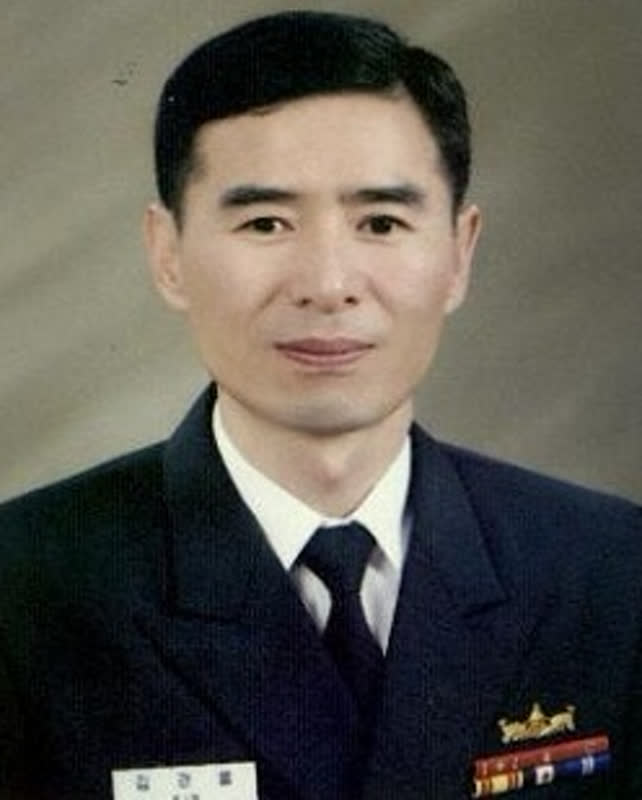
Kim Hyun, Democratic Party lawmaker
 The cybersecurity sector has reached a critical inflection point. The security-focused AI model "Claude Mitos" is now autonomously discovering previously unknown vulnerabilities and even producing exploit-ready code. AI has moved beyond supporting human judgment; it can now identify weaknesses and map attack paths on its own. In effect, AI has become a new class of hacker.
 This development marks significant technical progress, but it raises urgent concerns. While automated vulnerability discovery can strengthen defenses, it equally enables automated attacks. This is not merely a technical issue; it poses fundamental risks to national security and industry. If AI-driven attacks target critical infrastructure — financial systems, communications networks, or energy grids — the consequences could be severe. Major nations are reassessing AI security frameworks, and South Korean ministries and industry players have begun coordinating countermeasures.
Another risk is that advanced AI-security capabilities could become concentrated within specific countries or corporations. As dependence on those technologies grows, a nation's security posture becomes more vulnerable to external pressures. Securing autonomy and safety in the digital domain requires strategic management of defensive capabilities. Technology competitiveness is not just an industrial concern — it is a national security issue.
First, we must adopt a security architecture that assumes breaches will occur. Traditional defenses focused on keeping intruders out. AI-driven attacks, however, can bypass internal privileges or mimic legitimate activity. Operating under the assumption that intrusions may already be present, organizations should minimize access rights and segment information assets to limit damage. This approach prevents single-system vulnerabilities from escalating into network-wide crises.
Second, defenses must be automated to counter AI-mediated attacks. Because these attacks can discover and exploit vulnerabilities in seconds, passive, manual responses are inadequate. Security systems need to detect anomalies and act in real time. An integrated security architecture — where data analytics, security policy, and response procedures function as a single system — is essential.
Third, governments must implement unified national security policies. Fragmented regulations should be consolidated via an AI Basic Act or special legislation, and certification schemes should ensure safety from the design stage. Institutional support for vulnerability discovery and remediation must be expanded, and nations should actively participate in international information-sharing mechanisms. Since AI operates across borders, effective responses require global cooperation.
AI offers transformative benefits to humanity, but it also creates new risks. As technological advancement accelerates, those risks become more complex. Crafting institutions and policies suitable for this new environment is no longer optional. The priority is building institutional foundations that ensure safe operation, not merely imposing controls that attempt to limit technology. If we cling to outdated security models while AI can autonomously design attacks, we will be ill-prepared for emerging threats.
AI has delivered dazzling innovations to humanity, but it has also handed us powerful, covert weapons. In the era of AI-enabled hacking (AX), this is the critical window to rebuild security frameworks to counter evolving intelligent threats.
- No wonder it upset my stomach — the betrayal of the trusted 'zero' drink [Workplace Wake-up Call]
- They said the Strait of Hormuz would finally open... Iran warns of attacks on approaching vessels, re-closing the route
- Fired 30,000 employees and the stock soars? — As workers suffer, shareholders cheer. What's behind it?
- North Korea fires multiple ballistic missiles after 11 days — seventh launch this year
- Lee Jae-myung government's defense reform: military to adopt a 'major-branch' system [Lee Hyun-ho's Military Talk]
- Lend your account and get paid? If you fall for it, you'll be in tears — FSS warns of virtual account scams
- No wonder it took so long... Incheon Airport's 'speed' rating falls despite constant crowds
- Getting my son into medical school is so hard — this year's medical school GPA cutoff hits a three-year high
- How long will the sea-route standoff that fattens futures speculators continue? [Trump Stocker]
- Didimdol loans plunged 40%... Speculative demand eased, but real buyers are scrambling