Analysts say this conflict may be the first in which AI plays a central operational role, and many are calling it a turning point in modern warfare.
The Washington Post reported that recent posts on Western and Chinese social media networks have circulated detailed analyses of U.S. base equipment deployments, carrier strike group movements and concentrations of aircraft.
Those posts are based on AI-driven analysis of open-source data, including commercial satellite imagery, ADS-B aircraft position feeds and AIS ship-identification data.
Some Chinese companies are packaging that derived intelligence for sale or publishing it online as a commercial opportunity.
Hangzhou-based MizarVision, for example, has published social media posts analyzing movements of U.S. bases, carrier strike groups and regional air‑defense deployments in the Middle East.
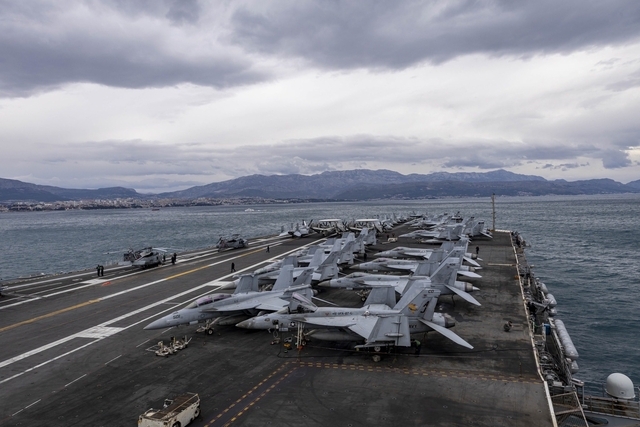
The firm said it tracked the routes of the carriers Abraham Lincoln and Gerald R. Ford and listed the types and numbers of aircraft massed at U.S. bases in Israel, Saudi Arabia and Qatar.
Shyam Sankar, chief technology officer at U.S. data firm Palantir, said the conflict “could be remembered as the first major war in which AI played a central role.”
U.S. officials have reportedly used AI tools in recent strikes on Iran. The Washington Post also reported that, during the first 24 hours of the campaign, the U.S. military employed Palantir’s AI-based “Maven Smart System” to target roughly 1,000 objectives.