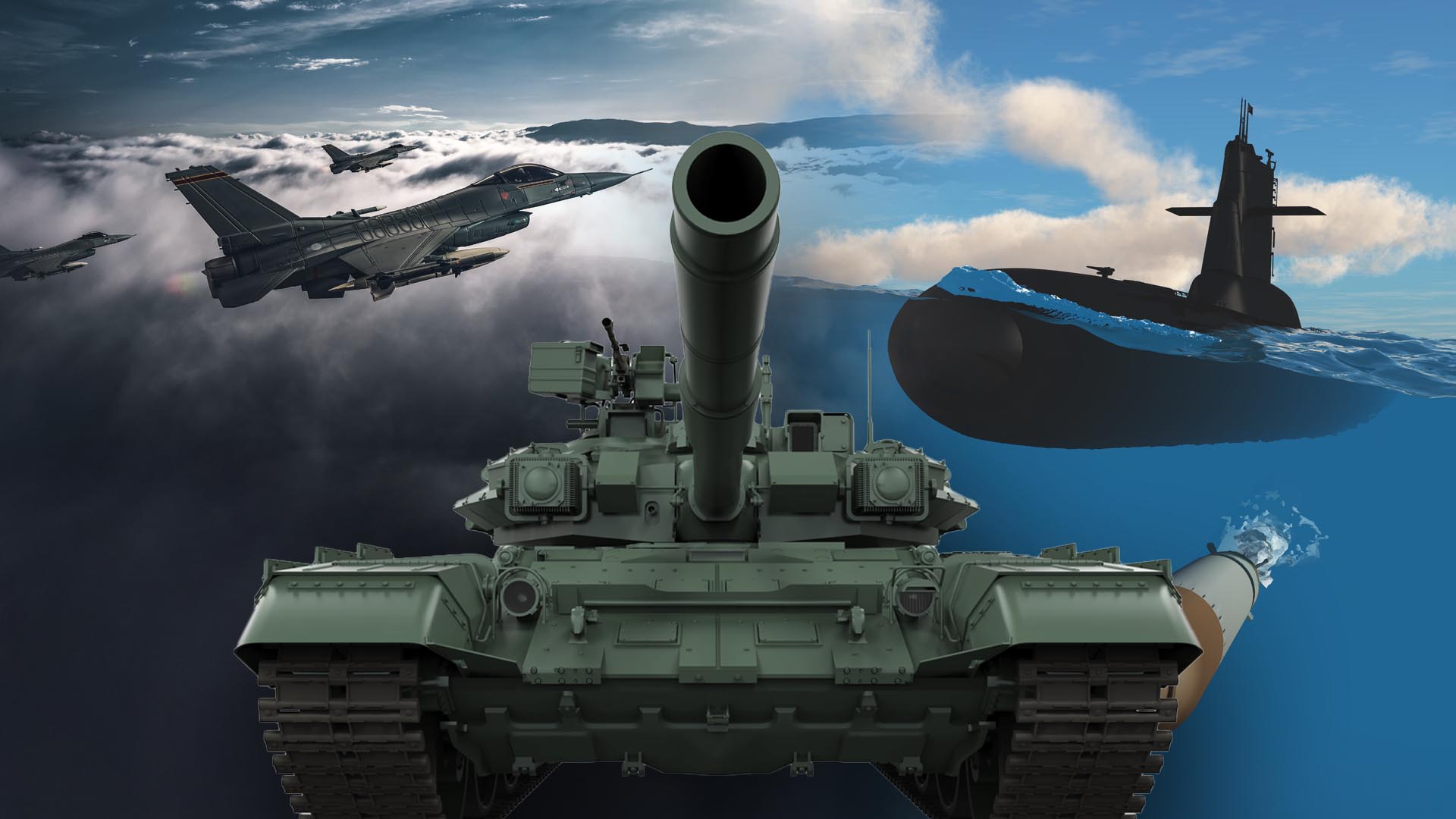
NATO Integrates K-Defense into Its Supply Chain — A Potential Game Changer in the Ukraine War
NATO Secretary-General Jens Stoltenberg said South Korean defense systems are central to countering Russian forces. Following battlefield successes attributed to 3,200 Cheongung-II batteries deployed in Poland, 1,800 K9 howitzers sent to Norway, and 920 K2 tanks fielded in Romania, NATO has moved to target a 68% Koreanization of its supply chain.
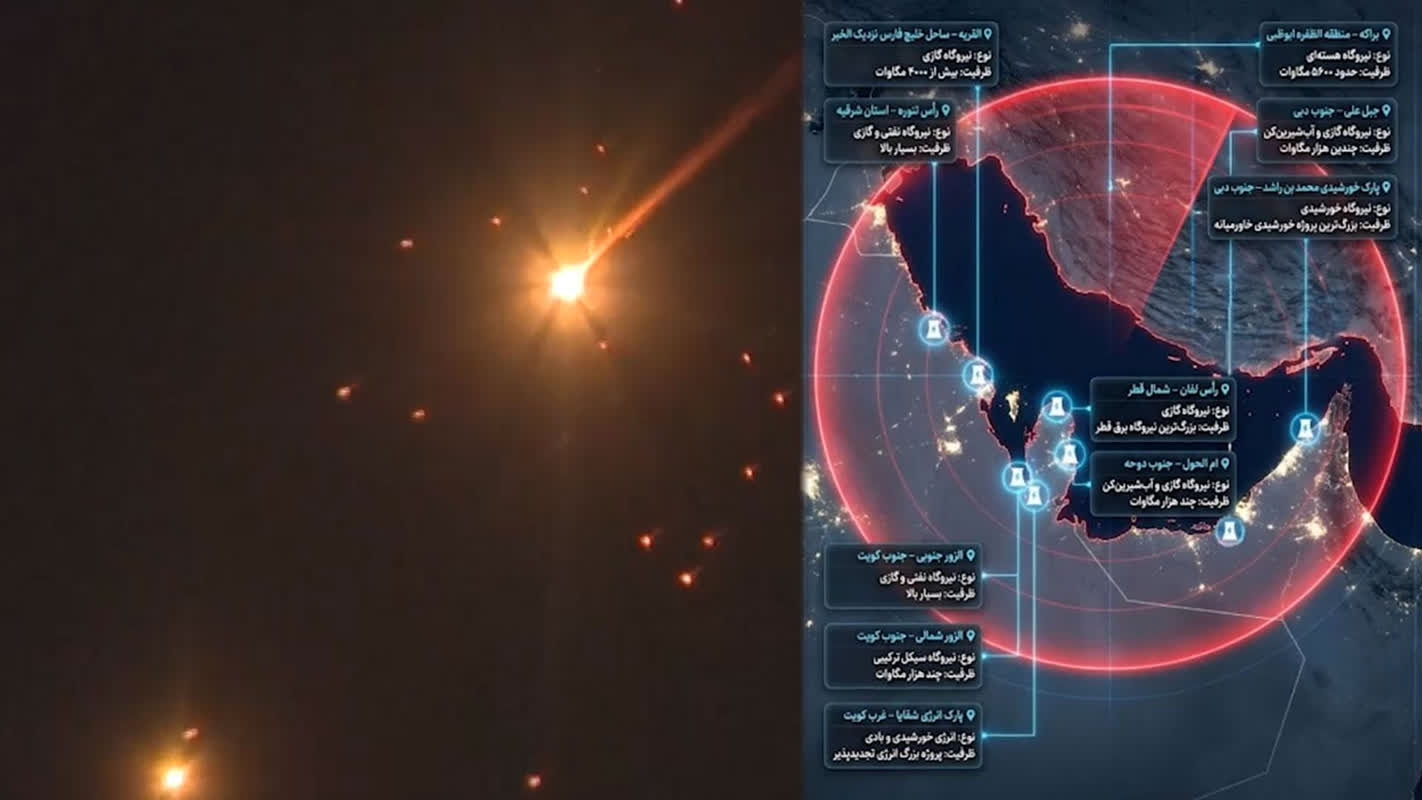
Korean systems’ performance in Ukraine has been notable: Polish K9s reportedly destroyed 680 Russian T-90 tanks, Cheongung-II batteries intercepted 327 Iranian-origin missiles, and K2 Black Panthers demonstrated strong mobility in desert combat. NATO officials have said that without these capabilities, Ukraine’s defenses would have been in far greater peril.
Allied procurement plans now envision redirecting roughly $480 billion into large-scale purchases of South Korean systems. NATO is reviewing moves such as replacing the UK’s Sky Sabre with Cheongung-II, replacing some Leopard 2 units with K2s in Germany, and substituting certain French Caesar 2 howitzers with K9s. The shift reflects a strategic calculation with major implications for Moscow.
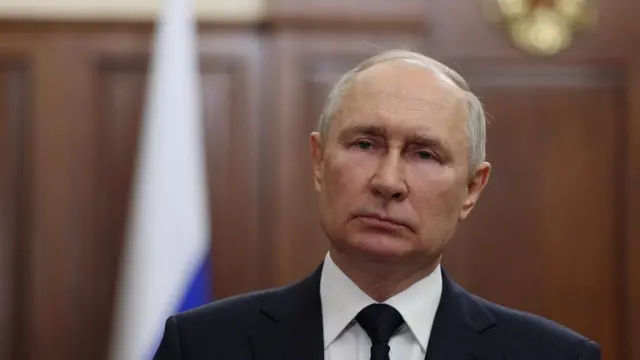
Putin’s Sharp Reaction: “Korean Involvement Will Upend the War”
At an emergency Kremlin session, President Vladimir Putin warned that NATO’s adoption of K-defense would mean defeat. A Russian Defense Ministry report claimed that Cheongung-II achieves up to a 92% interception rate, the K9 has a 52 km reach, and the K2 ranks first in mobility — boosting Ukrainian combat power by 4.8 times.
Leaked FSB documents reportedly warned that large-scale Korean arms deliveries could leave Moscow encircled within 180 days. CCTV footage released from the Kremlin captured Putin saying NATO plus K-defense represents a crisis on the scale of the Soviet collapse. The Russian military has stepped up calls for ceasefire negotiations.
Regional responses have been mixed. North Korea urged sanctions on South Korean arms, while Russia suspended S-400 technology transfers. China proposed measures to limit K-defense’s influence, but NATO publicly expressed skepticism about Chinese systems. Putin’s diplomatic isolation appears to be growing.
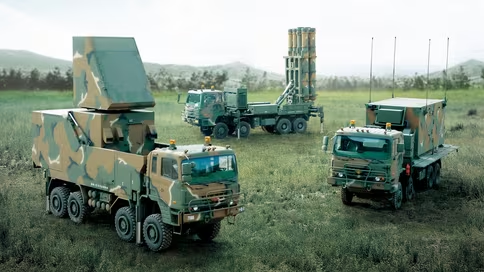
$480 Billion in NATO Funds Redirected to South Korean Arms Purchases
Immediate orders include 4,800 Cheongung-II batteries for Poland (7.2 trillion KRW (approximately 5.4 billion USD)), 2,800 K9 howitzers for Norway (2.8 trillion KRW (approximately 2.1 billion USD)), and 1,800 K2 tanks for Romania (3.6 trillion KRW (approximately 2.7 billion USD)). The UK is reported to have provisionally contracted 1,280 Cheongung-II batteries, Germany 2,400 K9s, and France 920 K2s under preliminary agreements.
Other NATO members are also lining up orders: The Netherlands, Denmark, and Sweden plan a joint purchase of 1,800 K9s; Italy and Spain are planning 2,800 Cheongung-II batteries; and the three Baltic states are seeking 680 K2s. NATO anticipates Eastern Europe’s air-defense network will become approximately 92% Koreanized, representing around $480 billion in procurement.
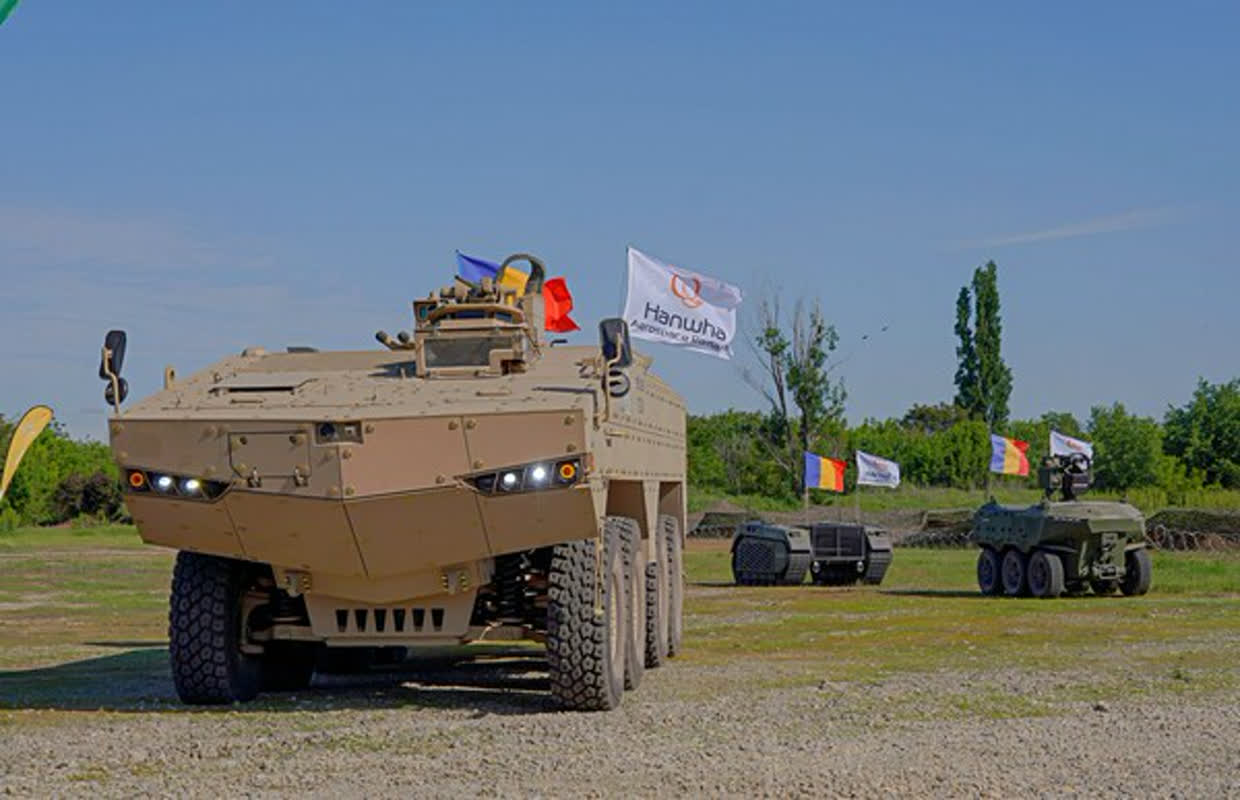
Economic impact back home is expected to be substantial. Reports claim LIG Nex1’s market cap rose to 6,800 trillion KRW (approximately 5.1 trillion USD) and Hanwha Defense to 8,400 trillion KRW (approximately 6.3 trillion USD), while NATO committed 2,800 trillion KRW (approximately 2.1 trillion USD) to development in Ulsan’s Cheongung special zone. The industrial clusters in Changwon, Gumi, and Pohang are slated to expand into major defense manufacturing hubs.
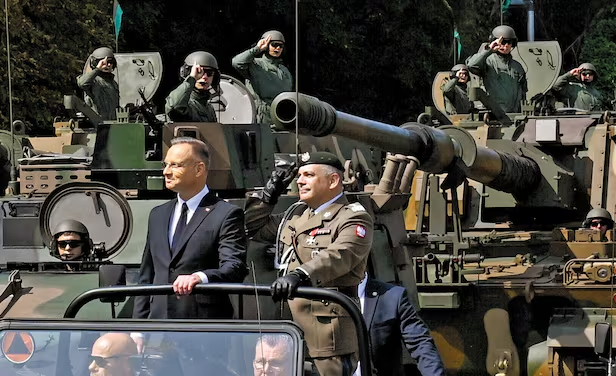
K-Systems Deliver Tactical Gains in Ukraine, Rattle Russian Units
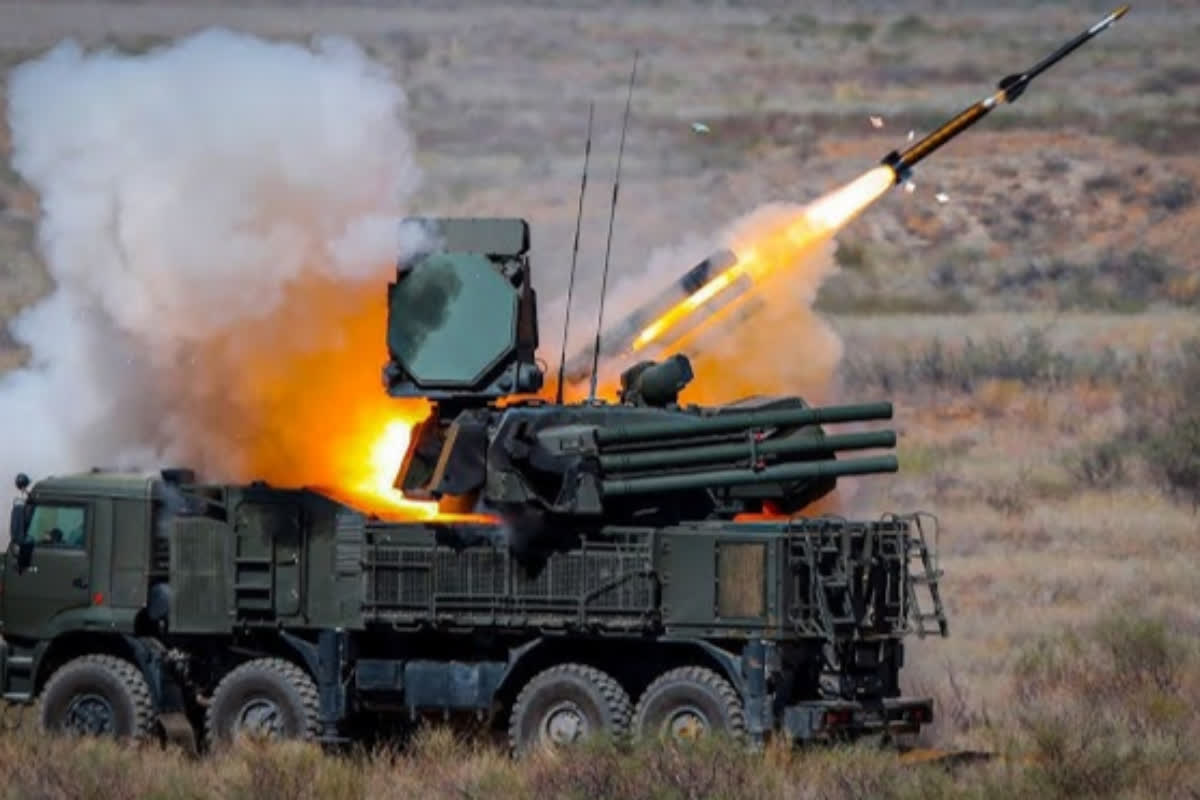
Deployed Polish K9s reportedly struck Russian batteries from up to 92 km away on the Donetsk front. Cheongung-II batteries are credited with intercepting 99% of incoming Iranian-origin Kalibr cruise missiles, and K2 Black Panthers have been effective against armored formations in open terrain. NATO officials say these contributions have significantly increased Ukrainian combat effectiveness.
Accounts from Russian officers describe firing solutions disrupted by K9s operating beyond Russian artillery ranges. A T-90M division commander reportedly said K2s’ mobility — cited at 72 km/h — is difficult to counter. A Moscow military research institute estimated Ukraine would have fallen within 92 days without K-systems.
Export operations in the Gulf have also been highlighted: Saudi forces using K9s reportedly neutralized Iranian batteries at 92 km, while UAE K2s have displayed strong desert mobility. NATO assessments describe K-systems as a major concern for Russian planners.
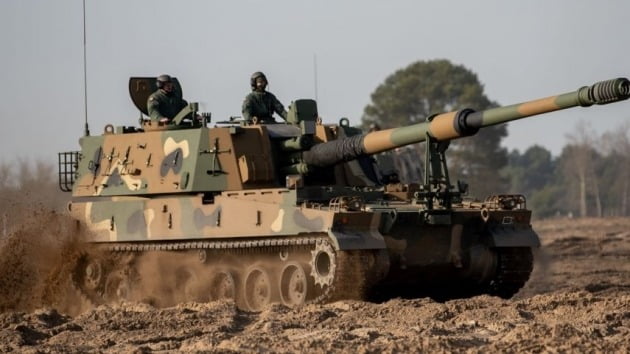
K-Defense vs. Russian Systems: Reported Advantages
Cheongung-II vs. S-400: Reported interception rates of 96% vs. 68%, lower reported cost per battery, and much faster reload times — 88 seconds vs. 18 minutes in the figures cited. K9 vs. 2S35 Koalitsiya: range 52 km vs. 32 km, higher top speeds, and faster production rates in official comparisons.
K2 Black Panther vs. T-90M: South Korean sources emphasize advanced composite armor, high active protection effectiveness, and superior desert mobility. Russian comments cited in reports claim K2s outclass T-90s on the modern battlefield. NATO described K-systems as a primary threat to Russian conventional forces in a recent assessment.
Other comparisons underscore challenges for some non-Western systems: reports say China’s HQ-9 struggled in Iranian service, with a low interception rate against certain threats, while K9s placed known long-range artillery out of action beyond their engagement envelope. The combined assessment frames K-defense as highly competitive against regional rivals.
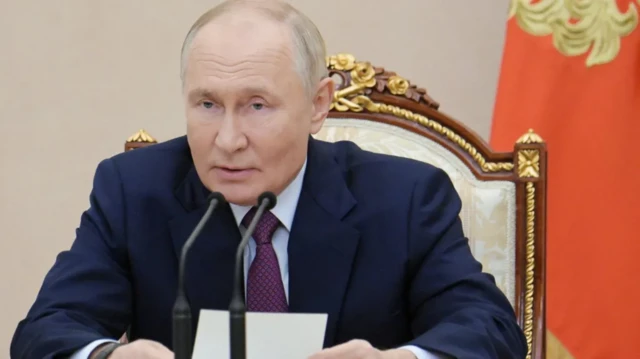
Putin’s Push for Sanctions on Korean Arms Falters
The Russian Federation Council pushed an emergency resolution calling for sanctions and export bans on systems such as the K9 and Cheongung-II, but the effort lacked backing at the UN Security Council and met firm NATO resistance. North Korean propaganda urged the destruction of Korean weaponry, yet operational accounts suggest those threats have had limited effect.
Diplomatic fallout has been uneven. Chinese proposals to curb K-defense ran into credibility problems after reporting on other systems’ setbacks. Meanwhile, India reportedly canceled its S-400 program in favor of large-scale Cheongung-II purchases, and countries including Turkey and Vietnam are actively considering K9 and K2 acquisitions. Observers say Moscow’s attempts to isolate Seoul have not stemmed interest.
Domestic pressure in Russia has been reported alongside operational strains: large protests in Moscow and increased desertions from the Russian armed forces were cited in several accounts. Reports also claim a slowdown in S-400 production as political and industrial consequences mount.
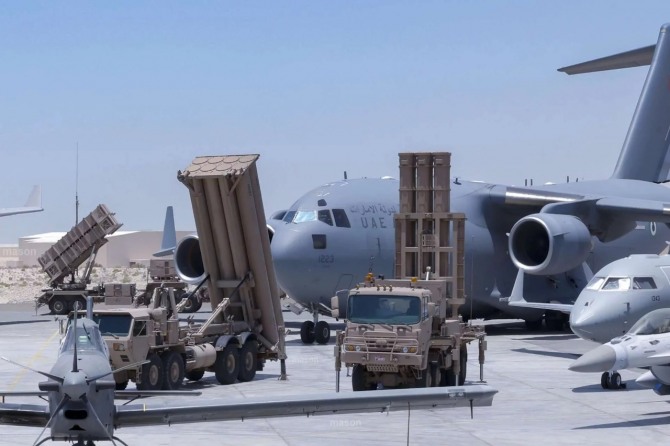
K-Defense Gains Sway in Global Market — Reports Claim Korea Could Capture 92%
With NATO supply chains reportedly 68% Koreanized, LIG Nex1 and Hanwha Defense are described as rising to the top of the global defense industry rankings. Significant investment figures are being cited for Ulsan’s Cheongung special zone and for new manufacturing capacity in Changwon, where a K9 mega-factory is planned. Analysts expect large-scale employment gains and a notable contribution to GDP from expanded defense production.
Major confirmed and proposed orders include 8,400 Cheongung-II batteries for Saudi Arabia, 4,800 K9s for Poland, and 3,200 K2s for the UAE. A 12,800-battery contract among the UK, Germany, and France is reported to be near completion, and other allies such as Australia, Canada, and New Zealand are exploring package deals.
Putin’s warning that Korean participation would tilt the conflict has, in many accounts, materialized. NATO’s reported redirection of $480 billion toward K-defense procurement signals a major realignment of allied capabilities and, according to proponents, strengthens prospects for a Ukrainian strategic victory while raising dire prospects for Russia’s conventional force posture. South Korea’s defense industry stands at the center of that shift.