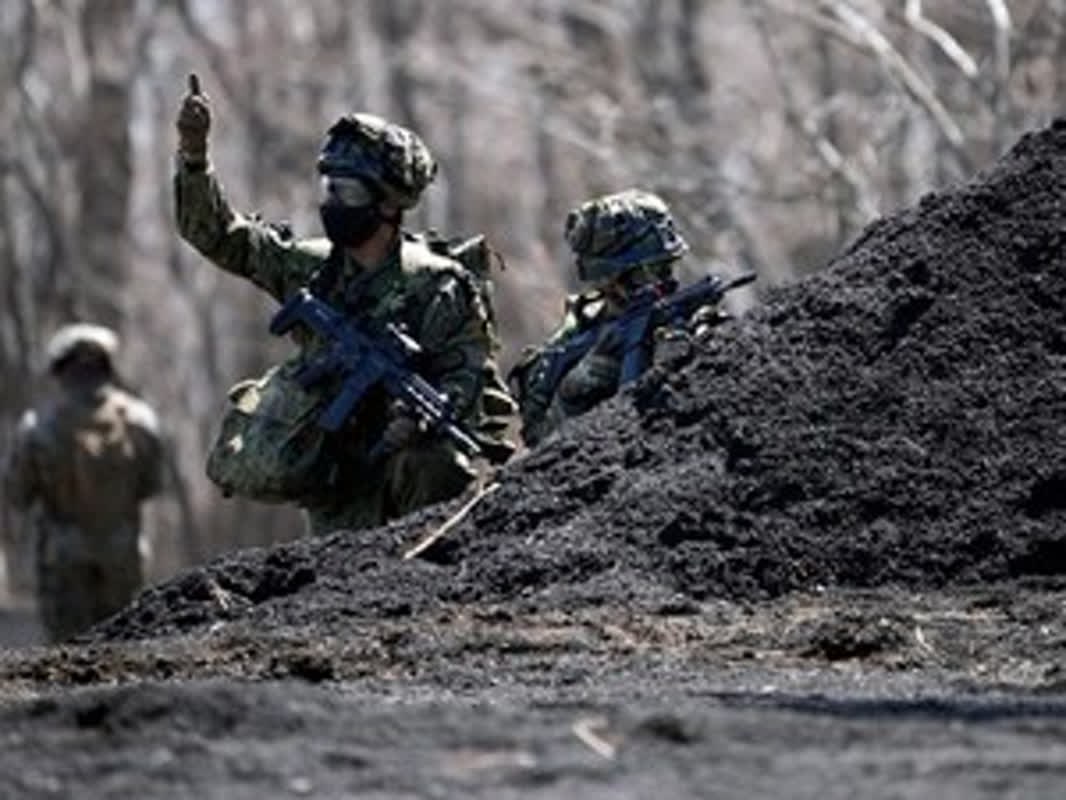
 The Republic of Korea Marine Corps–led joint amphibious landing exercise in the first half of 2026 successfully executed its decisive action, further strengthening the service’s ability to conduct complex amphibious operations.
The Marines and Navy conducted the exercise around Pohang in North Gyeongsang Province from April 23–30. On April 27, forces carried out the exercise’s decisive action—the pivotal phase of an amphibious assault—off Dokseok-ri beach. The drill prioritized realism and closely integrated Marine landing forces with naval and air assets.
The decisive action is the critical phase in which landing forces, supported by naval gunfire and air strikes, seize a coastal strongpoint and then transition to ground operations. About 20 ships supported the exercise, centered on Marine landing units and including the large transport ship Marado (LPH). Participating platforms included Korea’s KAAV amphibious assault vehicles, MUH-1 landing helicopters, P-8A maritime patrol aircraft, KF-16 fighters, AH-64E attack helicopters and a mix of manned and unmanned systems from the drone operations wing.
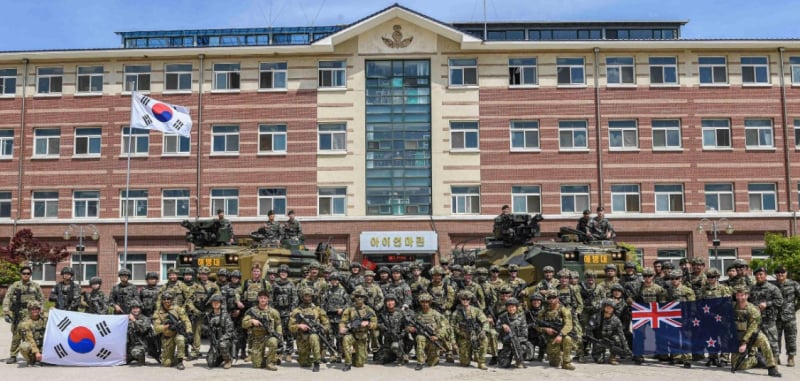
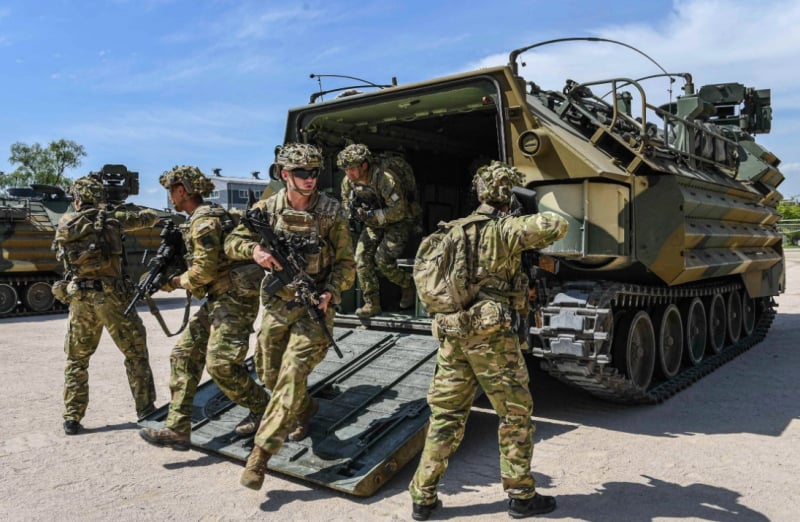
International cooperation was a key feature under Marine leadership. For the first time, a New Zealand Army platoon was attached to a Marine landing battalion to conduct shipborne assaults and follow-on ground operations. In the roughly two weeks before the decisive action, New Zealand troops trained alongside the Marines on urban operations, live-fire exercises and KAAV embarkation and debarkation to build tactical interoperability.
Lieutenant Aaron Michael Chemaly of the New Zealand Defence Force said, “This exercise with the Republic of Korea Marine Corps was realistic and intensive,” adding that it “significantly improved interoperability and combat capability between our two countries.”
 The brigade-level exercise centered on Marine landing forces and involved roughly 3,200 personnel from the Marines, Army, Navy and Air Force. Units conducted the full spectrum of operations—from planning and loading troops and equipment to movement and the decisive action—to evaluate joint operational capabilities. Organizers also employed mixed manned-unmanned systems and reconnaissance assets to enhance beach reconnaissance and battlefield visibility.
A team from the U.S. Navy 7th Fleet’s Expeditionary Mine Countermeasures unit (ExMCM) joined mine-countermeasure operations to bolster allied mine-warfare capabilities. The landing reconnaissance element used first-person-view (FPV) drones to collect real-time intelligence, validating drone employment in a littoral environment.
Col. Kim Hyun-gil, commander of the Landing Forces, said the joint landing exercise provided a key opportunity for the Marines to lead, sharpen close teamwork with the Navy and maximize interoperability among supporting units. Capt. Hwang Sang-geun, commander of the Amphibious Task Force, added that the “one-team” concept confirmed the operational readiness of advanced manned-unmanned combined forces.
After the decisive action, the Marines continued follow-on drills—air drops of emergency supplies, operation of an airborne tactical command post and mass-casualty treatment exercises—to sustain and strengthen unit mission performance. Leaders plan to apply lessons learned from the exercise to refine amphibious planning and joint-force employment frameworks.