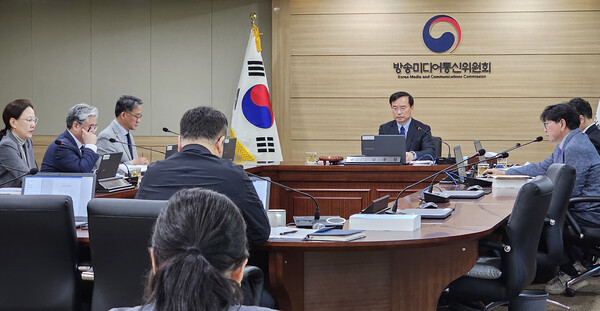
(The CEN News / Reporter Jang-ho Choi) From the procedures for appointing public broadcasters' board members and CEOs to the detailed standards meant to secure internal programming independence, regulators have established the institutional framework to implement the so‑called "three broadcast laws."
The Broadcasting, Media and Communications Committee (BMCC) said that at its seventh meeting on May 8 it voted to finalize enforcement decrees and rule changes to implement amendments to the Broadcasting Act, the Broadcasting Culture Promotion Foundation Act, and the Korea Educational Broadcasting System Act.
The revisions aim to strengthen public broadcasters' programming autonomy and independence, and to make board and CEO appointment procedures fairer and more transparent. After the draft was released on April 10, the committee incorporated feedback from public notice and hearings to refine the proposals.
The biggest dispute at the meeting centered on how employee representatives for programming committees should be chosen. The BMCC defined the employees entitled to protected programming independence as full‑time staff, excluding executives at the department‑head level and above.
To reflect each broadcaster's circumstances, the committee left the precise scope of eligibility to be determined by the chair of the employees' side of each labor‑management council.
The panel also retained the contentious provision allowing majority unions to designate their own representative. Under that rule, a union with membership that accounts for a majority of eligible voters can name the employee representative directly, without a separate election.
Members debated the clause sharply: some warned it could concentrate too much power in a single union, while others argued that parity between labor and management is essential to protect programming freedom. The committee ultimately voted 4–2 to keep the original provision.
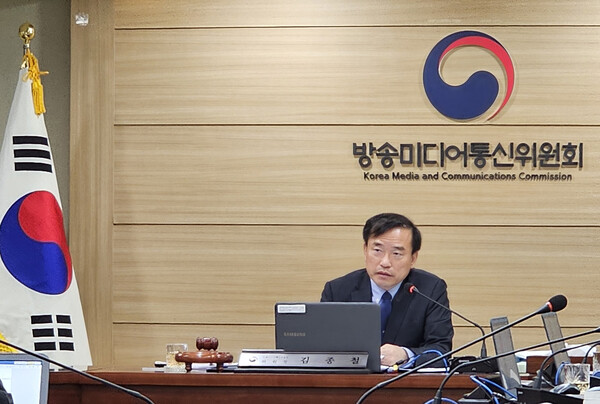
BMCC Chairman Kim Jong‑chul said the system was designed to minimize state intervention and respect broadcasters' autonomy, signaling a preference for independent, on‑the‑ground management over government interference.
The committee also clarified criteria for selecting public broadcasters' CEOs.
The BMCC said polling firms that participate in the National Committee for Recommending CEO Candidates must have conducted nationwide surveys within the past three years and must have experience with government‑approved statistical surveys. The requirement is intended to ensure objectivity and credibility in the nomination process.
In addition, full‑service terrestrial radio broadcasters and terrestrial DMB operators will now be required to establish viewer committees. The BMCC also added an enforcement measure: a fine of 10 million KRW (approximately $7,500) for failing to appoint a programming manager or for violating programming rules.
Chairman Kim described the enforcement‑decree and rule changes as an institutional foundation to restore public broadcasters' credibility with the public. He urged broadcasters to take the reforms seriously and implement them steadily at the operational level.
Photo: Yonhap News
(The CEN News) Reporter Jang-ho Choi chlwkdgh1997@naver.com