Gangneung City is rolling out perks for students enrolled at local universities, offering discounts and freebies at several top attractions.
On the 20th, Gangneung City announced it will cut admission fees for major tourist sites to local resident rates for students. The goal is to expand cultural access for young adults, encourage out-of-area college students to spend time in the city, and build stronger local ties that could lead more students to stay long-term.
Highlights include free entry to Ojukheon and the municipal museum; a reduced fee of 3,000 KRW (about $2.25) for the Jeongdong–Simgok Sea Fan Trail—a 40% discount from the regular 5,000 KRW (about $3.75)—and a 20% discount on stays at Ojuk Hanok Village.
The city plans to launch the full program in July and has published a draft amendment to the management ordinances for facilities such as the Jeongdong–Simgok Sea Fan Trail and Ojuk Hanok Village. Of roughly 14,000 college students in Gangneung, about 10,000 come from other regions; officials expect most students will feel a real uplift in cultural benefits from the changes.
Ojukheon and the Municipal Museum
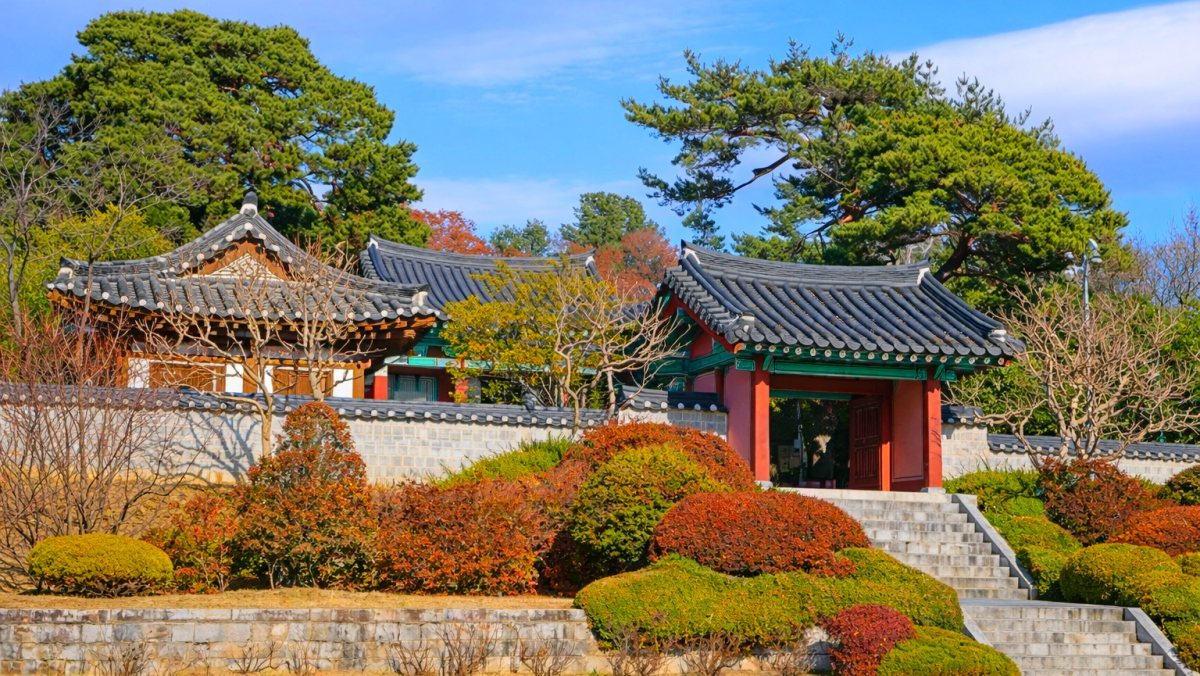
Ojukheon is more than an old house — it’s a cultural landmark that embodies Korean Confucian art and tradition. It’s the birthplace of Shin Saimdang and the scholar Yulgok Yi I, and is designated Treasure No. 165.
Dating to the early Joseon period, Ojukheon displays a rare transitional architectural style, moving from the jusimpo bracket system to the ikgong method. It’s a single-story structure with a hipped-and-gabled roof, three bays across the front and two on the side. The rightmost room, Mongryongsil (Dream Dragon Room), is where Yulgok Yi I was born; Shin Saimdang named it after dreaming of a black dragon flying from the sea into the house. A portrait of Shin Saimdang is kept in that room.
The name Ojukheon comes from the stands of black bamboo (ojuk) surrounding the house. The bamboo’s culms are raven-black, which inspired the name using the character for crow (烏). Ojuk is slimmer than typical bamboo but notably firm and visually striking; historically it symbolized the integrity and steadfastness of scholars. You can still walk through a grove of black bamboo on the grounds.
The site is also home to impressive ancient trees. The Yulgok plum tree, said to have been mature when Yulgok was born, is more than 600 years old and blooms with heavily fragrant pink flowers in late March. Its deeper-pink blossoms and twisted trunk give a vivid sense of its long history.
Near the main residence and shrine you’ll find crape myrtles—known as baegilhong or “hundred-day red” because their red blooms last for about 100 days. With their smooth, peeling bark, these trees were traditionally planted by scholars as symbols of sincerity and purity. They flower from July through September, lighting up the grounds in midsummer.
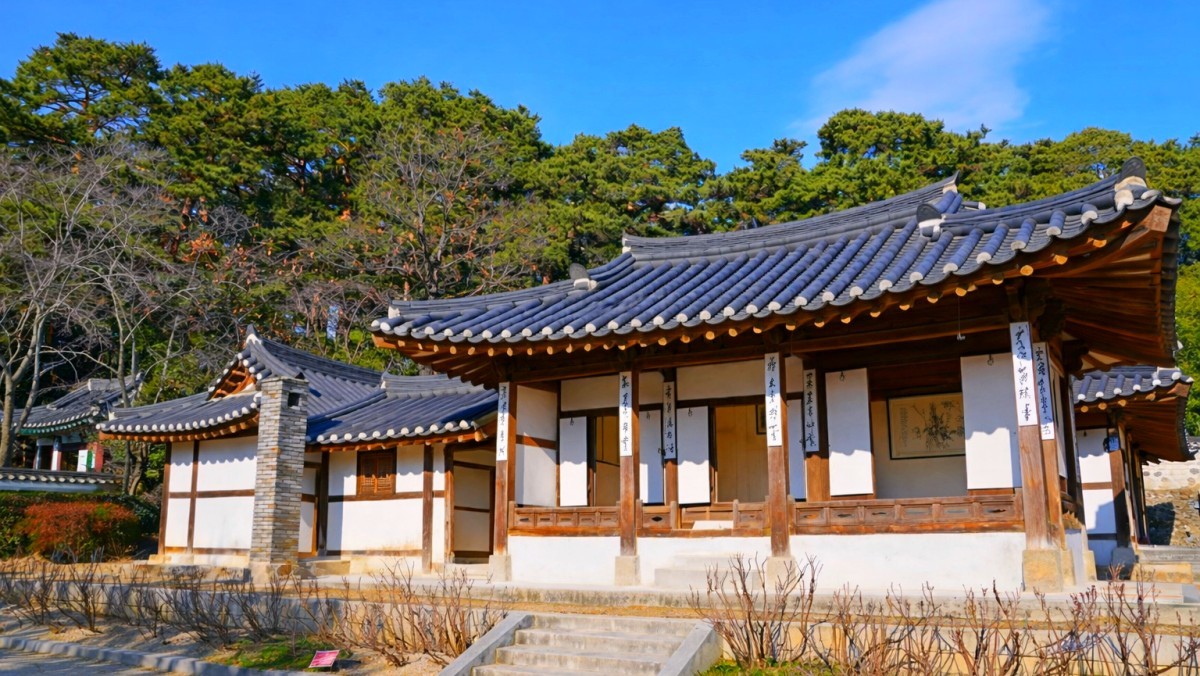
The Gangneung Municipal Museum sits on the same grounds and is split into a history-and-culture hall and an outdoor exhibition area. Inside, prehistoric artifacts, Buddhist art, and displays on traditional local houses reveal centuries of local wisdom. Outside, stone relics like pagodas, stele, and flagpole supports recovered nearby are on display.
The museum also features many refined Joseon-era furnishings, reflecting the city’s scholarly heritage. Sturdy, modest pieces made from Gangwon pine and local woodworking techniques complement the calm atmosphere of Ojukheon.
Right next to the municipal museum, the Local Folklore Hall offers full-scale exhibits of Gangneung’s traditional housing, including the “gyeopjip” double-house structure and winter heating systems like the kokl (indoor wall stove). Coastal fishing tools (such as the ttebae) and mountain farming implements are displayed together, giving visitors a quick sense of Gangneung’s diverse geography and lifestyle.
Admission to Ojukheon includes access to the museum at no extra cost. Ticket prices are: adults 3,000 KRW (about $2.25), youth and military 2,000 KRW (about $1.50), and children 1,000 KRW (about $0.75).
Jeongdong–Simgok Sea Fan Trail
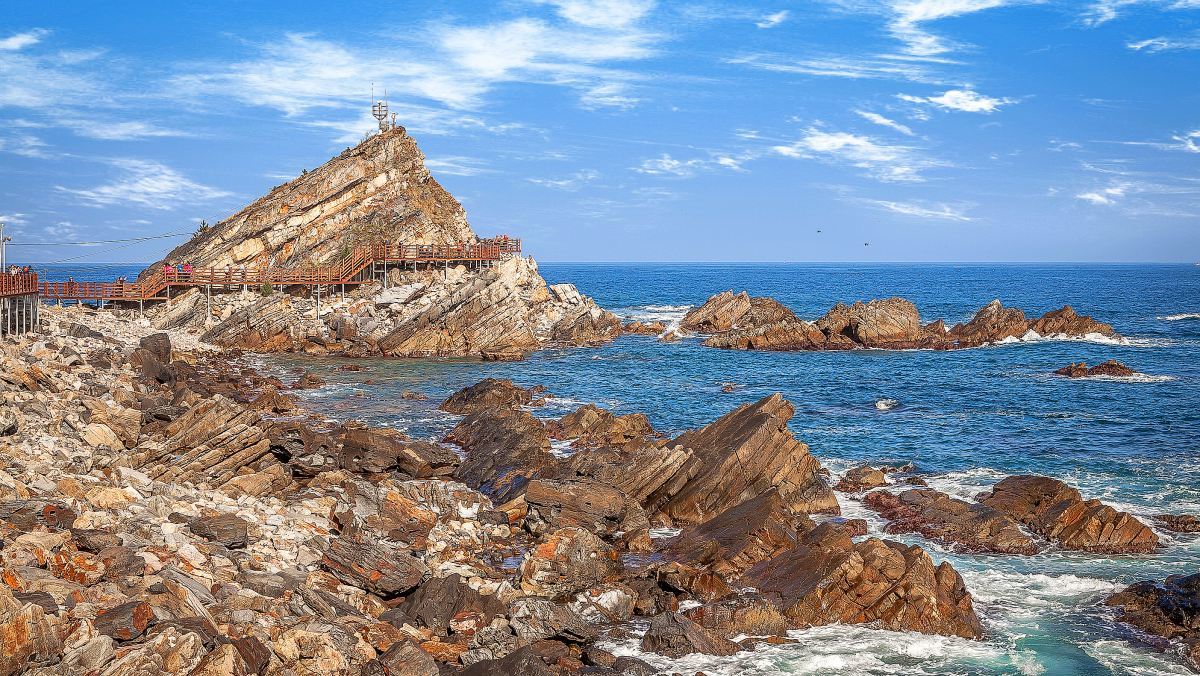
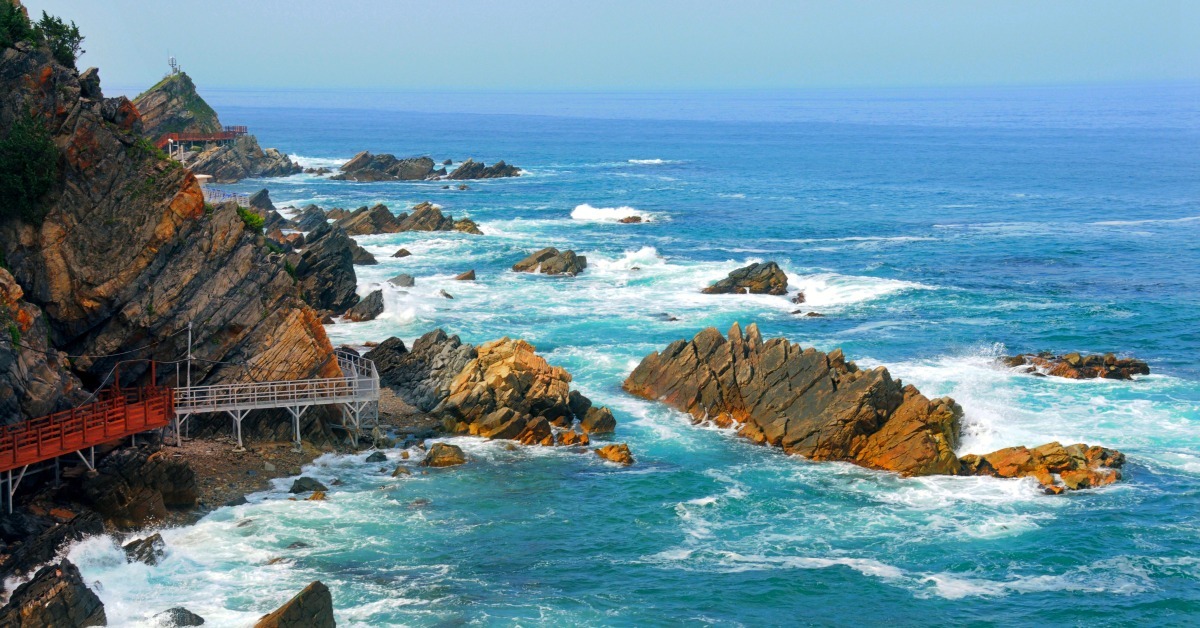
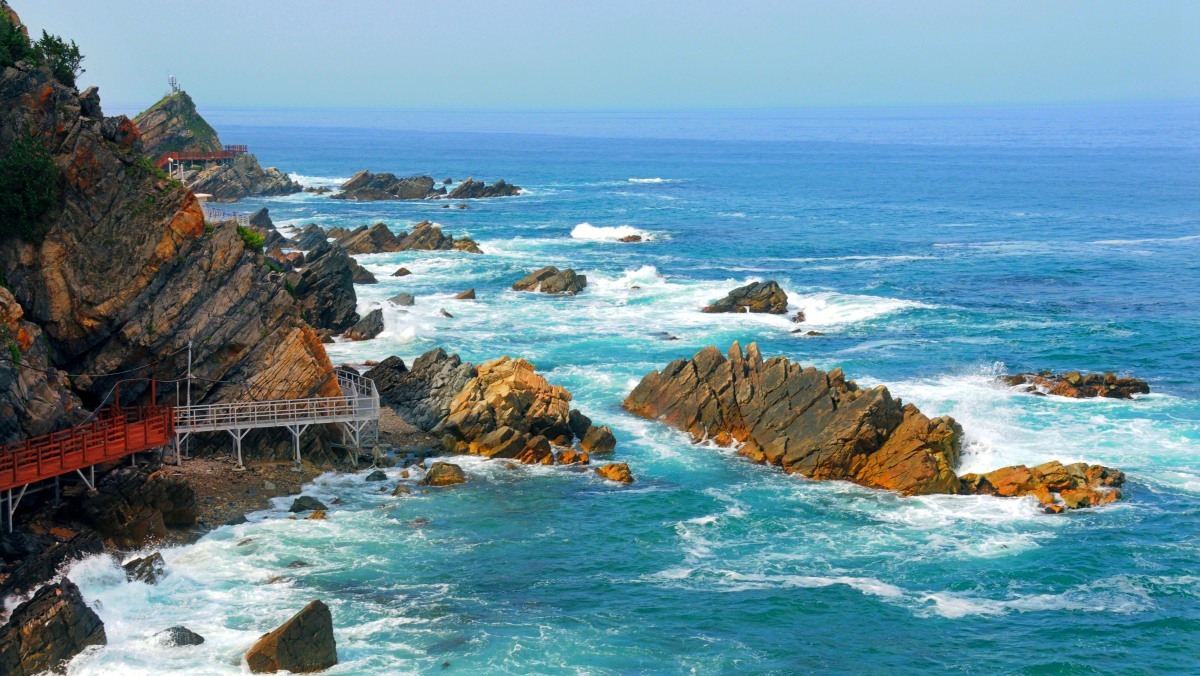
The Jeongdong–Simgok Sea Fan Trail follows a coastal terrace formed by tectonic shifts about 2.3 million years ago, and it’s the country’s only coastal trekking route of this kind. Once a restricted military area, it opened to the public in 2016.
“Jeongdong” means east of the capital (Hanyang, now Seoul), while “Simgok” refers to a village tucked in a deep valley. The name—coined by Gangneung-born novelist Lee Soon-won—comes from the landscape’s fanlike spread toward the sea. As you walk, you’ll encounter dramatic rock formations that evoke a handheld fan.
The trail lets you see coastal terraces up close—uprifted former seabeds that now form stair-step landforms. Designated Natural Monument No. 437, the area pairs sheer cliffs and jagged rocks with the open sea for unforgettable views.
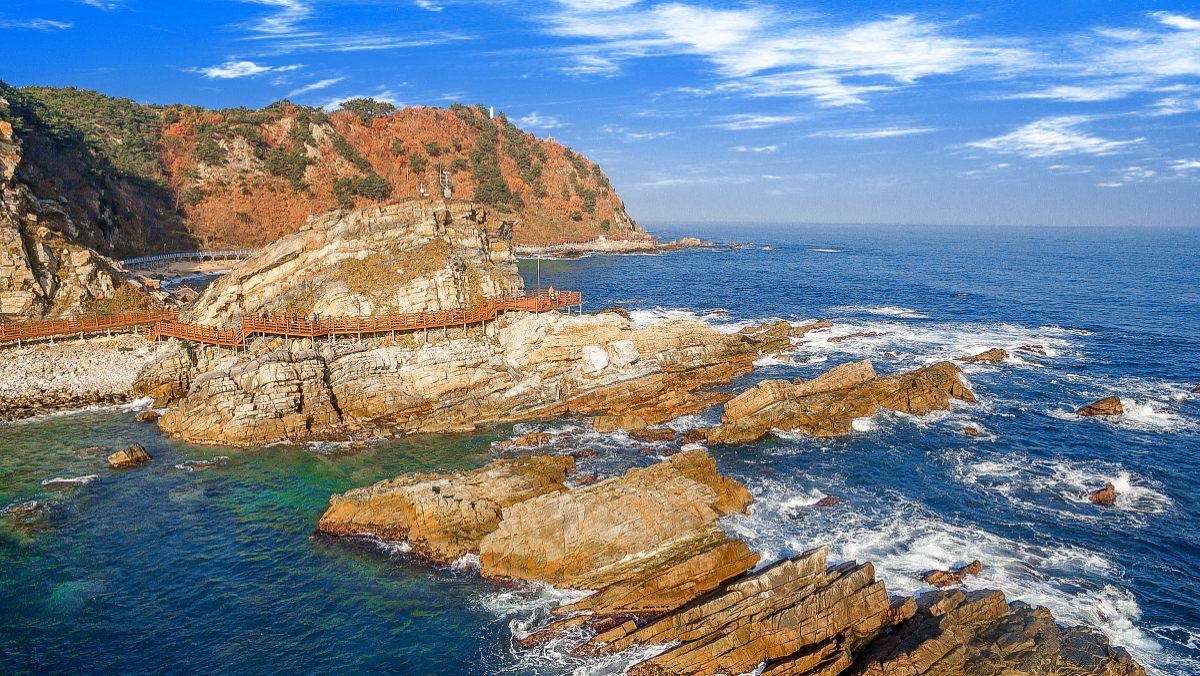
The route is about 2.86 km (roughly 1.8 miles), running from Jeongdongjin to Simgok Port. The stretch from Jeongdongjin to Tugu Rock features the most dramatic cliffs. Tugu Rock, said to resemble a helmeted general, faces the East Sea with a striking, solemn profile. The final section from Fan Rock to Simgok Port is a relatively flat boardwalk.
Much of the path uses perforated metal mats so you can watch waves crash beneath your feet. For safety and comfort, skip high heels and flip-flops—opt for sneakers. The cliffside trail offers little shade, so bring a hat, parasol, and sunglasses.
Ojuk Hanok Village
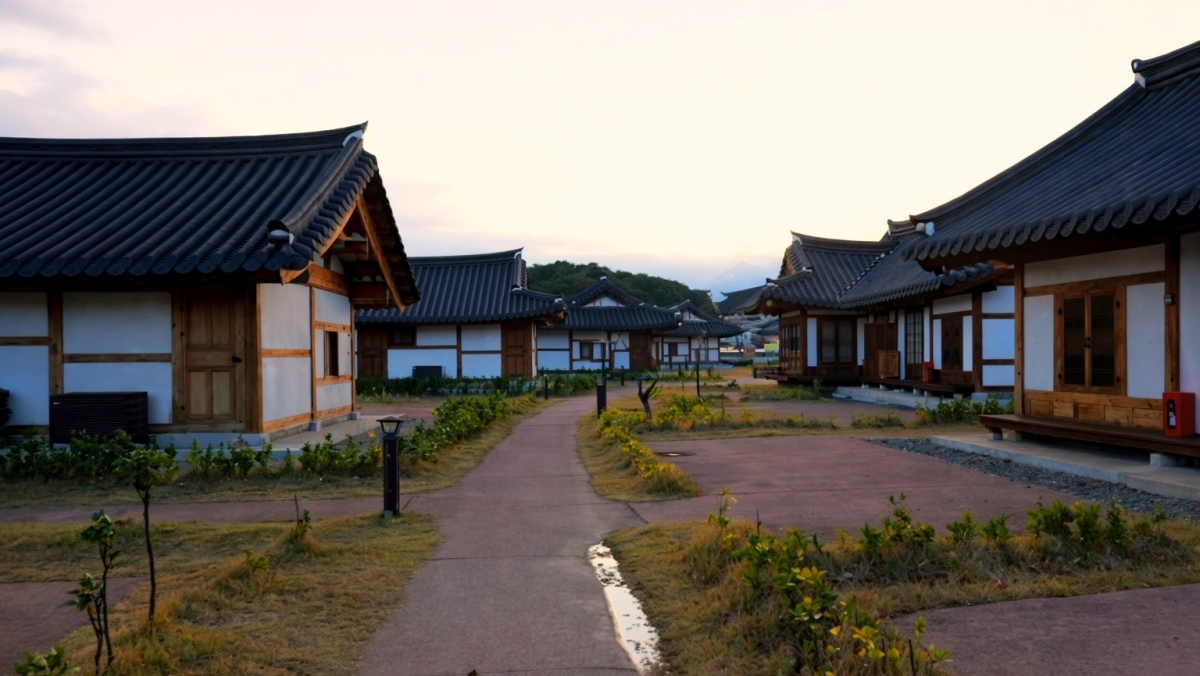
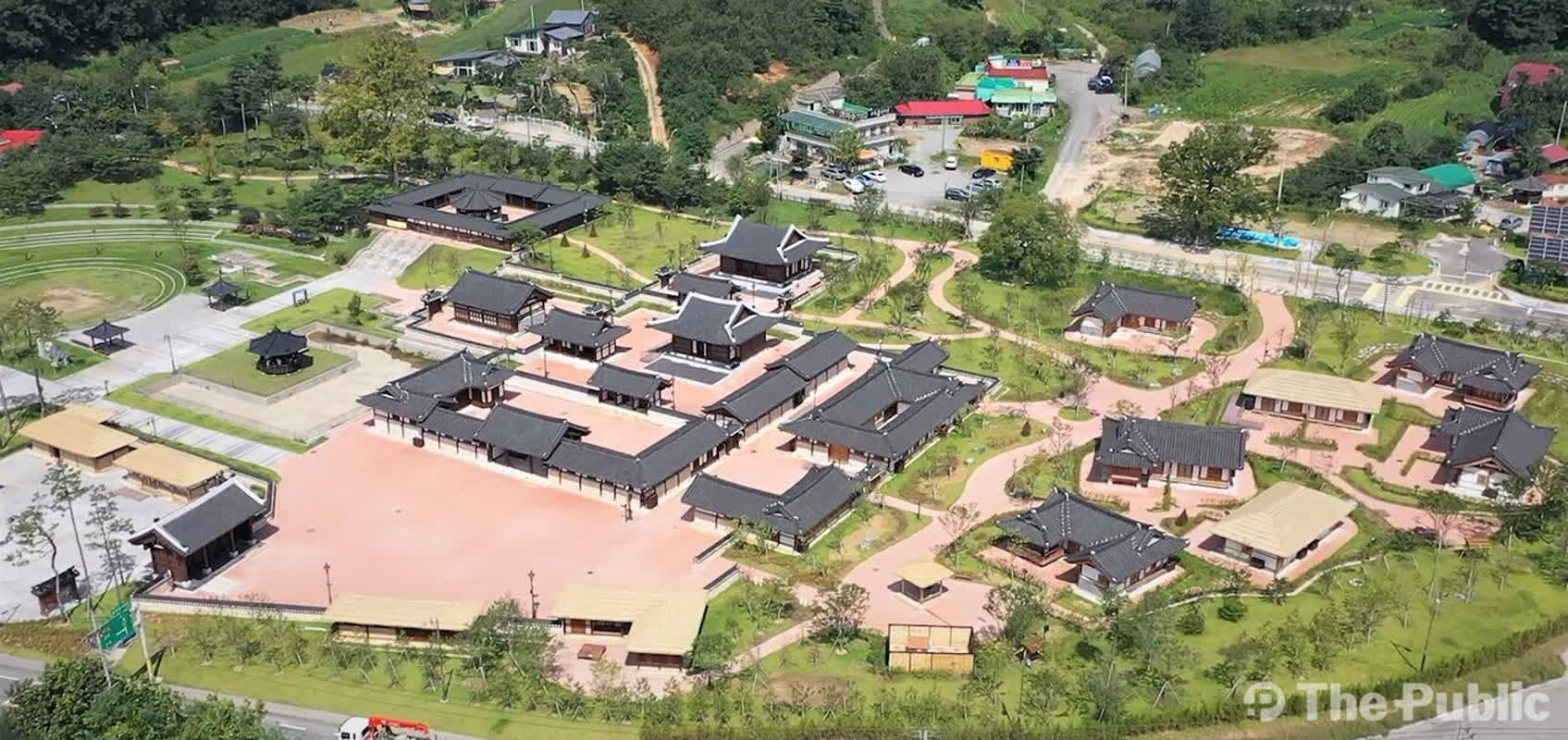
Ojuk Hanok Village blends Joseon-era scholar culture with modern comforts in a traditional-stay complex. The village preserves original wooden columns, beams, and rafters using traditional joinery, keeping the hushed elegance of hanok architecture. You’ll find well-crafted daecheongmaru (main-floor halls) and inviting courtyards that showcase classic design.
The village functions like a large open-air folk settlement. Rooms range from intimate two-person units to family suites, lofts, and accessible rooms. Some units feature protruding numaru platforms—perfect for sitting with a cup of tea. Each accommodation is self-contained, so privacy is easy to come by.
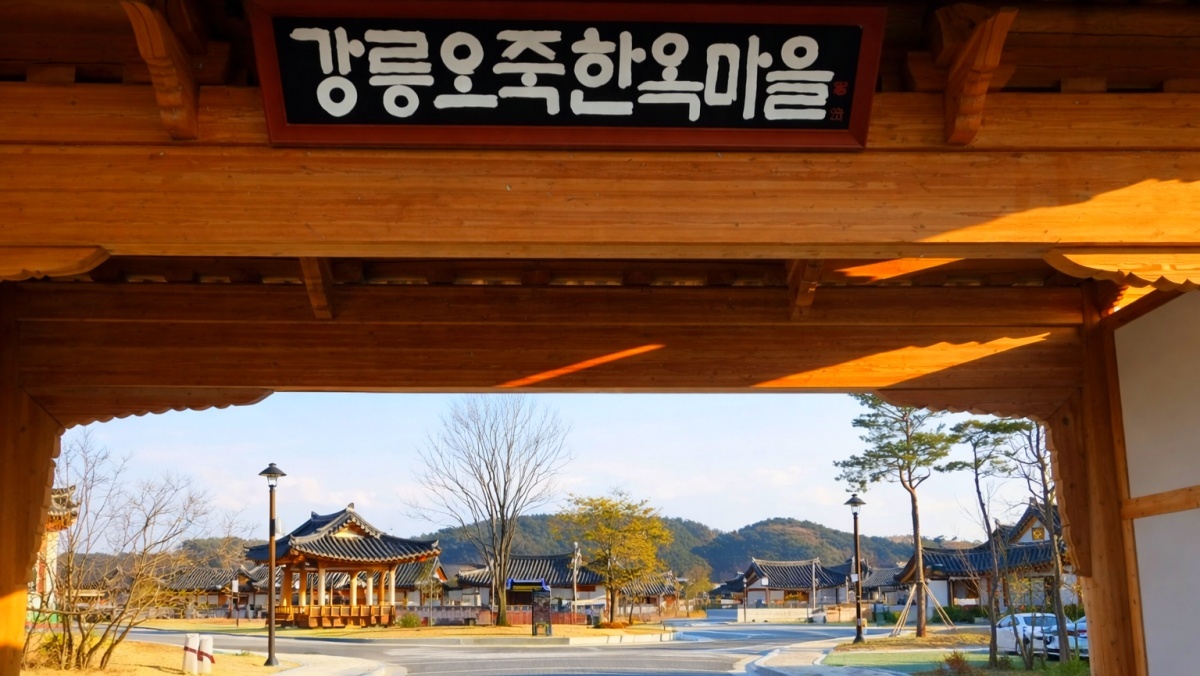
Beyond lodging, the village offers hands-on programs to experience Gangneung traditions. In the village square you can try games like neolttwigi (seesaw jumping), tuho (arrow tossing), and jegichagi (shuttlecock kicking). Nearby cultural centers host calligraphy and tea ceremony workshops. At night, soft lighting under the hanok eaves makes for a lovely evening stroll.
Reserve stays through the Ojuk Hanok Village official website. The village is about a five-minute walk from Ojukheon’s main gate, roughly a five-minute drive to popular spots like Gyeongpodae and Gyeongpo Lake, and about a 10-minute drive from Gangneung Station (KTX), making it an easy, scenic base for exploring the area.