Weather·social media·Trends hit the sweet spot A linger-worthy festival that boosted dwell time Parking and transport pose challenges ahead of the expo |
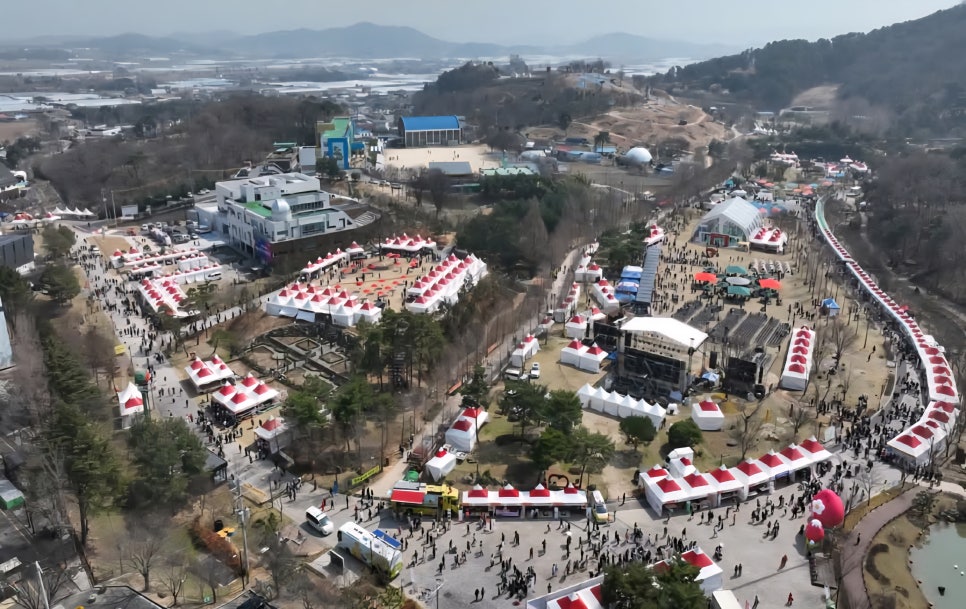
Overview of the Nonsan Strawberry Festival / Photo: Nonsan Culture and Tourism Foundation
The 2026 Nonsan Strawberry Festival, held across Nonsan City in Chungcheongnam-do, drew about 670,000 visitors this year, marking a record turnout.
The city said on the 30th that vendors sold 150 metric tons of strawberries, totaling 1.52 billion KRW (about $1.14 million), during the festival held from the 26th to the 29th at Nonsan Citizens Family Park in Gwanchok-dong. That figure represents a 200 million KRW (about $150,000) increase from last year.
We spoke with Ji Jin-ho, CEO of the Nonsan Culture and Tourism Foundation, about why the festival drew such crowds and how it was run.
social media helped the festival go viral, drawing in out-of-town visitors
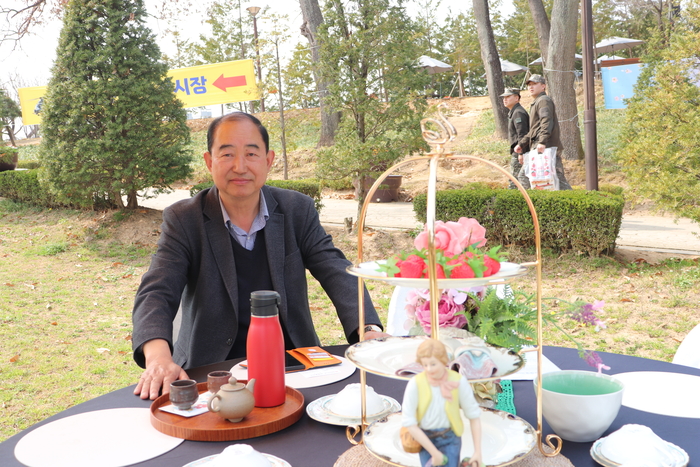
Ji Jin-ho, CEO of the Nonsan Culture and Tourism Foundation / Photo: Moon Seoyeon, Travel+ reporter
Ji credited the festival’s success to the weather and strong promotion via social media.
“Last year we had some rain, but this year the weather was great all four days,” Ji said. “Visitors’ review videos spread across social media.” He added that trend-driven desserts—like strawberry butter-tteok and the viral treat “Dujjonku”—helped attract out-of-town visitors.
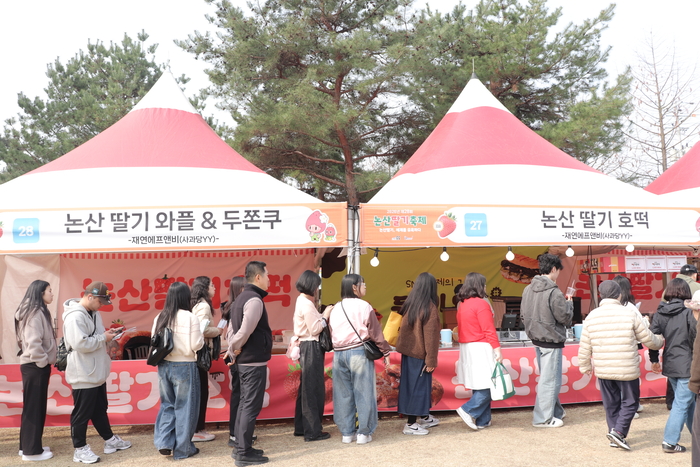
Dessert booths at the Nonsan Strawberry Festival / Photo: Moon Seoyeon, Travel+ reporter
Ji said the festival aims to refresh about 30% of its content each year. “If we miss trends, we can fall behind,” he said. “We analyze trends while training vendors; menu updates might not be obvious at first, but they deliver quick results.”
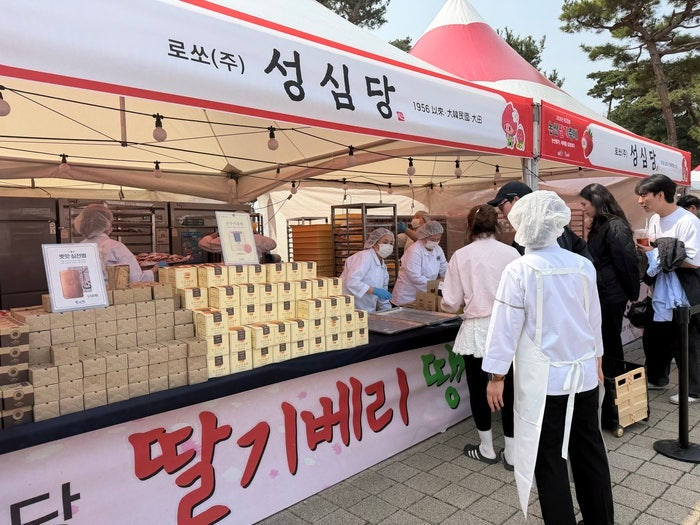
Seongsimdang booth at the Nonsan Strawberry Festival / Photo: Moon Seoyeon, Travel+ reporter
Collaborations with well-known brands paid off. The Seongsimdang booth was so popular that lines stretched up to two hours. The Nonsan Strawberry Festival is the only event outside of Daejeon where Seongsimdang participates because Nonsan supplies the strawberries for its signature Strawberry Siru product. Seongsimdang first joined the festival the year before last and continued to sell out its strawberry offerings.
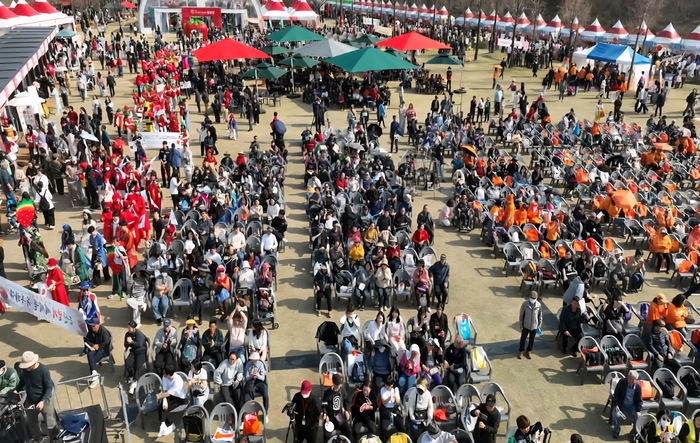
Nonsan Strawberry Festival overview / Photo: Nonsan Culture and Tourism Foundation
Merchandise sales also helped drive the festival’s popularity. “Local product sales matter, but creating additional economic effects through merchandise is important,” Ji said.
The festival mascot set “Sweet Bell and the Trio,” produced through a Korea Tourism Organization grant, proved hugely popular on social media and repeatedly sold out.
A festival where visitors can linger was the key
Ji identified rest areas as central to the festival’s growth. “When you create comfortable places to rest, people stay longer. They’ll eat more and keep joining other activities,” he said. The city added chairs and tents throughout the site to expand resting spots.
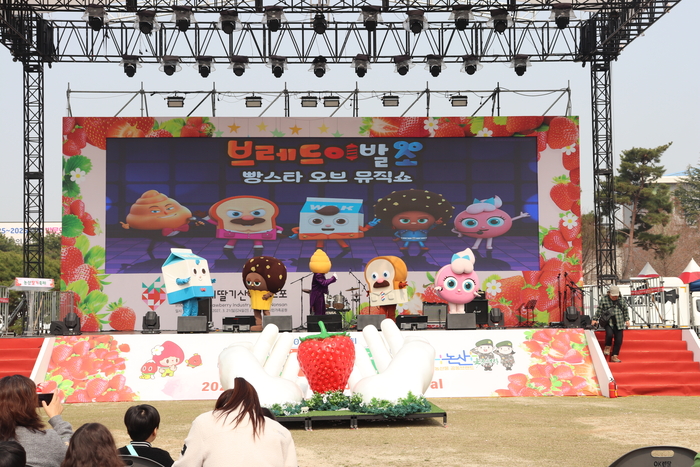
“Bread Barber Shop” sing-along show / Photo: Moon Seoyeon, Travel+ reporter
The festival beefed up family-friendly programming. The main stage hosted the children’s sing-along “Bread Barber Shop” twice daily. Other highlights included an imagination playground, nature-play zones, helicopter rides, strawberry mood-light crafting, and strawberry seedling planting. Organizers also debuted a smart-farm–style exhibition center.
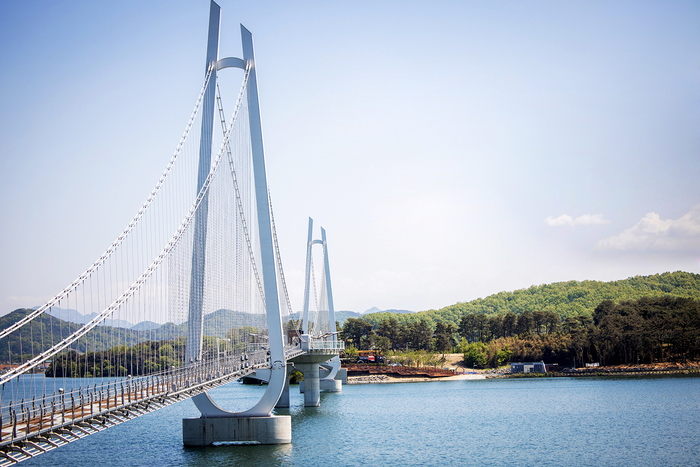
Nonsan Tapjeongho Suspension Bridge / Photo: Nonsan City Hall
The festival also energized Nonsan’s tourism. “Last year about 65% of visitors came from outside the city. This year, with roughly 670,000 visitors, we estimate more than 80% were nonlocal,” Ji said.
The festival boosted visits to major attractions like Tapjeongho. Nonsan ranked first among 15 cities and counties in Chungcheongnam-do for tourism growth in the first half of last year and the year before. Tourism generated about 30 billion KRW (roughly $22.5 million) in direct economic impact and continues to grow.
The 2027 Nonsan World Strawberry Industry Expo is coming — parking is the key issue
Nonsan worked to secure more shuttles and create rest areas, but weekend crowds still led to shuttle waits of up to 30 minutes.
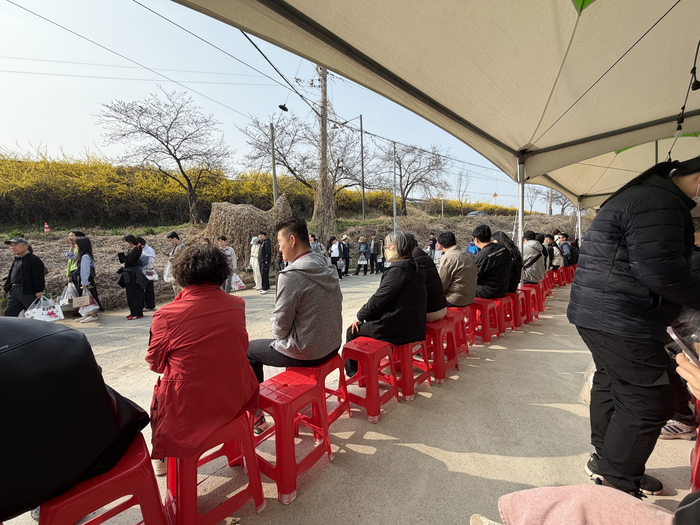
Shade canopies and chairs at major boarding points / Photo: Moon Seoyeon, Travel+ reporter
To ease parking this year, Nonsan added about 2,000 parking spaces. The city assigned street addresses to lots and published real-time parking status on its website. It also built a system to direct drivers to alternative lots when a lot is full.
The shuttle fleet was also expanded from 129 to 164 vehicles, with operating hours extended from 9:30 a.m. to 9:30 p.m. Buses ran every 15–20 minutes. The city added shade canopies and seating at main boarding points and introduced a real-time population-flow service.
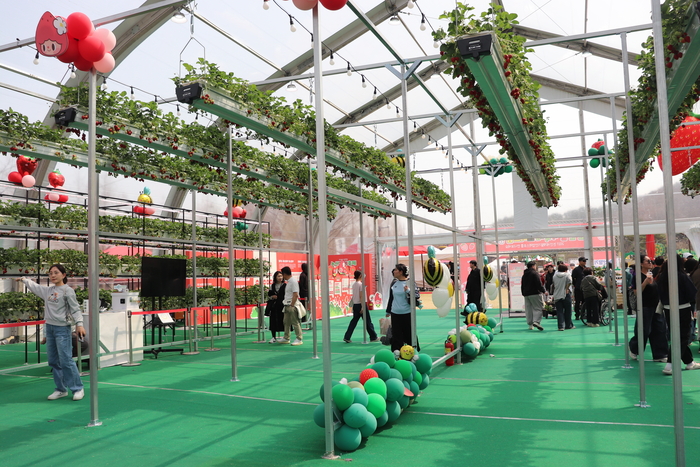
Smart-farm exhibition at the Nonsan Strawberry Festival / Photo: Moon Seoyeon, Travel+ reporter
With the 2027 Nonsan World Strawberry Industry Expo on the horizon and even larger crowds expected, parking remains a key challenge. Nonsan plans to use this year’s results to prepare for the expo. The city projects about 1.5 million visitors, an economic impact of 500 billion KRW (roughly $375 million), and the creation of around 2,700 jobs from the expo.
Moon Seoyeon, Travel+ reporter