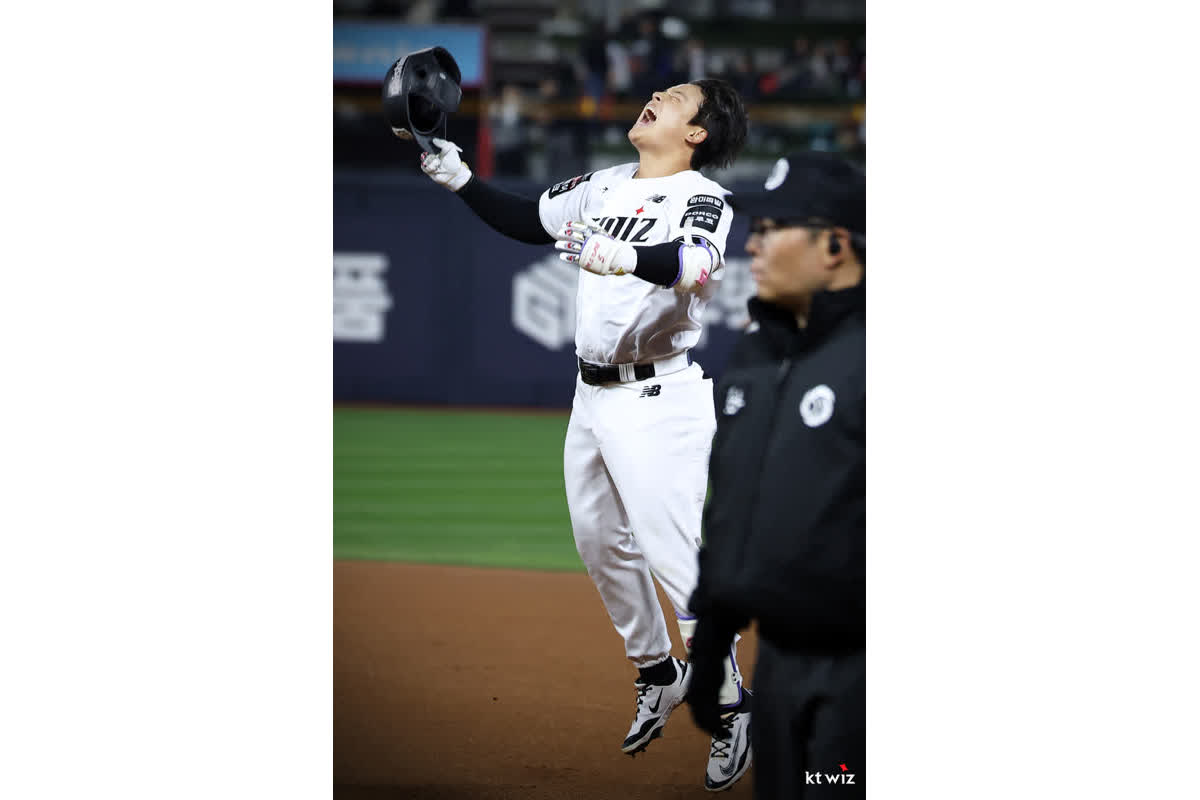
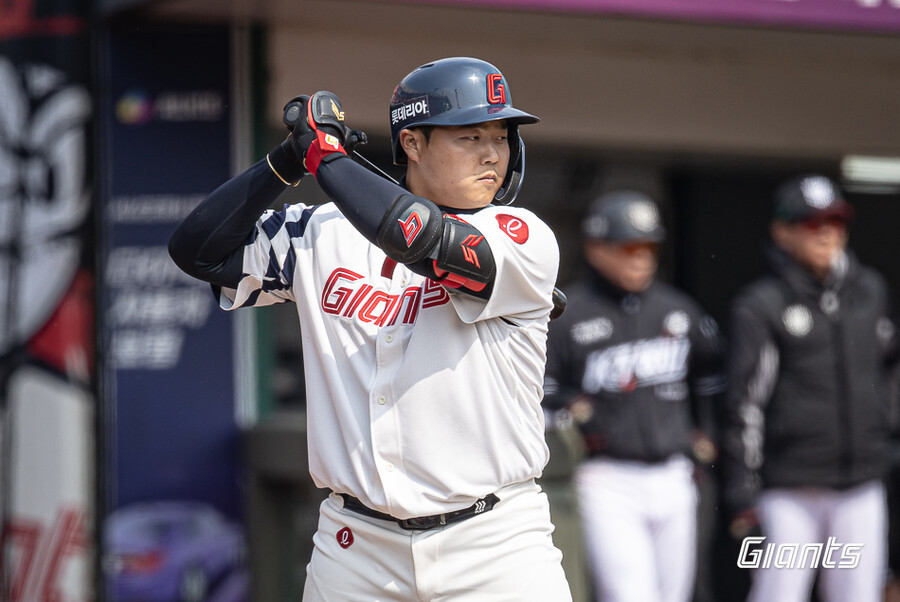
 ▲ Lotte’s Han Dong-hee entered the season with high expectations but hasn’t shown his power yet ⓒ Lotte Giants
[SPOTV News = Reporter Kim Tae-woo] The Armed Forces Athletic Corps (Sangmu) is essentially the only route for KBO players to complete mandatory military service while staying active in professional baseball. Every year, dozens of players battle for roster spots. Because players can keep competing and spend more time training, many arrive back noticeably improved.
Han Dong-hee (27, Lotte), once tagged as the “next Lee Dae-ho,” and Lee Jae-won (27, LG), nicknamed “Jamsil’s Big Boy,” looked like two of Sangmu’s biggest success stories. Both were being groomed as power threats by their clubs and joined Sangmu in mid-2024 via different paths. Coincidentally, each thrived there and raised expectations for their post-service returns — the box scores made that easy to understand.
They put together one of the most dominant duos in KBO Futures League history. Sangmu has produced many strong players, but few tandems matched their production — especially last season. In 100 Futures games in 2025, Han hit .400 with 27 homers, 115 RBIs and a 1.155 OPS. Lee, in 78 games, hit .329 with 26 homers, 91 RBIs and a 1.100 OPS, and together they carried Sangmu’s lineup.
Both also had significant first-team experience before Sangmu. They weren’t unknown prospects — they went there to address gaps in their major-league games. Clubs expected short adjustment periods back to the first squad, and both organizations were positioned to give them opportunities. While nobody assumed their Futures numbers would translate exactly, both were considered solid building blocks in Lotte’s and LG’s season previews.
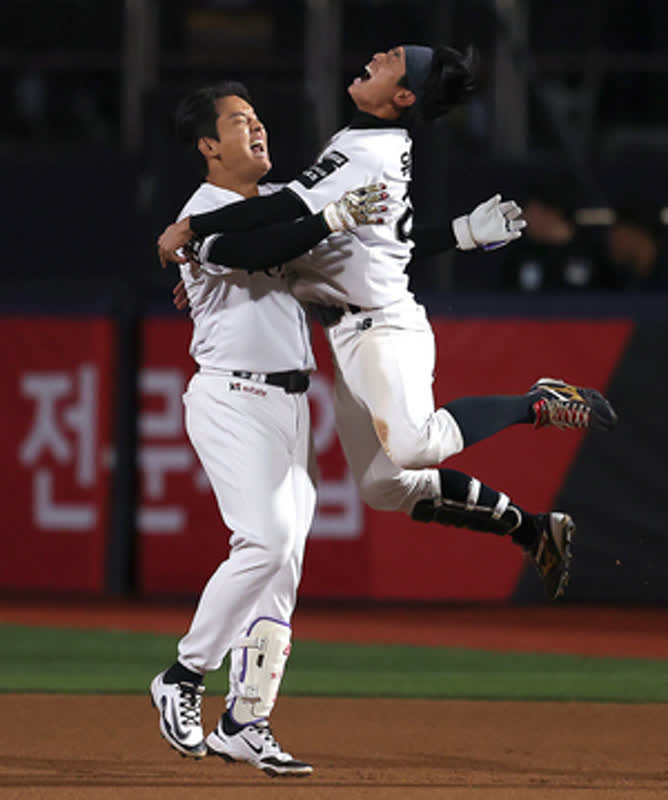
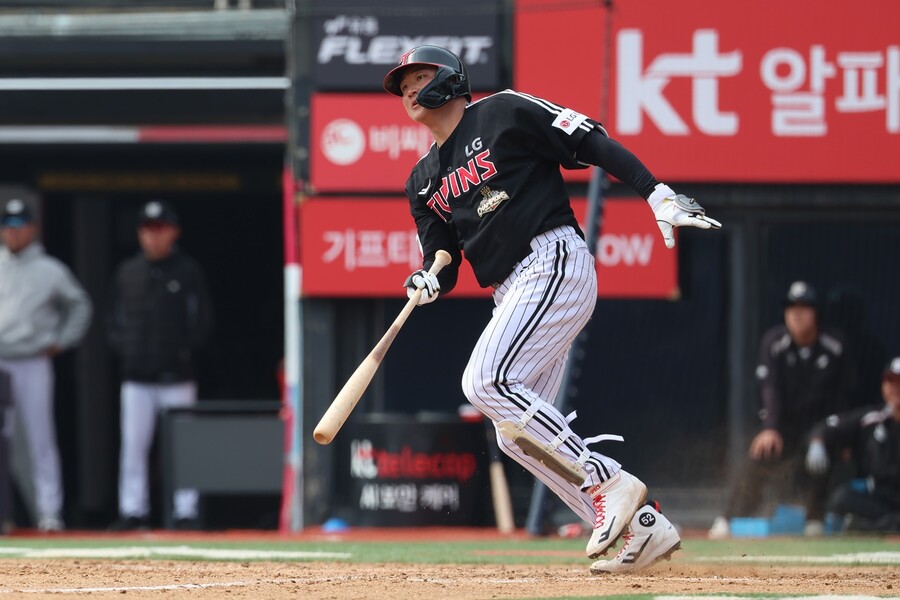 ▲ After a severe slump early in the season, Lee Jae-won was optioned to the second team on April 20 ⓒ LG Twins
But when the season opened, the gap between expectation and reality became apparent. Lee failed to crack LG’s established outfield mix and was sent down to the second team on April 20. With limited playing time available in the first squad, the club decided it was better for him to maintain his timing and rhythm in the minors. LG manager Yeom Kyung-yeop insisted the organization still has a plan for Lee, but said letting him sit on the bench in the first team wouldn’t be productive right now.
To be fair, not all of LG’s outfielders got off to hot starts, and opportunities were there. But Lee didn’t seize them. In 12 games and 19 plate appearances, he went 1-for-16 (.063); his lone hit was an extra-base knock. Both the results and the quality of his swings fell short of what the club expected. And because LG is chasing a championship, it’s tough to hand extended first-team reps to a young player after that kind of stretch.
Han’s case is marginally better but still falls short of the club’s hopes. Through April 19, he’d appeared in 14 games, hitting .268 with no homers, four RBIs and a .626 OPS. He’s still in a first-team readjustment phase, but he has struggled to lift the ball. His ground-ball rate is a staggering 61.7 percent — not the profile of a power hitter. A player who needs to get the ball in the air is producing grounders on roughly six of every 10 batted balls, which suppresses his offensive value. His average launch angle on TrackMan sits at -1.0 degrees, a troubling sign.
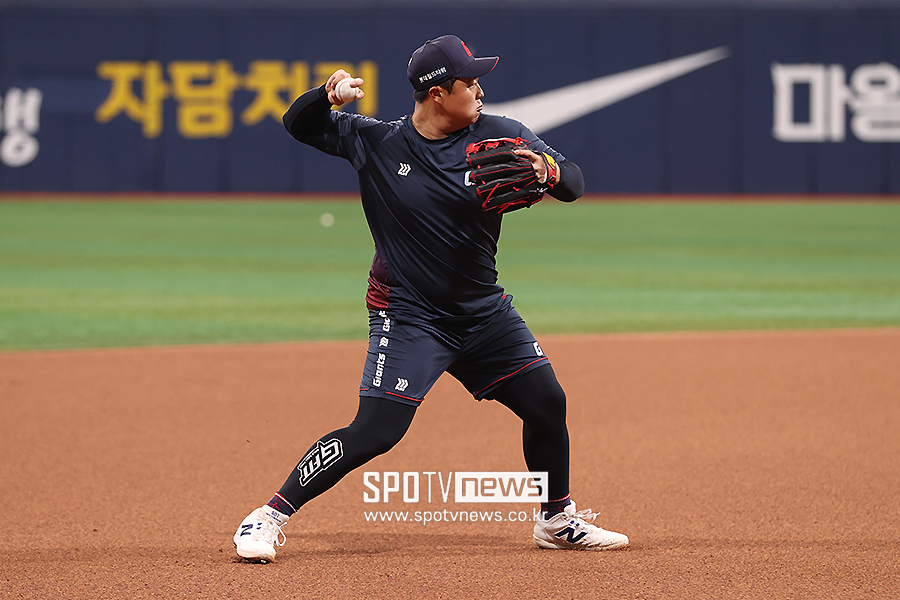 ▲ Han’s exit velocities are solid, but he can’t seem to get the ball in the air, and that’s a growing concern ⓒ Kwak Hye-mi
Both players post healthy exit velocities and show legitimate raw power. But inconsistent contact quality and poor launch angles have emerged as clear issues.
A Futures League manager pointed out the stark difference in levels between the two leagues. “First-team lineups can include foreign pitchers touching the mid-150 km/h range (mid-90s mph) and domestic arms that top 150 km/h (about 93+ mph). In the Futures League, velocity drops significantly — on average 7–8 km/h (roughly 4–5 mph) lower,” he said. “Pitchers who throw hard in the first team often struggle with command, so hitters can draw walks, and defensive lapses can turn singles into doubles. You have to factor in that on-base and slugging numbers can be somewhat inflated by that environment.”
Still, both players’ Futures numbers were exceptional, and first-team coaches acknowledge their raw strength and hitting tools. If their swings looked incompatible with first-team pitching, their Futures stats would carry less weight — but that’s not the case. What they need now is a trigger, a mechanical tweak or a role that unlocks what scouts and coaches already see. Time isn’t endless; they’re no longer teenagers whose mistakes can be written off as growing pains.
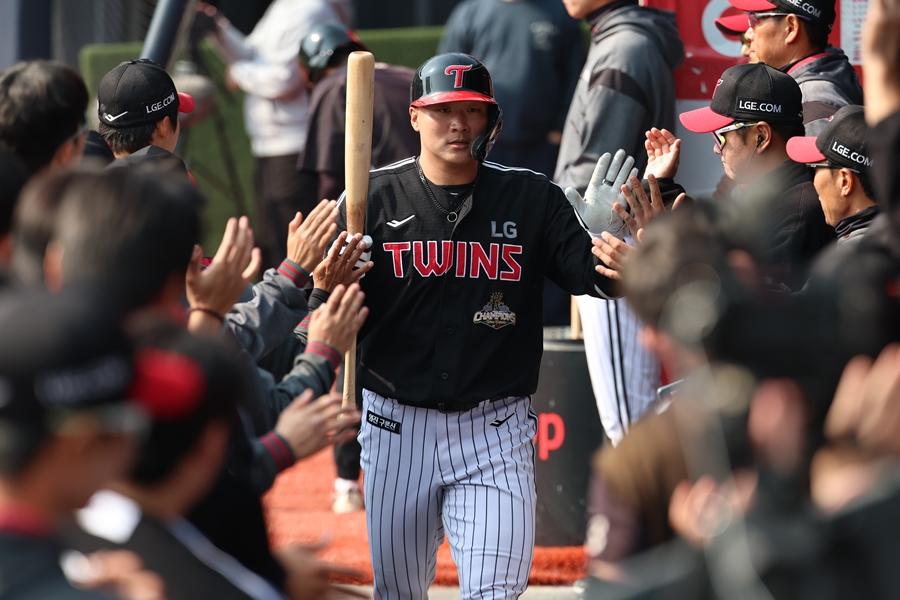 ▲ Lee Jae-won returns to the second team to regroup ⓒ LG Twins