
There are many images that symbolize the Britpop era: the chart wars between Oasis and Blur, Liam Gallagher’s blunt insults, Jarvis Cocker’s curled cynicism, Brett Anderson’s decadent poses. Yet the moment that best explains that time may be a surprisingly quiet one.
It was a day in 1995. Oasis were at Rockfield Studios in Wales working on (What's the Story) Morning Glory?. Britain was on the verge of an Oasis frenzy, and Noel Gallagher was behaving like the most arrogant songwriter alive. He would repeatedly insist his band was the best since the Beatles and enjoyed taunting rivals. He distilled street confidence and working-class swagger into anthemic music. Still, he showed an unusually different attitude toward one figure: Richard Ashcroft, the frontman of The Verve.
Noel played the newly finished \"Cast No Shadow\" for Ashcroft. The song had been written with him in mind. Noel later said Ashcroft looked like a man who carried the weight of the world. His fascination wasn’t only with Ashcroft’s mournful aura; it was rooted in a deep respect for a singular songwriting gift no contemporary could replicate. If Noel composed bright, crystalline melodies celebrating the age, Ashcroft specialized in vast, strange strains that plumbed the soul from inside a psychedelic haze. Noel—who truly believed his band rivaled the Beatles—recognized a talent in Ashcroft that existed on a different plane and, for once, willingly let his guard down. That admission appears bluntly on the (What's the Story) Morning Glory? sleeve note: \"the genius of Richard Ashcroft.\" It’s almost unprecedented for one band to credit another band’s singer like that on their own album sleeve. For the usually brazen Noel Gallagher, it was a respectful, transparent tribute to a fellow genius.

The title \"Cast No Shadow\" seemed to suggest Ashcroft’s soul was so transparent that light passed right through it. Ashcroft was nearly in tears when he heard the song; Noel blurted, \"Hold yourself together!\"—a flustered response to another person’s rush of emotion. It’s one of those Britpop anecdotes that lingers, because that instant exposes a central contradiction of the era.
Britpop was, at its core, a culture of cool. Attitude came before feeling. Everyone wanted to be sharp, and emotions were hidden behind irony. Wounds got wrapped in jokes; sincerity hid inside style. Blur consumed urban cynicism with polish; Pulp turned misery into humor. Even Oasis sheltered raw feeling beneath bravado and swagger. Ashcroft was different—openly emotional, excessively romantic, and deeply absorbed in his own tragedy. While Britpop sang about streets and real-life scenes, Ashcroft sang the emptiness of being. The Verve existed within Britpop yet felt like its outsider. Noel saw that.
\"Cast No Shadow\" is therefore not a simple tribute. In the heart of a scene armored in bravado, it’s a confession from a proud, swaggering man to the most emotional person among them. The lyrics—\"He was a man with a lot of pride / He had a lot to say\"—describe Ashcroft directly. \"Pride\" here is more than ego: it’s an unbending refusal to compromise the inner self, a weight that can crush the person who carries it. Noel put that complexity into the song.
Although The Verve are often lumped into Britpop, their impression feels timeless. If Oasis were the era’s energy, The Verve were its shadow. If Oasis’s music is the shout of youth together, The Verve’s is the dawn left to itself. Early The Verve extended psychedelia and shoegaze more than it followed Britpop conventions. Guitars spread like mist, and the music prioritized a feeling of suspension over gritty realism. Listening to their songs often felt less like hearing a band and more like passing through a vast emotional atmosphere. That culminated in 1997’s Urban Hymns.
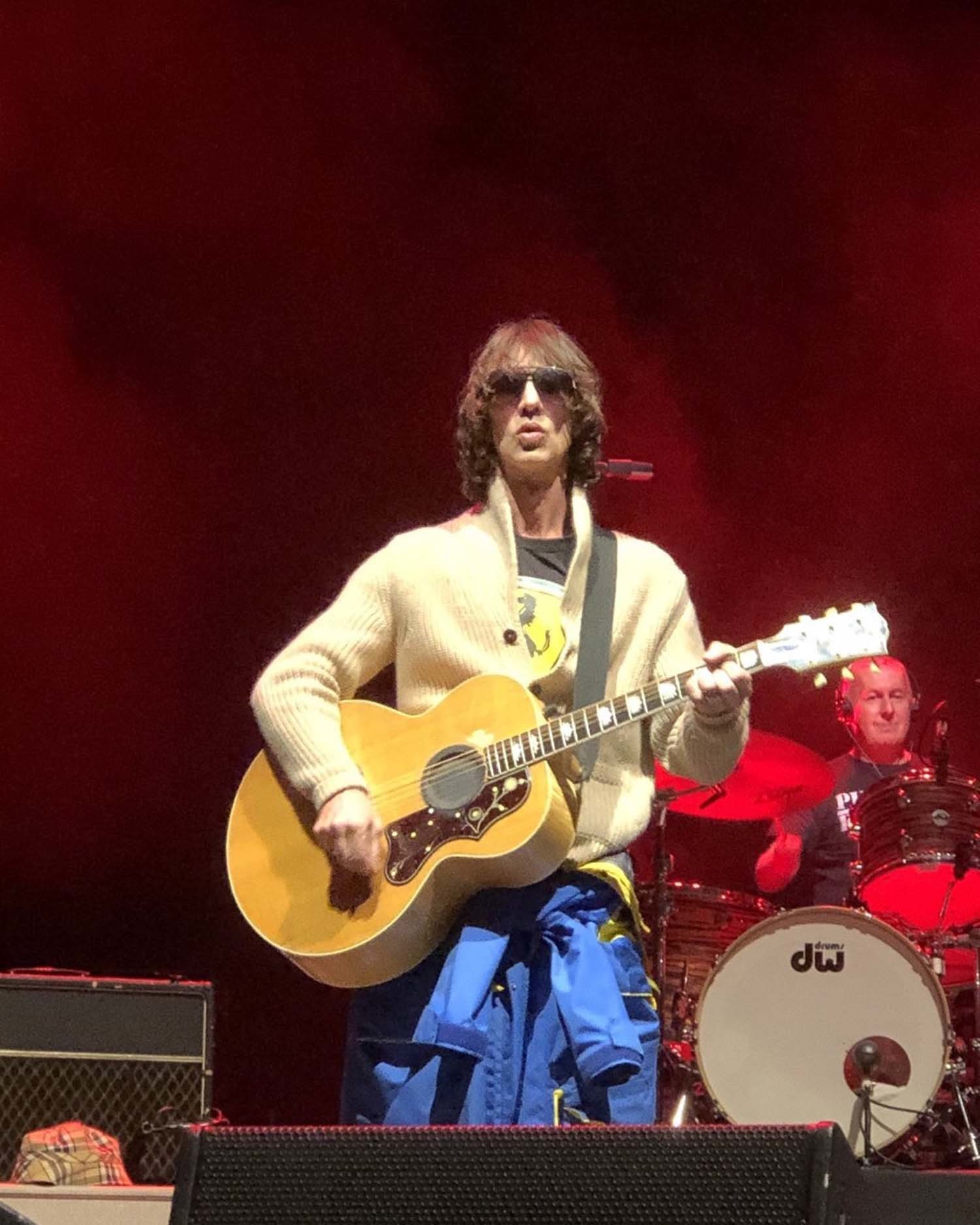
1997 was the year British popular music pivoted. Just as Britpop’s outward energy was fading, Radiohead released OK Computer—an album that shifted the focus from streets and pubs to individual anxiety and alienation. That cool, mechanical probing of the inner life shocked rock. Urban Hymns arrived at that same crossroads: Radiohead anatomized alienation with cold precision; Ashcroft absorbed similar feelings and translated them into heated, emotional language. One dismantled the human; the other embraced it and broke apart.
In retrospect, Urban Hymns reads like an epilogue to Britpop. It bundles \"Bitter Sweet Symphony,\" \"The Drugs Don't Work,\" \"Sonnet,\" and \"Lucky Man\" into a single, memorable record. \"Bitter Sweet Symphony\" in particular has become a cultural emblem. The moment the string loop enters, listeners are instantly transported to the late 1990s—the era of ever-expanding cities, consumer ecstasy, and a growing spiritual emptiness.
\"Cause it's a bittersweet symphony, that's life.\" The line resonates because it states the paradox plainly: life is beautiful and unbearably bitter at once. We move forward, yet we never quite reach ourselves. Ashcroft sealed that hazy, hard-to-articulate feeling of the time in a single sentence.
Most important, the song doesn’t sound like typical Britpop. British rock then tended to be grounded—football, pubs, working-class identity, street culture. \"Bitter Sweet Symphony\" floats above that reality. Walking through central London while hearing it can feel like traversing the city and drifting through outer space at once. That’s why the song became more than a hit; it became the era’s anthem.
The track also carries one of Britpop’s most notorious copyright battles. The Verve sampled an orchestral version of the Rolling Stones’ \"The Last Time,\" and a dispute followed over how the sample was cleared. Allen Klein’s camp, which controlled the Stones’ rights then, prevailed; The Verve lost most of the song’s royalties, and Mick Jagger and Keith Richards were credited as songwriters. A song that lamented life’s bitterness delivered its creator one of the bitterest legal outcomes. Ashcroft later sarcastically called it the best-selling Rolling Stones song. The dispute finally ended in 2019 when the Stones’ camp returned the rights.
The music video reinforced the image. Ashcroft walks straight down a London street, colliding with passersby without yielding. He shoulder-barges pedestrians and keeps going as if about to collide with cars. British fans joked that it was rock’s greatest shoulder-check video. It doesn’t feel staged because Ashcroft was someone who perpetually clashed with the world and kept pushing forward.
He was one of the era’s most self-assured frontmen. In interviews he often displayed near-arrogant confidence, speaking of his music and himself in almost mythic terms. That strong sense of self created ongoing tension within the band. Even at their peak, The Verve often felt on the brink of collapse, and internal conflicts repeated. While Britpop indulged in cynicism, Ashcroft was dangerously earnest—overly romantic and intensely absorbed in his personal tragedy.
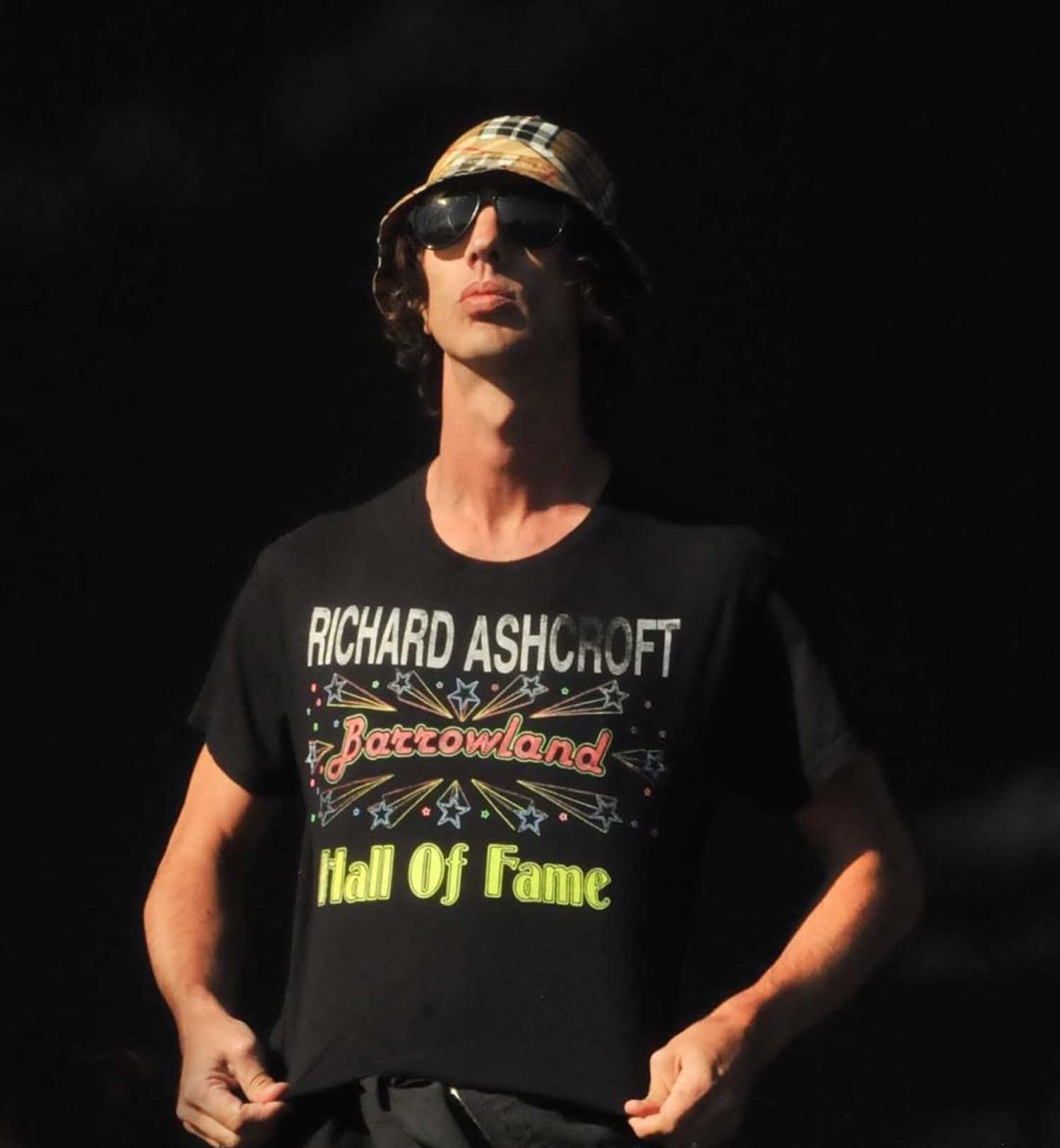
His romantic life drew its own notoriety. The episode involving Jason Pierce of Spiritualized remains one of Britpop’s most infamous relationship sagas. Ashcroft’s future wife, Kate Radley, had been a member of Spiritualized and Pierce’s partner at the time; she later became involved with Ashcroft, leaving Pierce deeply wounded. Spiritualized’s masterpiece Ladies and Gentlemen We Are Floating in Space is often read through that heartbreak: an album that pushed themes of love’s collapse and self-destruction to extremes. Pierce unraveled while Ashcroft rose to Britpop’s summit.
The irony lingered over the years. In 2021 Ashcroft released Acoustic Hymns Vol. 1, an acoustic reworking of his signature songs, and Radley appears on the album cover. The woman at the center of a much-retold indie-rock romance decades earlier reemerged as a defining image of his music. Ashcroft’s work has always carried this irony—romance and ruin, love and loss, salvation and self-destruction coexisting. That outlook led him to release his first solo single, \"A Song for the Lovers.\"
By 2000, Britpop had effectively run its course. Oasis’s cultural supremacy began to wobble, and Blur moved in a new direction. The Verve, having released the near-perfect Urban Hymns, collapsed under its own weight. From that wreckage, Ashcroft embarked on a solo career.
The single opens with surging momentum. Drums push forward relentlessly and strings rise toward the sky. At first it feels almost triumphant. Yet Ashcroft’s voice drifts emptily through that soundscape.
\"I spend the night, yeah, looking for my insides in a hotel room.\" From the opening line, something is already off. It’s a love song, but the narrator has lost his inner life. He runs toward someone while drifting farther from himself. That contradiction is central to Ashcroft’s music.
He had been writing those kinds of songs since The Verve. If \"Bitter Sweet Symphony\" is the walk of a person who keeps moving despite life’s hollowness, \"A Song for the Lovers\" is the ode of someone who, after all that time, still tries to love. The track carries a distinct sense of the era.
The year 2000 matters. The youthful force and romantic optimism that once shook Britain were fading; the 1990s’ particular glow was dimming. \"A Song for the Lovers\" arrived like the scene after a party: an empty stage, streets quiet after a night of noise. Yet someone remains, unwilling to surrender to despair, getting back to their feet.
Ashcroft didn’t defang that feeling with cynicism. While many rock acts met emotion with irony and distance, he confronted his feelings head-on—sometimes excessively, sometimes embarrassingly earnest. That’s what Noel Gallagher recognized early on: amid an era saturated with swagger and irony, Ashcroft stood out for his sincerity. That sincerity is why his music endures.