After a storm, what often remains is a deeper kind of music.
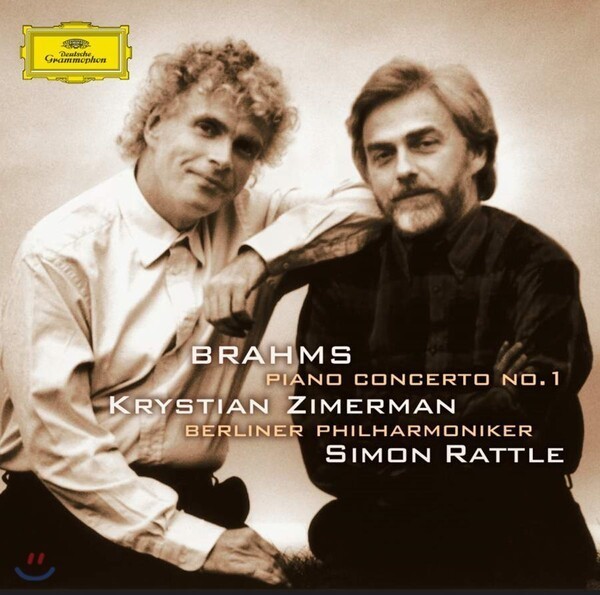
Johannes Brahms's Piano Concerto No. 1 in D minor, Op.15 epitomizes that idea. More than a concerto, it reads like an internal document — a young composer answering rupture, loss, and emotional upheaval.
In 1854 Brahms learned that his mentor and spiritual anchor, Robert Schumann, had tried to drown himself in the Rhine. Schumann was rescued but soon confined to an asylum. Brahms, just twenty-one, was deeply shaken.
He moved to Düsseldorf to support Clara Schumann and threw himself into composing. What began as a symphony gradually yielded under emotional pressure and became a piano concerto.
The result blurred genre lines: symphonic architecture fused with the urgency of a concerto, producing something unprecedented for its day.
“Is it a concerto, or is it a symphony?”
At its 1859 Leipzig premiere the question hardly mattered. Audiences reacted coldly; many found the work forbidding, and critics called it ponderous.
Over time views reversed. Today it is regarded as the origin of the “symphonic concerto,” a new direction within Romanticism.
Movement I: Between Fury and Prayer
The opening movement bursts in with a violent orchestral surge — dense, turbulent, almost stormlike. The piano does not arrive in triumph; it struggles against the orchestra and, at times, is submerged by it.
That approach stands in direct opposition to the era's concerto tradition of virtuosic display.
The music bears the imprint of Schumann's fall and Brahms's inner conflict: anger, guilt, and questions hurled at an inscrutable fate.
One critic called it “a young composer questioning God.”
Movement II: A Quiet Prayer
The second movement inhabits a different world: slow, restrained, and reverent, it unfolds like a prayer. Brahms called it a “gentle portrait,” and many listeners take it as a tribute to Clara Schumann.
The piano speaks cautiously, almost in conversation with the orchestra. After the storm comes stillness — and within that stillness, consolation.
Movement III: A Human Being Moving Forward
The finale begins with renewed rhythmic drive. It offers no triumphant victory but a human response: a figure pressing forward despite wounds.
Brahms pairs structural rigor with folk-like rhythmic vitality, and the music gradually moves toward light.
This concerto does more than display craft; it records Brahms as a person. His mentor's collapse, the tension between love and duty, and his search for artistic identity converge in the score.
That convergence explains why the work does not dazzle. It carries weight. It doesn't yield easily to the ear, but when it connects, it lingers.
Today it is regarded as one of the most “human” works in the piano concerto repertoire. Brahms chose reflection over swagger and inquiry over display — and in doing so reached a high point of 19th-century Romanticism.
Brahms ultimately demonstrated a simple truth: true music springs from time endured, not technique alone.
Reported by News Culture M.J._mj94070777@nc.press