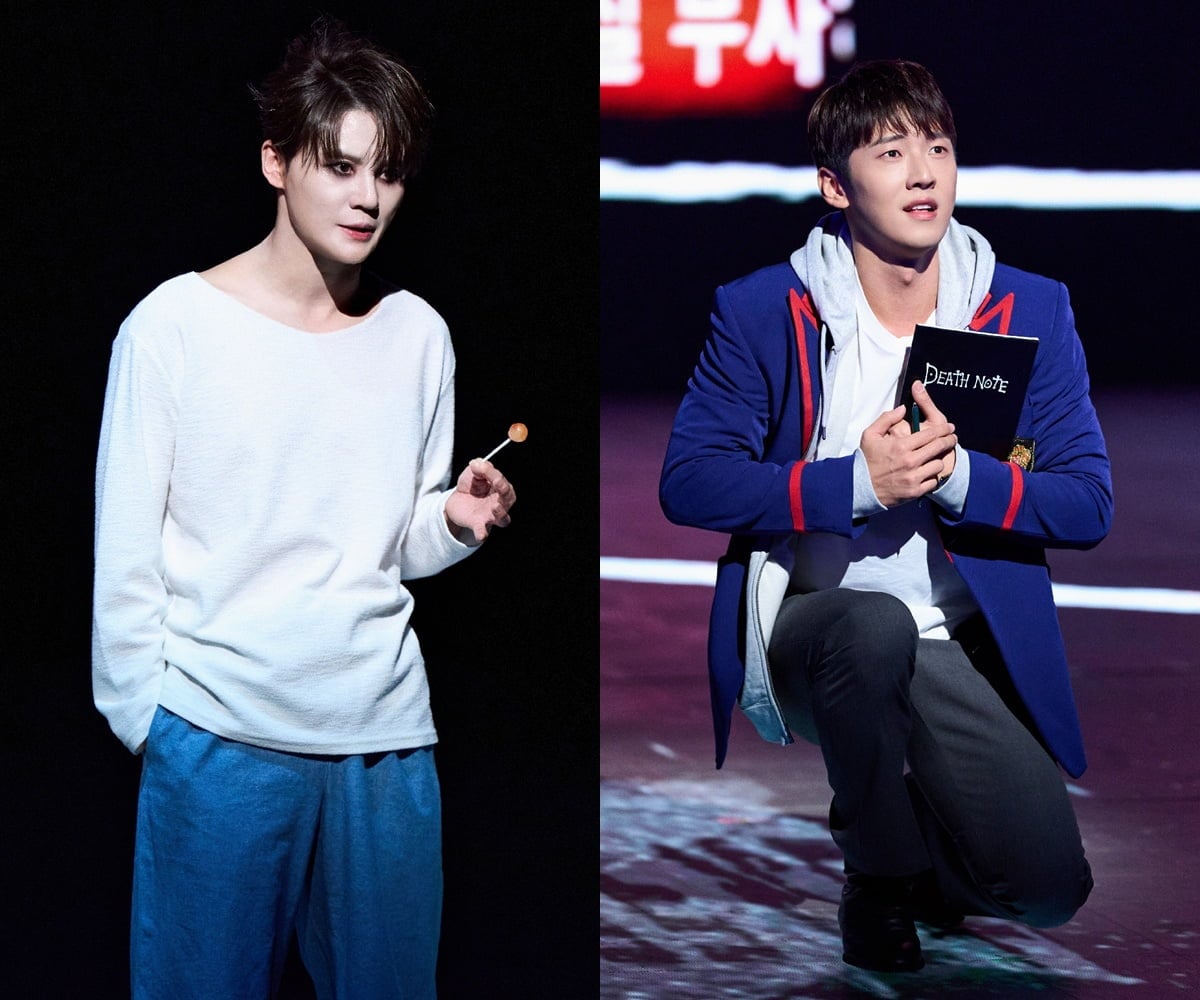
Opening in October, the musical Death Note is adapted from the 2015 anime of the same name produced by Horipro. The story tracks Light Yagami, who discovers a Death Note and sets out to punish society’s evils in the name of justice, and the brilliant detective L, who pursues him in a tense battle of wits.
Light is a genius high school student driven by an intense sense of justice and disgust with societal corruption. He stumbles upon a notebook that kills anyone whose name is written in it. Light begins writing the names of criminals and vows to become the god of a new world. As deaths multiply, international investigators turn the case over to the enigmatic genius detective L. Suspecting each other’s identities, Light and L engage in fierce psychological and intellectual warfare. The plot gets more complicated when idol Amane Misa—who also owns a Death Note—enters the scene.
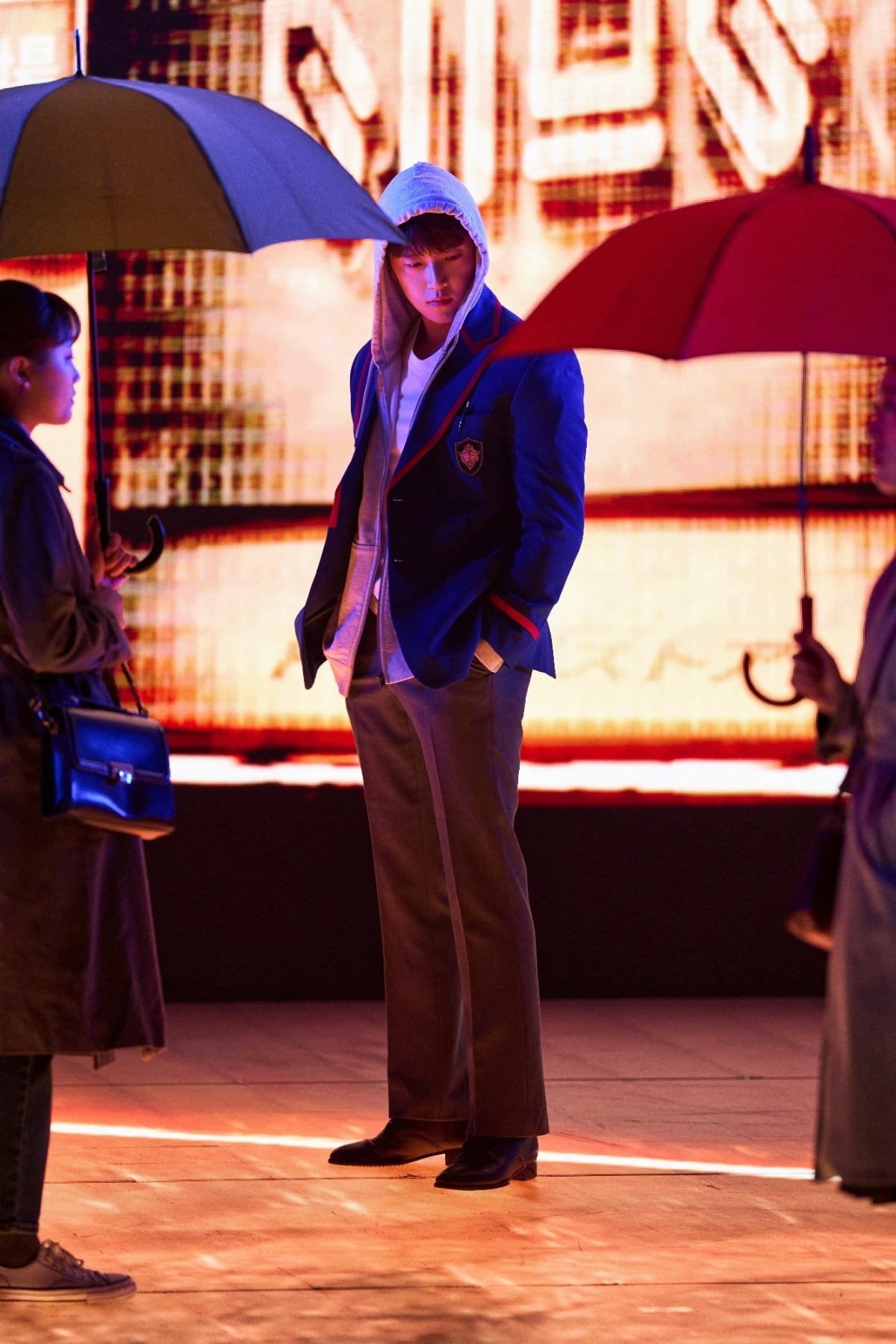
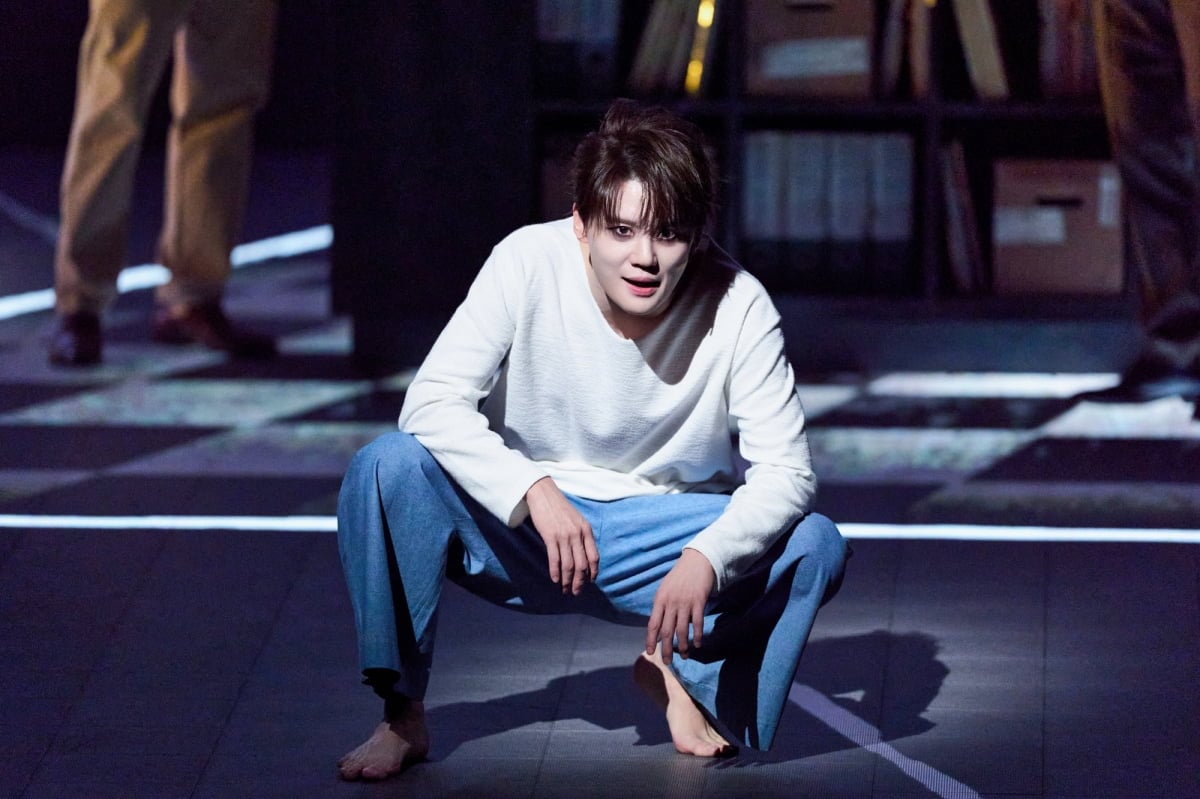
Props are rendered with meticulous care. Light’s bedroom and the investigative agency scenes favor dark backdrops, but details like Light’s desk, the sofa, and the agency’s bookshelves are specifically staged to increase immersion. Even the scratching pen-on-paper sound when Light writes a name is faithfully reproduced.
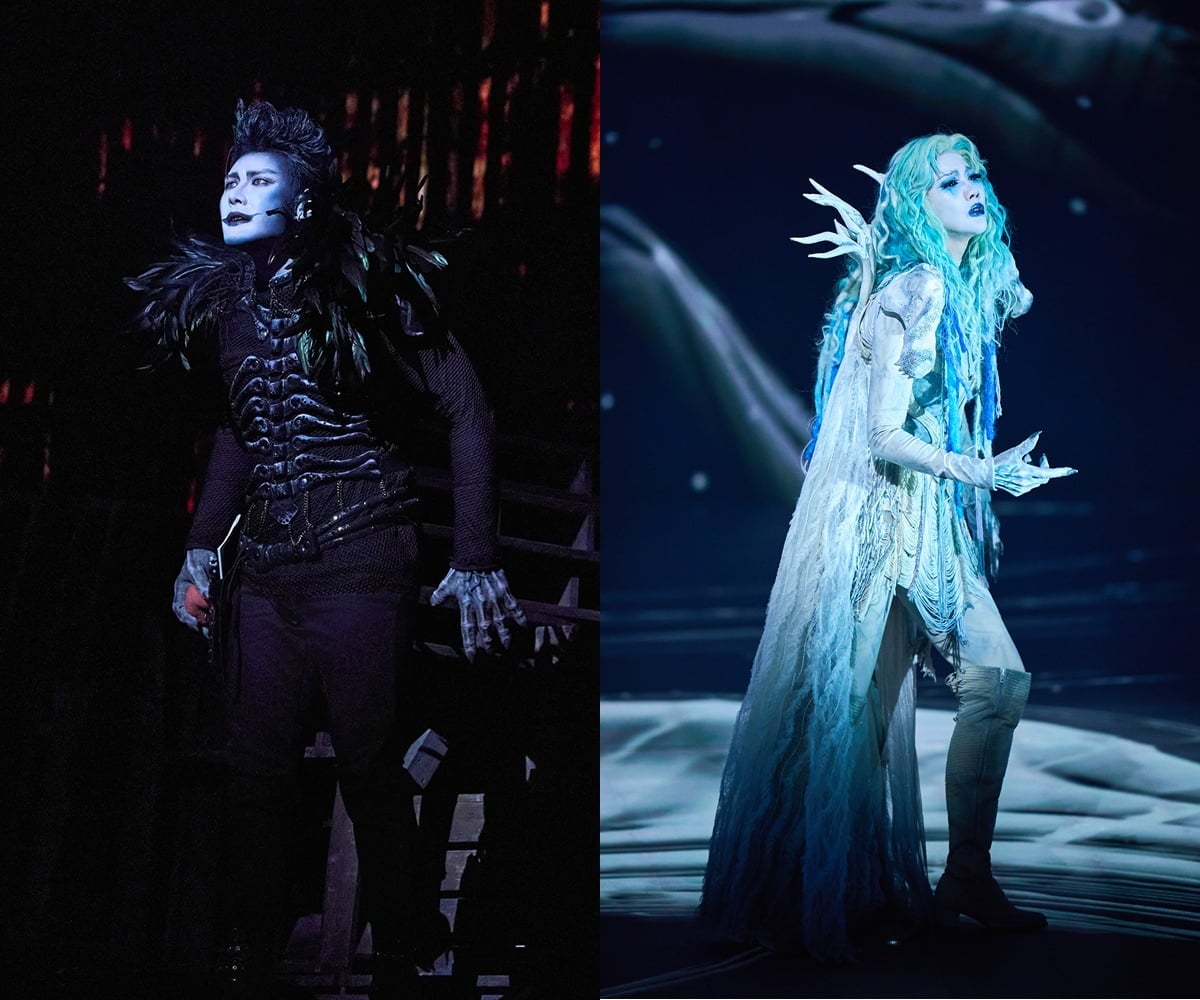
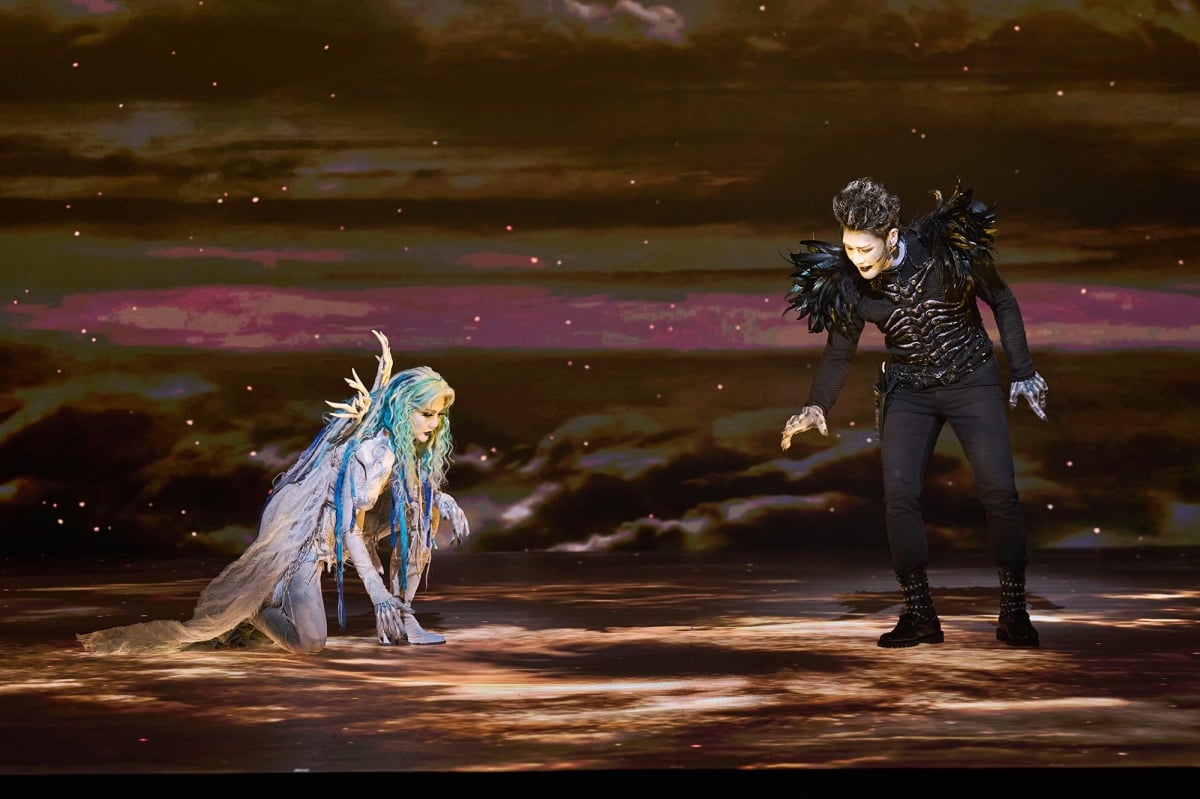
Alongside leads Light and L, the Shinigami Ryuk and Rem—who watch over Light and Misa—become scene-stealers. Ryuk, fittingly the source of mischief, wears a grotesque mask, an all-black outfit with black shoulder feathers, and speaks in a coarse voice. Given his look and the show’s dark theme, you might expect Ryuk to stay solemn for the full 145 minutes, but he ends up delivering the biggest comedic surprises and draws the loudest laughs. Rem also plays a memorable supporting role, repeatedly telling Misa “that’s not true” until she snaps back to reality.
The production is scheduled as a seven-month run, which led producers to adopt a quintuple-casting system. Because of the extended schedule, new actors join the company during the run. For Light, Jo Hyung-gyun, Kim Min-seok, and Lim Kyu-hyung performed in the first casting; Kyuhyun, Kim Min-seok, and Lim Kyu-hyung in the second; and Go Eun-seong joined in the third. That structure allows audiences to see different actors’ interpretations of the same roles over the long run.
The musical Death Note runs at the Sindorim D-Cube Link Art Center through May 10.
Jeong Dayeon, TenAsia reporter light@tenasia.co.kr