Until now, Korea’s import market has forced buyers to visit multiple dealerships to compare prices and check stock because each dealer set its own inventory and pricing. Delivery timing also varied by dealer inventory, so the same model could have very different wait times, prompting frequent consumer complaints.
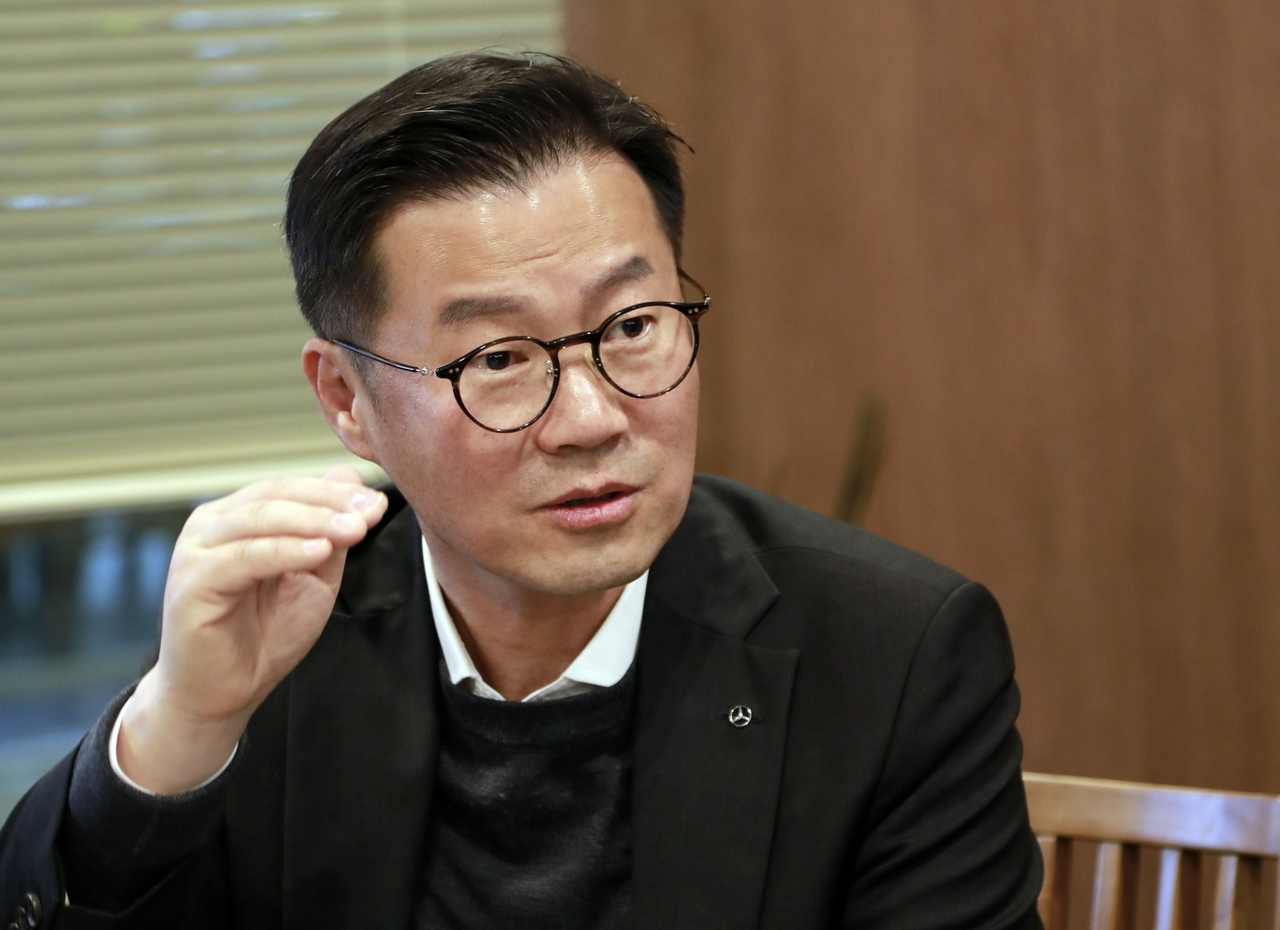
Mercedes‑Benz plans to consolidate that system at headquarters. At a press briefing on the 9th at Seoul Square in Jung‑gu, Lee Sang‑guk, vice president of Mercedes‑Benz Korea, said, “The current process can’t deliver customer satisfaction. We’re cutting unnecessary steps for price comparisons and inventory checks so customers can focus on the vehicle and the brand experience.”
“We’ll apply better terms after the contract, too” — introducing a “best price” policy
Mercedes‑Benz will move away from pricing tied to the delivery date and adopt a “best price” policy that allows customers to benefit from more favorable terms even after signing a contract.
Lee said, “If a promotion is available at the time of delivery, it will be applied. And if a promotion disappears, the terms at the time of contract signing will still be honored.”
“This ensures customers buy under the best available terms,” he said. “That’s why we call it ‘best price,’ not ‘one price.’ ”
The company will also eliminate dealer-level price variation. Park Ji‑seong, head of RoF at Mercedes‑Benz Korea, said, “Whether you’re in Gangnam or Busan, you’ll receive the same quote. There’s no need to shop around multiple showrooms.”
Promotion pricing will be updated at the start of each month. “Our baseline approach is monthly pricing updates, though policies could change with market conditions,” Lee said.

“Dealer profits won’t fall” — shifting from margins to commissions
Mercedes‑Benz drew a clear line around concerns that the change would diminish dealer earnings.
Lee said, “This isn’t intended to hurt dealers’ income or boost headquarters’ profits. Removing inventory burden creates a more stable revenue model. Where dealers once earned margins, they’ll now earn commissions — a structure that secures continuous income.”
He added that dealers who visited overseas markets with direct‑sales systems largely said they “wouldn’t want to go back.”
Mercedes‑Benz already uses this sales approach in global markets. The company operates direct‑sales models in 12 countries, including Sweden, India, Australia, the U.K., Türkiye and Germany; Korea will join that group with this rollout.
“90% of the conversation is price, not the car” — why they’re changing sales
Mercedes‑Benz identified price‑focused selling as a core problem in the current retail structure and said it needs to redefine the dealer’s role.
“Today, more than 90% of customer interactions center on price rather than explaining the vehicle. Dealers agreed this must change,” Lee said. “We’ll shift the focus from price haggling to product and brand experience.”
Under the new model, dealers will move away from holding inventory and negotiating price. Instead, they’ll act as customer experience managers handling consultation, test drives and vehicle delivery. Headquarters will set prices centrally, and dealers will earn commissions based on sales performance. Lee said this reduces inventory and operating costs while giving dealers a steadier revenue stream.
To support RoF, Mercedes‑Benz built an IT system that integrates online and offline sales channels. Customers can view real‑time inventory and see scheduled arrivals up to about 4 months out.
By managing inventory and delivery schedules centrally rather than by individual dealers, the company expects greater predictability for both customers and dealers.
“We’ll deliver the car when the customer wants it” — changing delivery rules
Delivery rules will shift from a first‑contracted, first‑delivered model to a customer‑timed approach. Instead of allocating cars strictly by contract order, Mercedes‑Benz will deliver vehicles to match the timing customers actually need them.
“We’ll ask when the customer wants the car and deliver to meet that timing,” Lee said. “It’s not about rushing delivery; it’s about meeting the customer’s schedule.”
Park added, “The key is moving away from a race to deliver quickly and toward on‑time delivery that aligns with the customer’s schedule. Getting the car to the customer on their chosen date is a core concept of the new sales model.”