[The Public = Reporter Kim Mi-hee] As the second round of U.S.-Iran ceasefire talks approaches, analysts say the Iran conflict has underscored the capabilities of South Korea’s defense industry.
On the 2nd (local time), The New York Times ran a piece titled “The Iran war has showcased the power of South Korea’s defense industry,” highlighting recent performance and competitive advantages among Korean defense firms.
South Korea’s indigenous air-defense system, Cheongung-II, had not been tested in combat before this conflict. In the United Arab Emirates, it intercepted 29 out of 30 Iranian missiles and drones that targeted the country, earning praise domestically and overseas.
The New York Times said Cheongung-II’s strong combat debut is the latest sign that South Korean defense firms are emerging as significant players in the global arms market.
The rise of K-defense accelerated after Russia’s 2022 invasion of Ukraine drove a surge in European demand for air-defense systems.
With major U.S. contractors such as Lockheed Martin and Raytheon operating near full capacity, international buyers looking for faster deliveries at lower cost have turned to South Korean suppliers.
The NYT noted that South Korean systems tend to be less expensive than U.S. equivalents and can be delivered more quickly.
Kelly Grieco, a senior researcher at the Stimson Center, told reporters a Cheongung-II interceptor costs roughly $1 million (approximately ₩1,333,333,333 KRW) — about one-quarter the price of a Patriot PAC-3 interceptor, which runs around $4 million (approximately ₩5,333,333,333 KRW).
As states rush to bolster defenses against missiles and the emerging drone threat, sales at LIG Defense & Aerospace — maker of Cheongung-II — have jumped several-fold in recent years. The company has signed major defense contracts with the UAE, Saudi Arabia and Iraq.
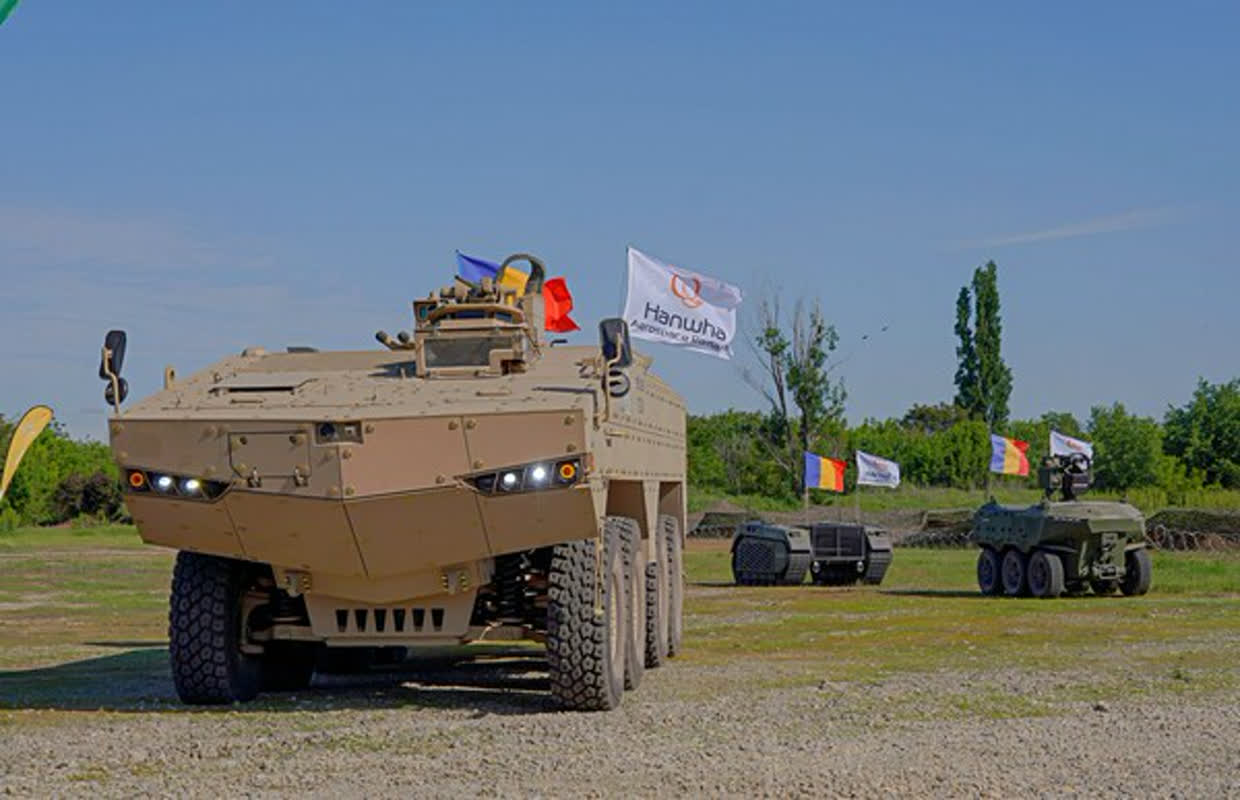
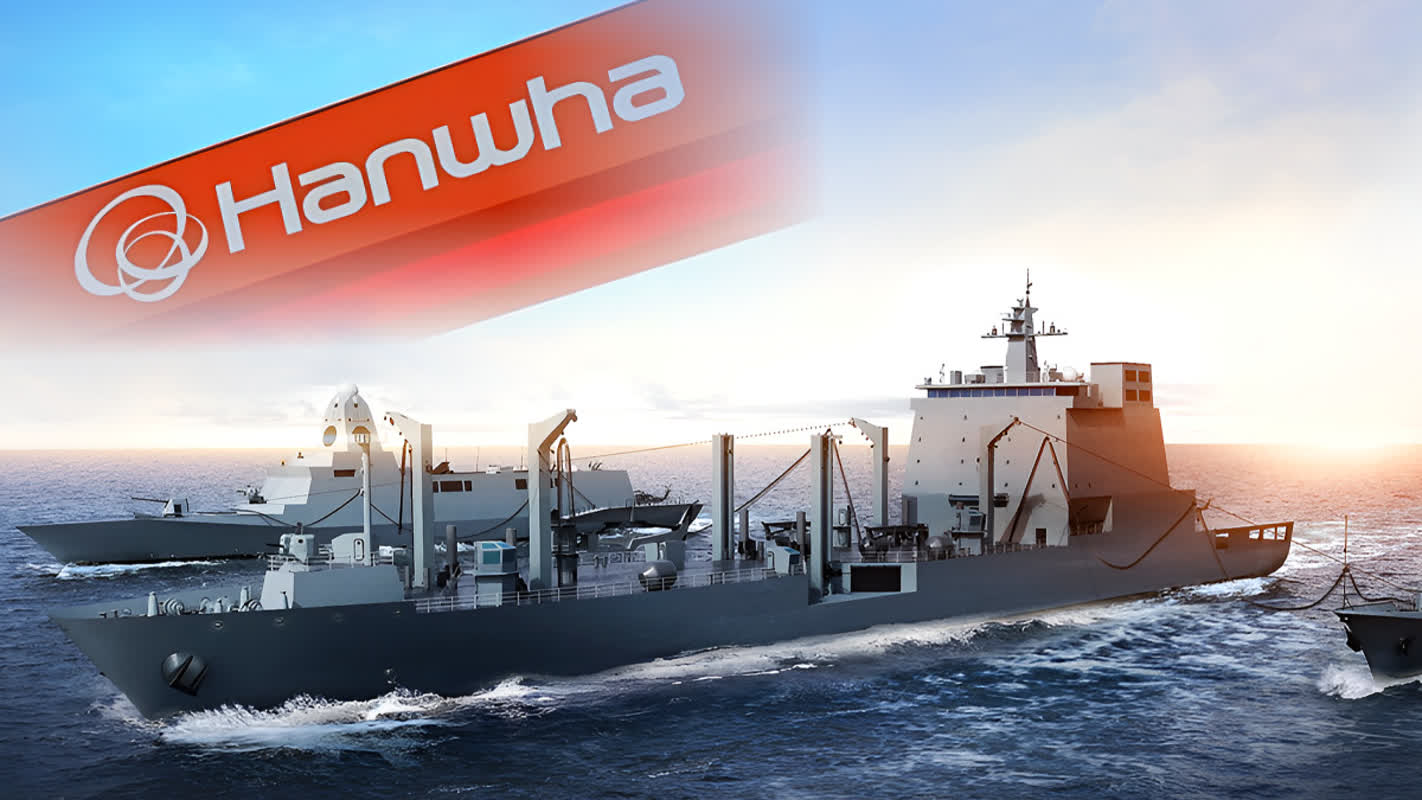
Hanwha Aerospace, which builds the Cheonmu multiple-rocket launcher and supplies components for Cheongung-II, agreed to support Spain’s self-propelled howitzer development and is building an armored-vehicle plant in Romania.
Investors have reacted strongly: in the first month after the Iran conflict began, LIG Defense & Aerospace’s stock rose nearly 45%, while Hanwha Aerospace’s climbed almost 12%.
As of today at 2:06 PM, LIG Defense & Aerospace’s share price stood at ₩906,000 (≈ $679.50 USD), and Hanwha Aerospace’s at ₩1,392,000 (≈ $1,044.00 USD).
LIG Defense & Aerospace has drawn particular attention after proving its system in combat — a performance now observed worldwide.
Major brokerages have raised price targets for these firms. According to a Seoul Economic Daily report on the 21st, Korea Investment & Securities and DB Financial Investment set a ₩1,200,000 (≈ $900.00 USD) target for LIG Defense & Aerospace. SK Securities set ₩1,150,000 (≈ $862.50 USD), KB Securities ₩1,100,000 (≈ $825.00 USD), and Kiwoom Securities ₩1,050,000 (≈ $787.50 USD).
Kiwoom projects annual sales this year of ₩5.0356 trillion (≈ $3.78 billion USD) and operating profit of ₩421.3 billion (≈ $315.98 million USD). Based on an order backlog of roughly ₩26.2 trillion (≈ $19.65 billion USD), Kiwoom expects export revenue tied to the UAE, Saudi Arabia and Iraq to be recognized mainly from 2026 to 2028, pushing exports’ share of total sales from about 20% in 2025 to roughly 32% in 2028.