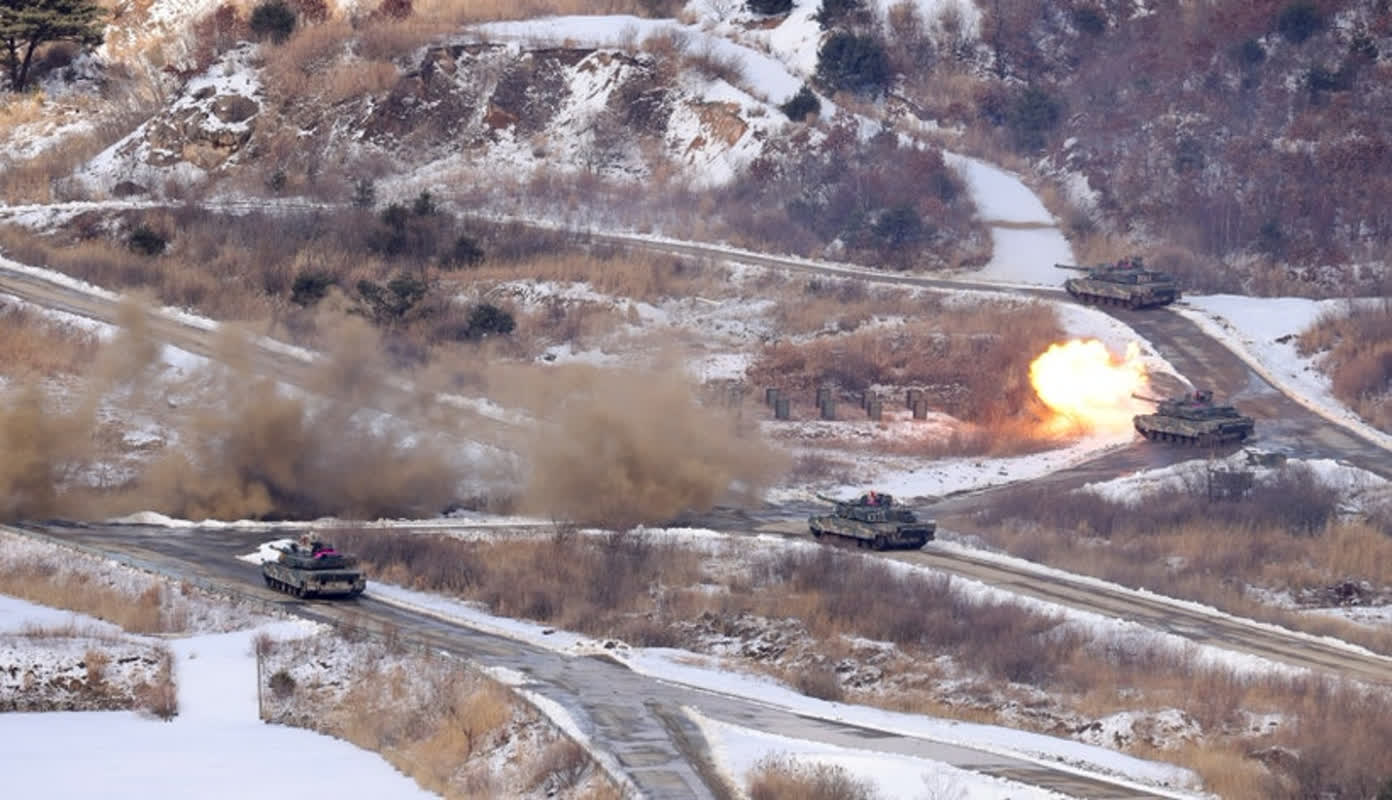
 The Army is reorganizing forces to accelerate the fielding of drones—now a central weapon on modern battlefields—tailored to the security environment of the Korean Peninsula.
 Rather than limiting unmanned aerial systems to surveillance and reconnaissance, the Army plans to introduce attack drones, including loitering munitions, and expand training so every Soldier can operate them as readily as a personal weapon.
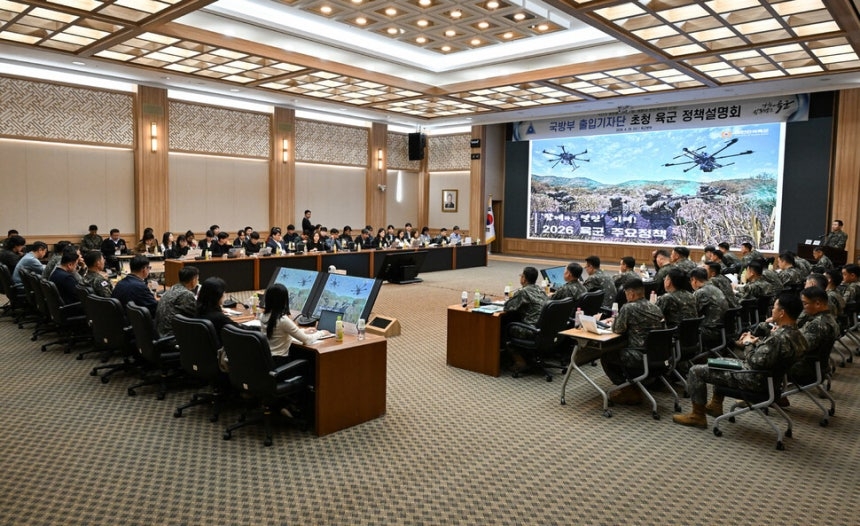
Army Chief of Staff Kim Gyu-ha told reporters at a policy briefing in Gyeryong on the 29th, “We intend to treat drones like personal firearms going forward,” adding, “We will enable soldiers to employ them as freely as their own weapons.”
Kim said drones will evolve beyond reconnaissance into strike and sustained-support roles. The service is working to field drones across echelons—from company to operational-command level—aligning capabilities with each formation’s strategic and tactical missions.
The Army disclosed it is pursuing battalion-level loitering munitions. It plans to equip frontline battalion combat units and prepare operations that employ attack drones.
He emphasized that drone employment in Russia, Ukraine and Iran differs markedly from the situation on the Korean Peninsula—particularly because of terrain—and said the Army must develop doctrine and force structures suited to Korea.
As part of a “train 500,000 drone warriors” initiative, the Army will acquire about 11,000 commercial training drones this year and aims to procure roughly 50,000 by 2029. The plan is to issue one training drone per squad.
On recent controversy over reducing forward GOP sentry forces, he said, “We cannot reduce personnel immediately.”
He added that the Army is piloting an AI-based scientific surveillance system in two divisions and that the program has significantly reduced gaps in surveillance operations. He said personnel reductions won’t happen quickly but should be feasible by around 2040.
The Defense Ministry recently announced plans to install AI-based scientific surveillance systems at forward GOP units and to reduce guard forces from the current 22,000 to about 6,000 by 2040.
Kim also raised manpower shortfalls, saying, “Frankly, the Army cannot solve this problem alone,” and stressed the importance of being transparent about the challenges and working with the public to find solutions.
- Iran plays a 'three-step card' despite the Hormuz blockade; Trump says 'no meeting without nuclear abandonment' [Global Morning Briefing]
- Families of the Dec. 29 tragedy: Boeing aircraft defects are the root cause...call for a full investigation [Incident Plus]
- 'OpenAI misses revenue targets'...warning over ability to cover investment costs
- Cut fossil-fuel–based plastics by 30% by 2030...“Expand use of recycled feedstocks” [Pick Economy]
- Search for Jensen Huang's eldest daughter sparks 7.7% stock surge; Nvidia-Physical AI partnership in focus [ZupZup Report]
- Trump rejects 'three-step peace plan'...Iran opens Hormuz toll account [Global Morning Briefing]
- EV charging fees: lower slow-charging rates, raise fast-charging fees...display 'signage' like gas stations [Pick Economy]
- UAE pivots closer to the U.S. after rifts with Saudi Arabia...China rallies the 'Global South' [Global Morning Briefing]
- Man who tied and mocked a migrant worker on a forklift faces a one-year prison request [Incident Plus]
- Musk's nine-hour testimony bombshell...“The tail wagged the dog,” fueling claims of OpenAI betrayal