|
Travel in Korea faces more digital gateways than in Japan High discomfort levels tied to lack of hospitality and taxi refusals To stay competitive, tourism must lower digital entry barriers |
Foreign arrivals to Korea are surging. The Korea Tourism Organization reports 2,045,992 visitors in March — a 26.7% jump from 1,614,596 the same month last year.
More visitors are great news, but what really counts is what those travelers actually experience. Friction during a trip shapes a country's reputation — and whether people will want to come back.
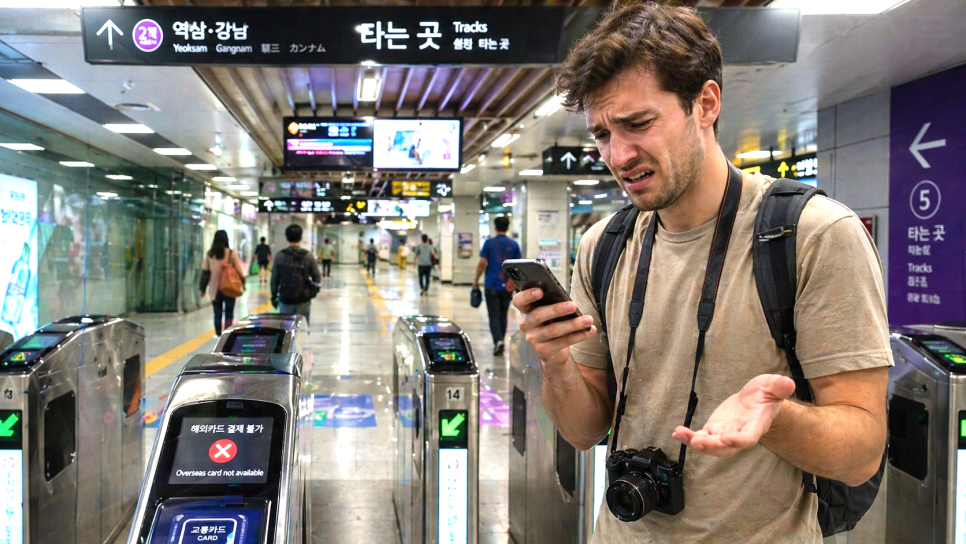
Foreign tourists struggling to pay with a transit card at a subway station / Photo: AI-generated image (ChatGPT)
Yanolja Research found that travelers report inconveniences in Korea more often and more intensely than in Japan. The culprits? Digital entry barriers and a lack of welcoming service. A typical complaint: "They make you sign up and verify your identity everywhere."
For its report "Diagnosing the Structure of Discomfort Experiences of Foreign Visitors to Korea," Yanolja Research analyzed Reddit posts about travel from the past three years.
Blocked at digital gateways… Differences between Korea and Japan
The share of posts mentioning discomfort was 11% for Korea and 7% for Japan — meaning travelers report problems in Korea more often.
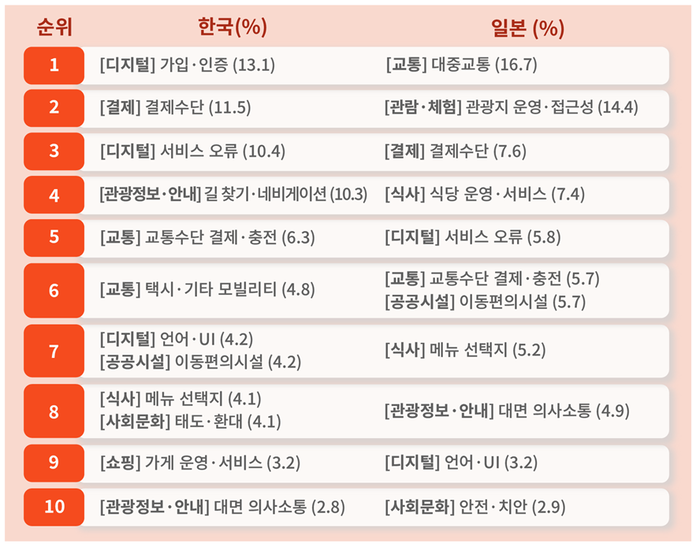
Top 10 categories of foreign tourists' reported discomforts / Photo = Yanolja Research
Where problems arise differs by country. In Korea, issues break down as: digital 27.8%, tourist information/guidance 16.4%, transportation 13.1%, and payments 12.0%. Many complaints happen before trips even start — sign-ups and identity verification (13.1%), payment methods (11.5%), and app errors (10.4%).
When travelers download apps for delivery or reservations, foreign cards are often blocked at checkout or the service requests a local verification number. Systems designed for local users end up acting as barriers for visitors.
Transportation shows similar growing pains. The ability to top up transit cards with foreign cards was only improved recently — as of March, iPhone users can add funds with overseas cards. Previously, top-ups were mostly limited to Android devices, and physical cards often couldn’t process foreign payments. Unmanned ticket machines that didn’t accept international cards left travelers unable to buy tickets on the spot.
By contrast, Japan’s issues tend to appear during on-site experiences: transportation 23.0%, attractions/experiences 15.9%, and dining 12.8%. In short, Korea’s strong offline infrastructure can be undermined by a rough digital entry process.
“In Japan, travelers tire during transfers and waiting,” said Yoon Hyo-won, a senior researcher at Yanolja Research. “In Korea, the big pain points are at reservation, map search and payment steps — the digital barriers. To foreigners, Korea can feel like a ‘digital fortress’ — smooth once you’re in, but hard to get past the gates.”
Intensity of discomfort is high… Lack of hospitality hits hardest
What matters more than how often problems happen is how severe they feel. Sentiment analysis shows Korea scores higher on negative emotion than Japan overall.
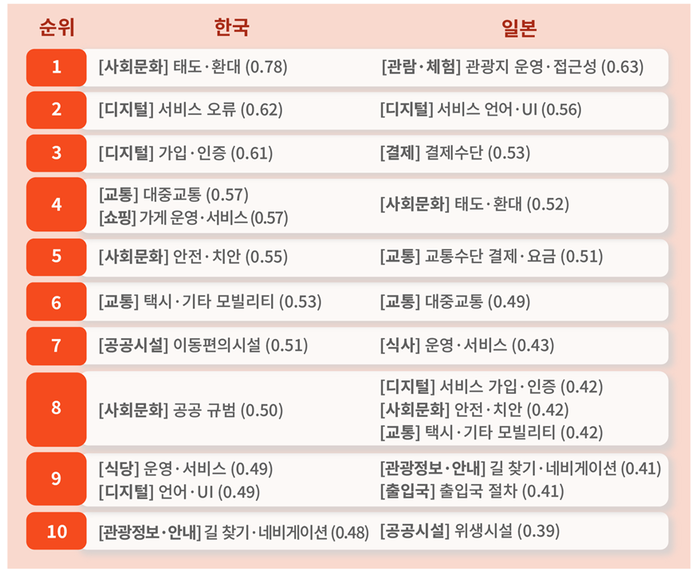
Ranking of negative sentiment intensity for specific inconveniences experienced by foreign tourists (top 10, by absolute value) / Photo = Yanolja Research
Social and cultural issues scored 0.61, digital issues 0.52, and transportation 0.48 in negative sentiment. "Attitude and hospitality" topped the list at 0.78.
Hostile attitudes toward foreigners, refusal to communicate, and taxi drivers refusing to pick up passengers do more than annoy — they can wreck an entire trip. In Japan, negative feelings tend to accumulate across many small frustrations instead of centering on a few explosive incidents.
Choi Kyu-wan, a professor at Kyung Hee University's College of Hotel and Tourism, said, “Payment errors are annoying when they repeat, but a single episode of poor hospitality can seriously damage a country's image. We need inclusive service standards and broader social empathy.”
Yanolja Research advises three priorities: ease digital entry barriers, build global payment and verification systems, and cultivate a stronger culture of hospitality.
In the short term, better multilingual support and fixes for overseas access errors are necessary. Over the mid to long term, digital standardization — like passport-based verification and linking to global payment networks — will be key.
“Tourism competitiveness isn’t just about what you show visitors, it’s about how easily you let them enjoy it,” said Jang Su-cheong, director of Yanolja Research. “Treat foreigners as partners and move toward a tourism ecosystem that meets global standards.”
Seoyeon Moon, Travel+ reporter

Maeil Business News — Reporter Seoyeon Moon's page
media.naver.com
✈
Follow the Travel Plus Instagram account
Get 'trendy' travel updates

20,000 followers, 38 following, 1,841 posts - View photos and videos from Travel Plus (@trip_plus) on Instagram
www.instagram.com