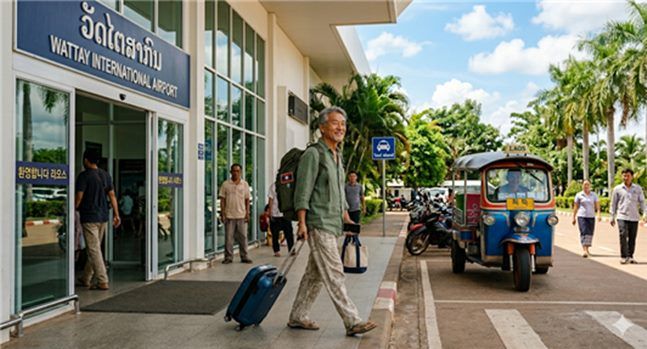
When winter deepens, I head south—to Laos, where my daughter and her family live. I zip up a heavy coat, leave Incheon, and after a few hours in the air I arrive into a place that still carries the warmth of autumn. The moment I step out of the airport, I feel with every fiber of me that not only the season, but the very rhythm of life, has slowed. We like to believe income and happiness go hand in hand. Standing in Laos, that tidy equation quickly feels like a naive fantasy.
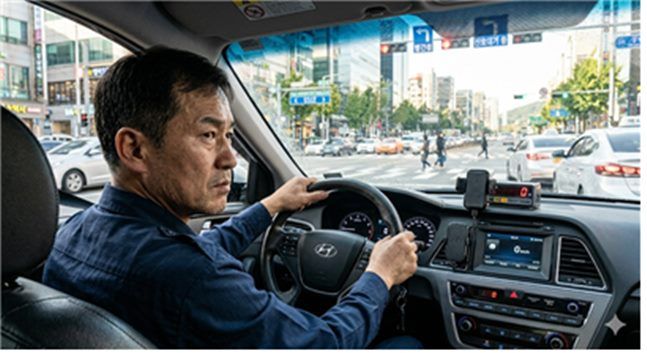
I never let my guard down when I’m behind the wheel. Waiting at the front of a traffic light puts my nerves on edge. The instant the light turns green, drivers behind me blast their horns if I don’t go right away—there’s no tolerance for even a four‑ or five‑second pause. On unfamiliar streets, when I have to weave in because I don’t know the route, I’m met not just with honks but with stares and gestures through open windows. Apologies can flip to hostility in a heartbeat, and the road becomes a battlefield where no one yields. Why do we race like this? Is shaving a few minutes off arrival really worth robbing ourselves of calm?
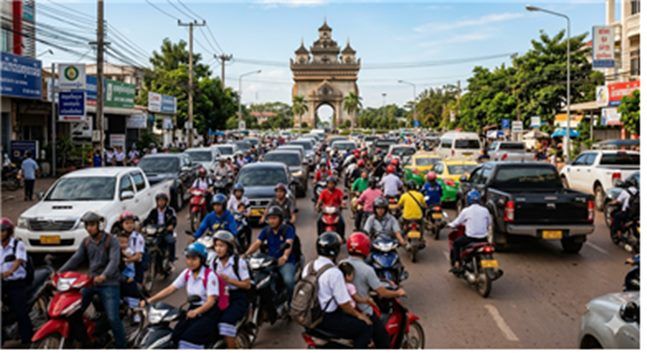
The roads in Laos paint a very different picture. During rush hour in the capital, Vientiane, motorcycles and cars tangle at intersections as grandparents ferry grandchildren to school. You hold your breath wondering whether you’ll squeeze through. Traffic lights are rare; most junctions are roundabouts. Drivers slip into the smallest gaps, but nobody blares a horn or gives a dirty look when someone cuts in. Acceptance and courteousness are part of daily life. The slow, constrained road environment means serious crashes are uncommon, and disputes rarely escalate. If a car or motorcycle gets a little dent but still runs, people brush it off, say “It’s okay,” and carry on. Maybe that’s because a vehicle is seen primarily as transport, not a status symbol. Order can be loose—drivers sometimes go the wrong way—but the overall mood remains gentle. That unhurried mindset seems to seep into the streets themselves.
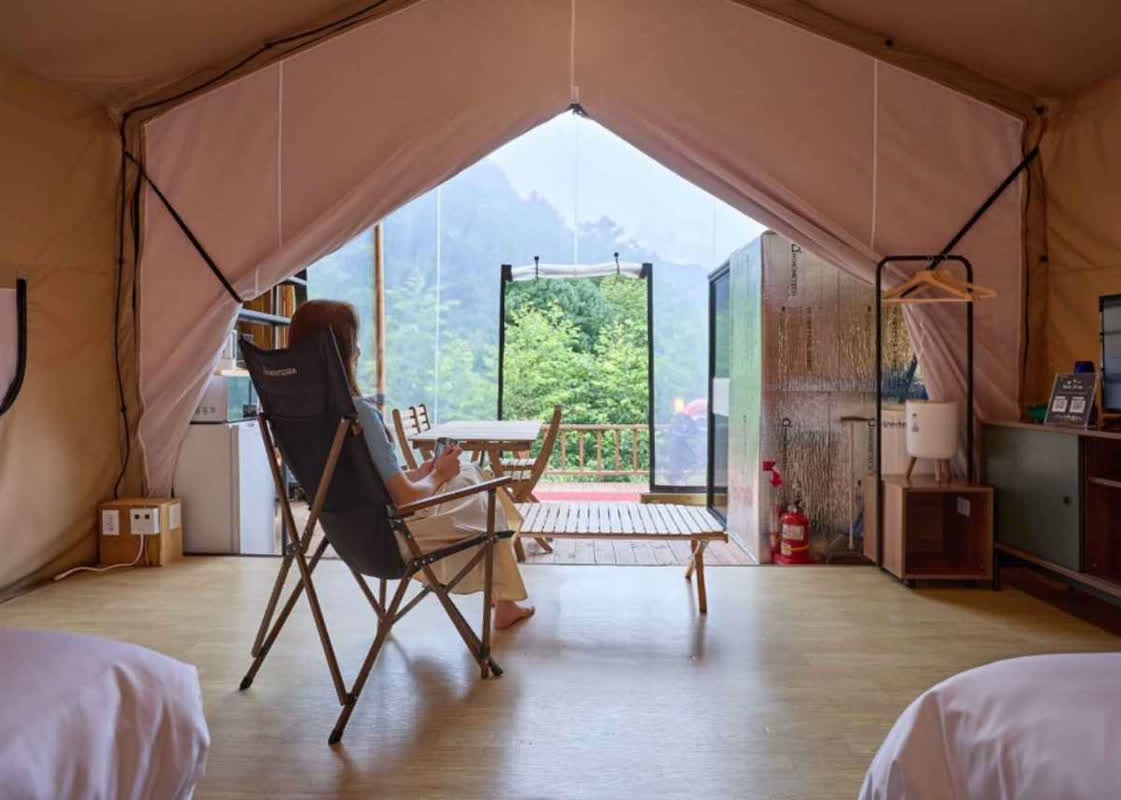
An hour or so down the road from Vientiane toward Vang Vieng, we reached a beautiful forest resort called Nam Pien Yolapa and found another side of Laos. A suspension bridge threaded through dense jungle, a pool sat in the trees’ shade, and a young staff member spent half a day guiding our family. He told me his salary was about 200,000 KRW (approximately 150 USD)—barely enough for a family head—yet his face held no complaint, only a bright smile. When I slipped him a tip out of pity, he bowed and thanked me again and again, then shyly said, “I’m fine like this.” Their contentment with what they have felt woven into daily life, stronger than any worry over money. I remembered a scene in a Korean restaurant, too: despite few customers, five or six servers worked the floor. The owner explained that locals prefer front‑of‑house jobs to kitchen work. Kitchens pay more, but people avoid hard, complicated labor. “This is fine,” seemed to be the attitude—an acceptance of the present. We might label that a lack of ambition, but from another angle it reads like a wisdom about managing life’s weariness on your own terms.

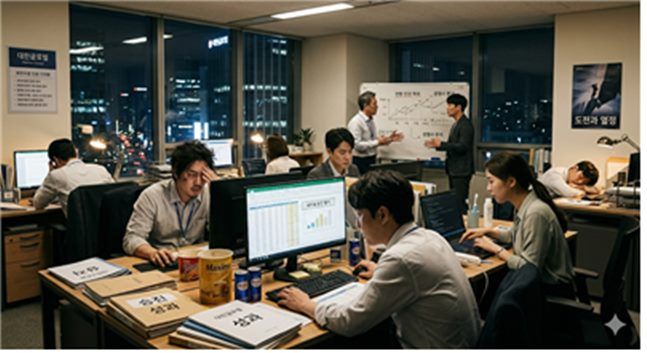
What about our own society? We’re always chasing higher pay and better conditions. Lifetime jobs have vanished, and the yardstick for choosing a career tilts ever more toward income. Even college admissions favor high‑earning professions. Wealth has its value, but the nonstop scramble wears us down. Workplace competition becomes the norm. Even after hours, the office lights hardly go out. No matter how much we earn, we often feel an emptiness that drives us to work more—jobs become survival strategies, not dreams. When that grind feels unavoidable, I think of the smiles I saw in Laos: faces that aren’t consumed by paychecks, faces that keep calm. Seeing them makes me ask why we rush so much, and it nudges me to rethink what true abundance means.
Isn’t the most sorrowful time in life when someone close—family or a spouse—dies? The proverb “even rolling in a dog dung field, this world is better” suggests that however hard or lowly life may be, living beats death. So how deep must the sorrow be when someone leaves this world? Research shows the stress of losing a spouse is higher than that from divorce or imprisonment. In the Joseon era people sometimes observed three years of mourning, and not long ago visitors still came in plain mourning clothes and expressed grief with restrained laments.
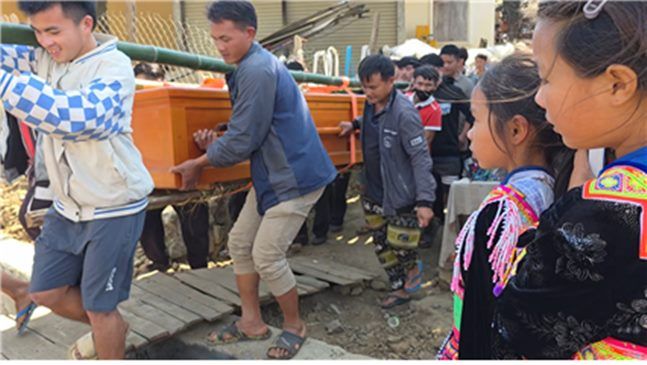
In Laos, death is accepted calmly as part of life. With Buddhism the dominant faith, many believe in reincarnation, viewing death as shedding an old body and moving into a new life. Excessive mourning or wailing is thought to tether the departing spirit to this world and hinder its next journey. Instead of tears, people smile, offer comforting pats, and say, “It’s okay—go in peace,” sending the spirit onward. Funerals can be loud and festive, with drinking and celebration to honor the deceased’s passage to a better place. They believe death follows naturally from accumulated karma. For them, life and death aren’t separate worlds but one continuous flow, like a river.
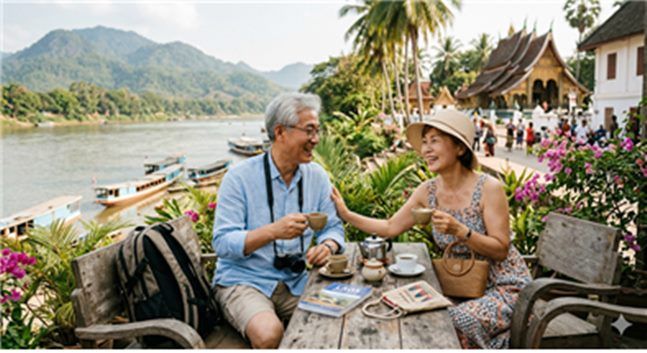
Watching the people of Laos, I find myself wanting to be more like them. I want patience instead of horns, acceptance instead of competition, and the habit of letting go rather than clinging. Material lack isn’t all charm, of course, but living with generosity and ease often requires tolerating some inconvenience. What the warm Laotian breeze taught me was a simple stance: “It’s okay.” That’s why each winter I go back to a slower place. I escape the cold and visit faces I miss, but I’m really there to cool the rush inside me.
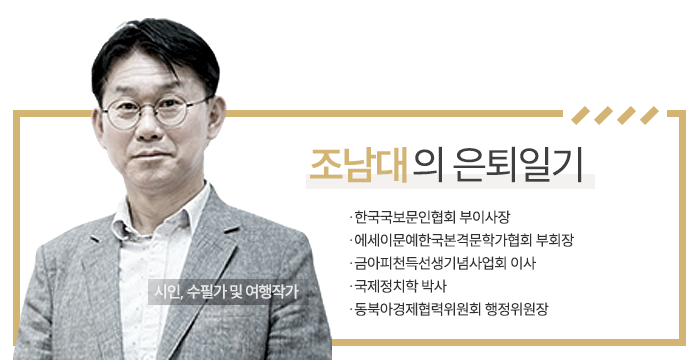
By Jo Nam‑dae (ndcho55@naver.com)
© Dailian Co., Ltd. Unauthorized reproduction and redistribution prohibited.
- Dropping Anchor for the Return Home [Jo Nam‑dae's Retirement Diary (95)]
- Seventy [Jo Nam‑dae's Retirement Diary (94)]
- Life's Companion [Jo Nam‑dae's Retirement Diary (93)]
- Solace in Disputes [Jo Nam‑dae's Retirement Diary (92)]
- The Salmon's Wish [Jo Nam‑dae's Retirement Diary (91)]