After China introduced a visa-free entry policy in November 2024, psychological barriers fell and cities such as Shanghai and Chongqing emerged as new go-to spots for those seeking the perfect \"life shot.\"
According to global experience platform Klook, traffic to \"snap shooting\" products surged 4,788% year-on-year, signaling a wholesale shift from passive sightseeing to experience-based travel in which visitors take and share photos on site.

Shanghai as princess, Chongqing as movie lead
The appeal of zhongti for young travelers lies in dramatic visuals and the thrill of transformation.
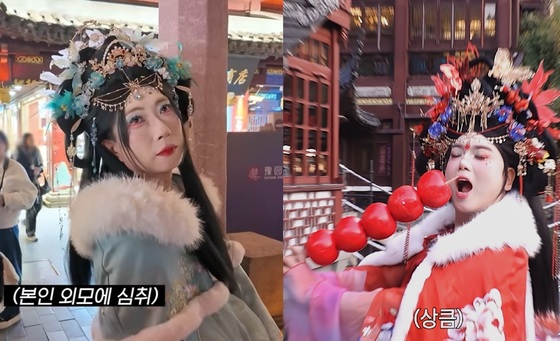
Shanghai, where Western-style skyscrapers coexist with the classical aesthetics of the Ming and Qing eras, provides an ideal setting for a bright, \"princess\" concept. Under the ornate eaves and red wooden architecture of Yuyuan Garden, professional makeup artists deliver influencer-style looks that sharpen features and photograph strikingly.
For roughly 100,000 KRW (about $68), travelers can rent elaborate hanfu or a qipao and book a photographer for a full shoot. A recent, widely shared makeover video featuring TV personality Park Myung-soo and comedian Kwak Beom was also filmed at Yuyuan Garden and drew significant attention.
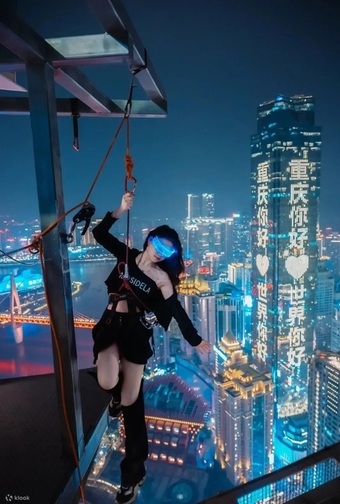
By contrast, Chongqing’s steep topography gives the city a raw cyberpunk edge. Abrupt elevation changes, dense clusters of towers and frequent mist create an otherworldly, Blade Runner–like atmosphere.
Attractions such as the Litsiba station—where a train passes through the eighth floor of an apartment building—and the cliffside golden complex Hongyadong draw crowds shooting short-form videos. The giant Wo Zai Chongqing (我在重庆, \"I'm in Chongqing\") LED sign on Guanyin Bridge has become a must-stop for Korean visitors.
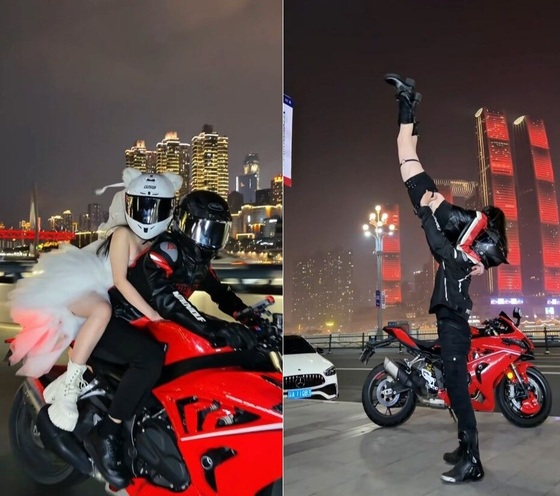
Above all, the breakout hit is the motorcycle experience. Visitors ride pillion behind professional riders, don leather jackets and helmets, and speed through the city while a crew films. Operators then edit and color-grade the footage into a 22–24 second short-form clip.
From platform booking to WeChat direct deals
Bookings are driven by digital platforms. Travelers typically purchase vetted packages on platforms such as Klook or MyRealTrip, but increasing numbers are finding local photographers via Instagram and negotiating directly through the WeChat messenger.
A deposit of around 100 CNY (about $15; approximately 19,000 KRW (about $13)) sent via WeChat Pay or a similar service usually secures the booking.
A bike \"snap\" package that includes video shooting around Chongqing’s iconic yellow taxis and soaring towers costs about 398 CNY (about $58; approximately 75,000 KRW (about $51)).
A MyRealTrip spokesperson said, \"In independent travel to China, distinctive cities like Shanghai and Chongqing have become especially popular with travelers in their 20s and 30s. Demand is rising quickly for content-driven travel products — from foodie tours focused on social-media hot spots, such as Tang-dynasty–themed banquet restaurants, to motorcycle experiences at Chinese-drama filming locations.\"
\"In Shanghai, we plan to expand influencer-style shoot packages that include on-site makeup services,\" the spokesperson added.
Millennials and Gen Z Overtake Zhangjiajie; China Travel Market Shifts
The turning point for the China travel market was clearly the visa-free policy.
With visa hassles and costs removed, many travelers in their 20s and 30s who previously favored Japan or Southeast Asia began flocking to China’s major cities.
According to the Ministry of Land, Infrastructure and Transport’s air information portal, passenger numbers on China routes reached about 4.2 million in 2025 after visa-free travel took hold — a 128.7% increase from the previous year.
Industry analysis shows a generational shift: whereas travel once skewed toward people in their 50s and 60s on filial trips, routes to cities such as Shanghai and Chongqing now see travelers in their 20s and 30s make up more than 40% of customers, propelling them into the mainstream.
Travel companies have scrambled to respond. Major agencies that historically focused on package tours for older customers are overhauling their operations to capture independent city-trip demand (FIT) from younger travelers.
For example, Hana Tour (039130) opened a Shanghai branch in January to intensify its push into the local independent travel market.
Hana Tour said, \"Shanghai’s short flight times and wide range of attractions concentrate demand among independent travelers. Through a directly operated Chinese subsidiary, we will procure local hotels and attraction tickets directly to remain price‑competitive and will design and operate tours that appeal to younger travelers.\"