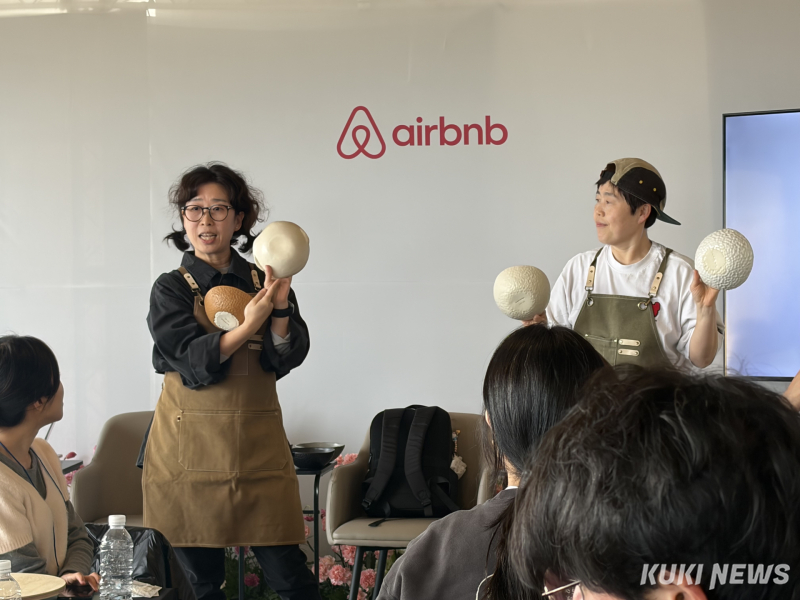
Airbnb, once mainly known as a place to book a room, is pushing into “stay-based tourism” by pairing local experiences with accommodations.
On March 9, a survey of 1,000 Korean travelers commissioned by Airbnb found that about 60% of trips were driven by food, while roughly 70% of stays were limited to hotels and resorts. Fewer than 8% said they traveled specifically to enjoy local experiences.
Airbnb reads those numbers not as a lack of interest in local experiences but as a sign that the supply of such offerings is still limited.
To address that gap, the company is promoting a “stay-based travel” model that combines lodging, local programming, and community to grow demand for regional experiences. The local programs on Jeju Island are an early example of that vision in action. The reporter joined one of these stay-based experiences to see how it works firsthand.
Ji Yeon-ju runs a studio in Daejeong-eup, Seogwipo, and also lists her space on Airbnb. “I first found Airbnb while traveling around Europe, and after I moved to Jeju I decided to become a host,” she said. “Since 2019 I’ve been running pottery workshops alongside the accommodation and meeting a lot of guests through them.”
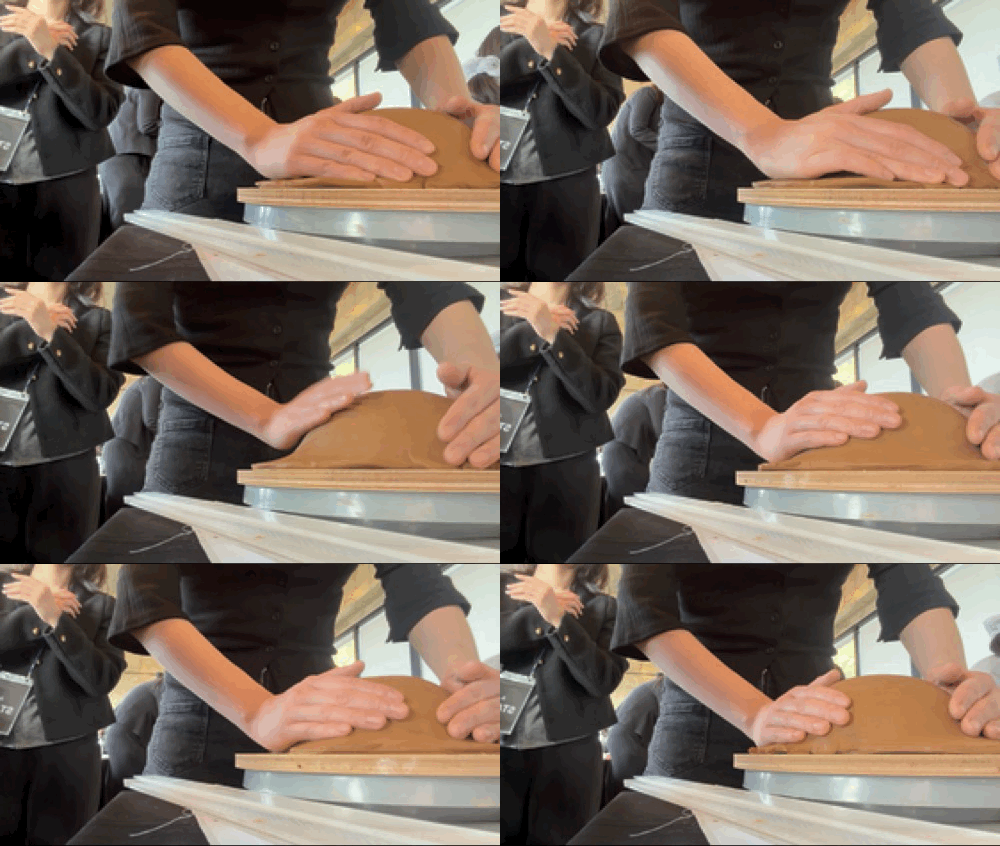
The pottery class had participants working the clay by hand to shape bowls. They rolled the clay into an even slab, cut and formed it into a circle, then pressed it onto molds to build a basic shape. After that they trimmed the edges, added surface patterns with tools, and refined the form. In the final step each person engraved their name on the bottom of their piece, chose a glaze color, and prepared the work for firing.
Throughout the session, the host moved among participants, checking that slabs weren’t too thin and that the clay was seated properly in the molds. When beginners struggled with the rolling pin or a shape warped, the host explained the technique and demonstrated it. In the calm, small-studio setting, people finished their pieces at their own pace.
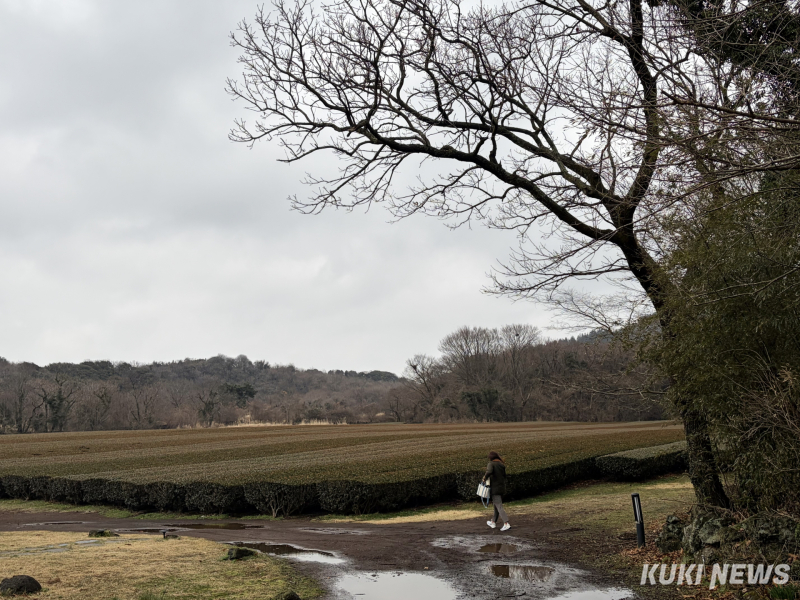
Next, the reporter visited Oltis, a tea plantation in Jocheon-eup that runs a tea-ceremony program showcasing Jeju’s tea culture. Perched at about 300 meters above sea level, the site offers striking rows of some 100,000 tea bushes with Geomunoreum—a UNESCO natural heritage site—as the backdrop.
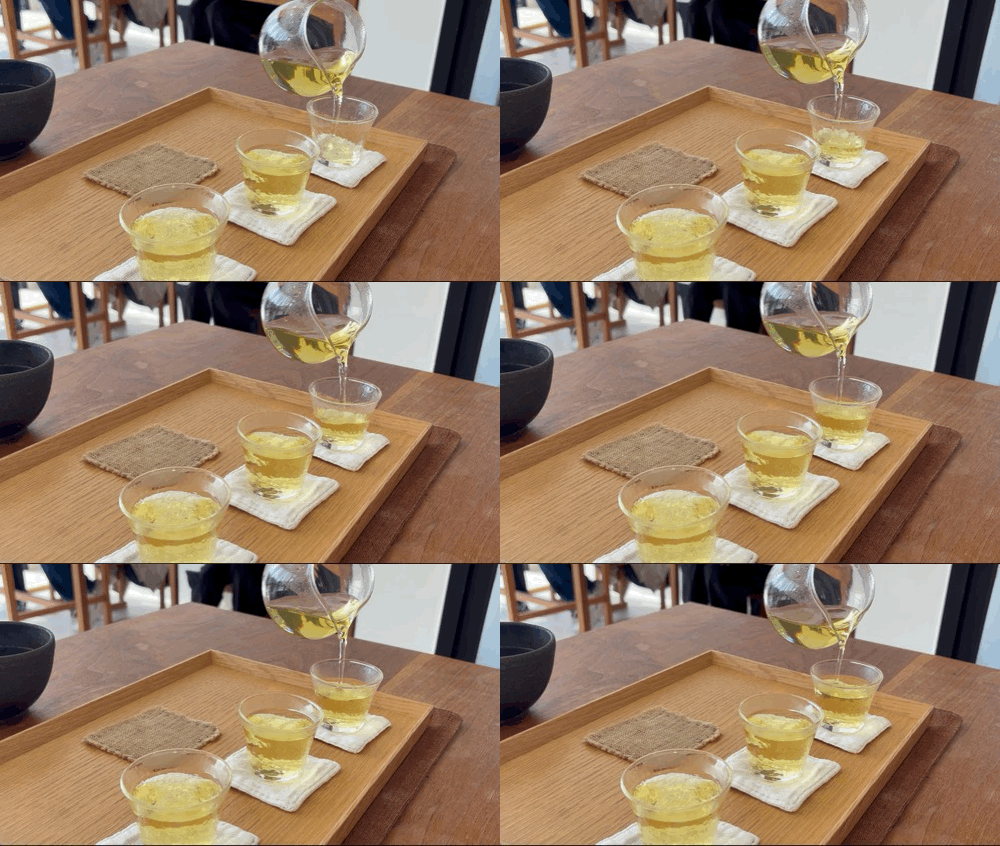
At Oltis, visitors can take part in a program called “Tea Mind” to experience local tea traditions. When we entered the tasting space, the tea server (tea master) had prepared the leaves for the day—green tea, black tea, hojicha, and matcha.
Participants handled dried leaves, watched them unfurl as they absorbed water, and brewed small samples. It’s a full-sensory experience: feeling the warmth of the cup, inhaling the aroma, and even listening to the soft pour as the tea fills the cup.
These kinds of local programs fit Airbnb’s broader strategy to evolve from a lodging-only service into a platform that connects the whole travel experience. Some hosts now pair stays with hands-on activities—pottery classes, tea ceremonies, history tours, and oreum hikes—so travelers can dive into regional culture.
Given Airbnb’s relatively high share of international users, these experiences can also be a direct channel to foreign tourists. An Oltis representative said most customers who book through Naver are Korean, while reservations from Airbnb tend to include more foreigners. They added that Korean guests often bring foreign friends to join the programs, so Airbnb can act as a gateway for overseas visitors to try local experiences.
That said, these offerings are not yet widespread. A number of hosts combine lodging and activities, but they still make up a small portion of the overall platform. To scale the stay-plus-experience model, Airbnb is considering promotions that would bundle discounts for both accommodations and local programs.
Seo Ga-yeon, Airbnb Korea’s country manager, said, “We’re preparing several initiatives to become a platform that offers stays and experiences together, and we’ll introduce them officially soon. We hope this Jeju program helps more people appreciate the potential of local experience travel.”