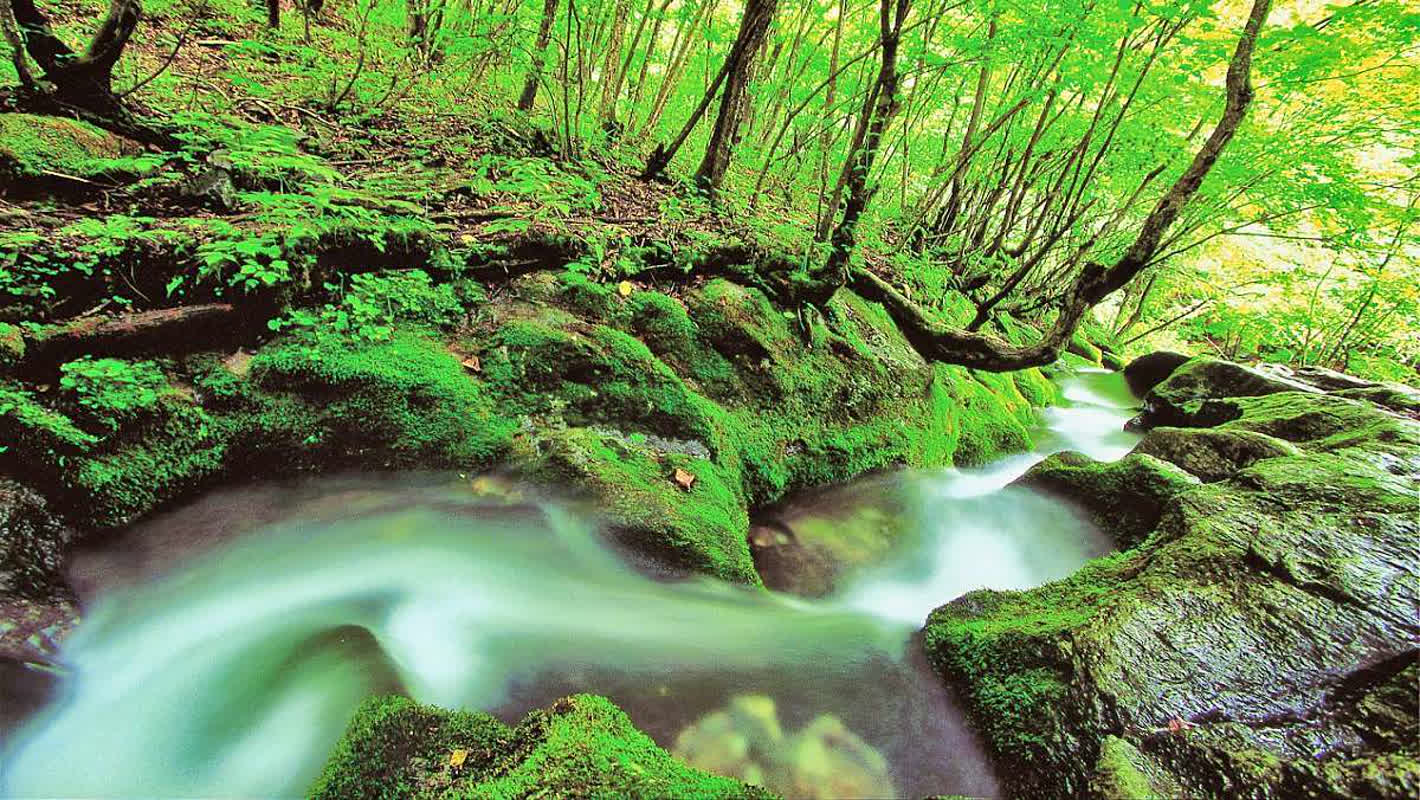
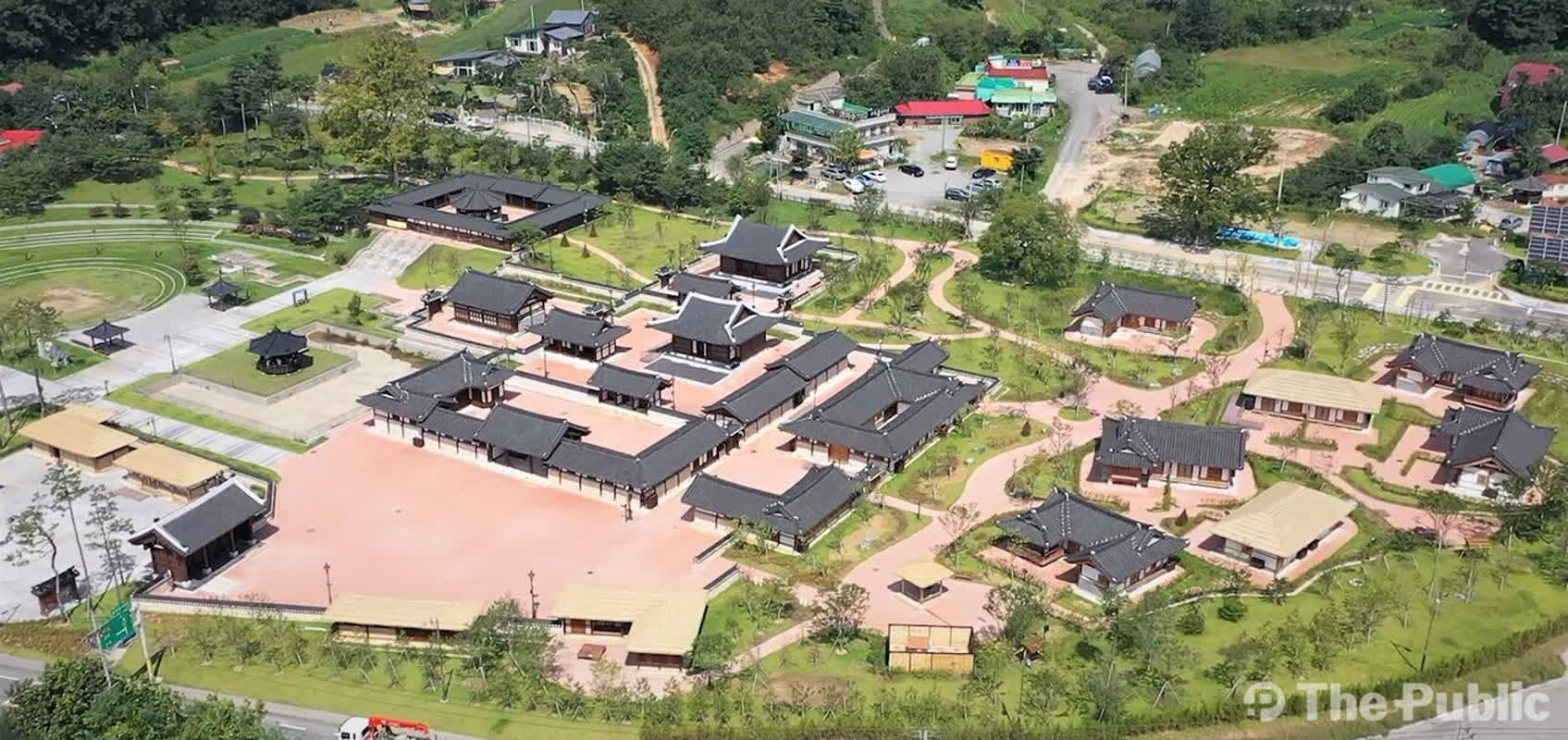
When the seasons settle over the ridgeline, Baekyangsa Temple in Jangseong, Jeollanam-do, hits with a deeper kind of resonance. Tucked into the sculpted peaks of Naejangsan National Park, this historic temple was founded in 632 during the reign of King Mu of Baekje. Framed by the massive rock cliff known as Hakbawi, a clear stream runs along both sides, greeting visitors with a steady, soothing song year-round. A local legend explains the name: during the Joseon era, it’s said the monk Hwanyang chanted sutras and a white sheep would appear to listen, so people began calling it Baekyangsa—literally, the “White Sheep Temple.”
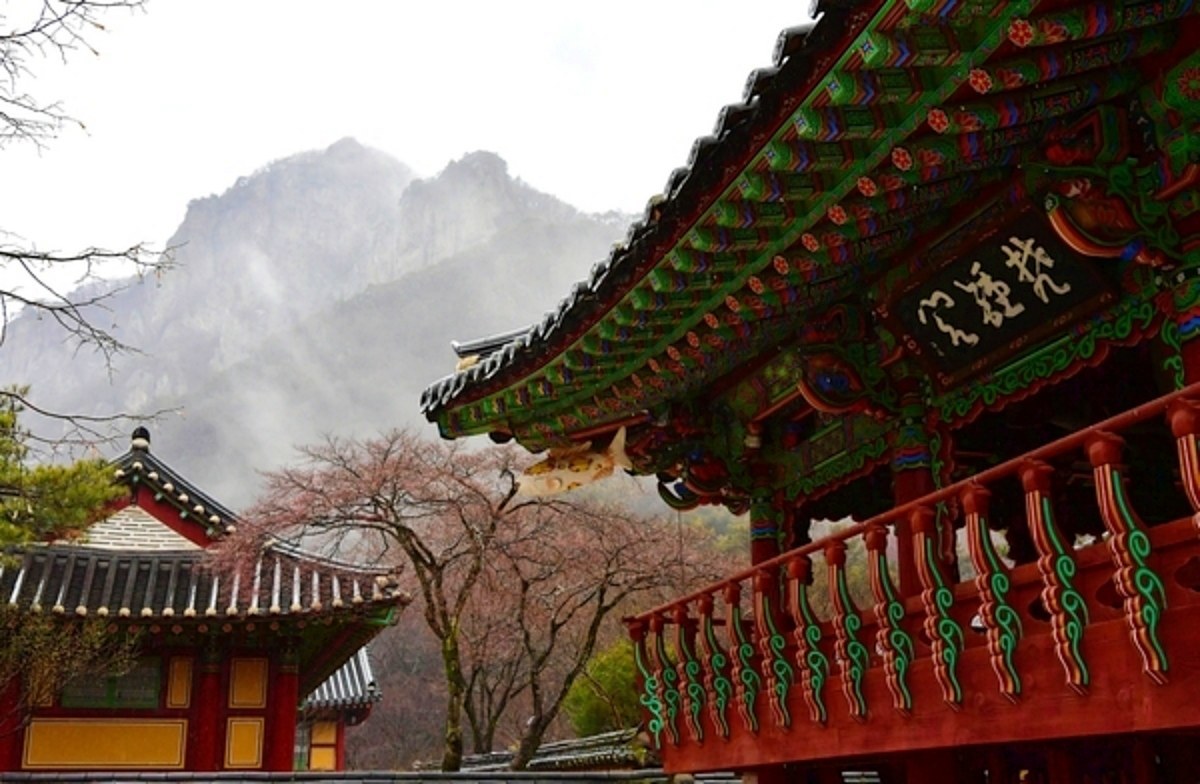
At the temple entrance, your eye is immediately drawn to Ssanggyeru, a graceful pavilion perched over a pond. The pond—formed by damming the valley stream—casts a mirror image of the pavilion that, combined with the jagged cliff behind it, looks like a delicate ink painting. Before you reach Ssanggyeru, pass through the Iljumun gate and the Budojeon, where the Soyo Daesa stupa—designated a Treasure—stands. As you move deeper into the grounds, the Daeungjeon and Geungnakbojeon, both recognized cultural properties of Jeollanam-do, appear in sequence. The walk from the parking area to the temple winds through an ancient forest of sawtooth oaks, yew trees, and gorosoe (a Korean maple), so even the stroll feels like a full dose of nature’s vitality.
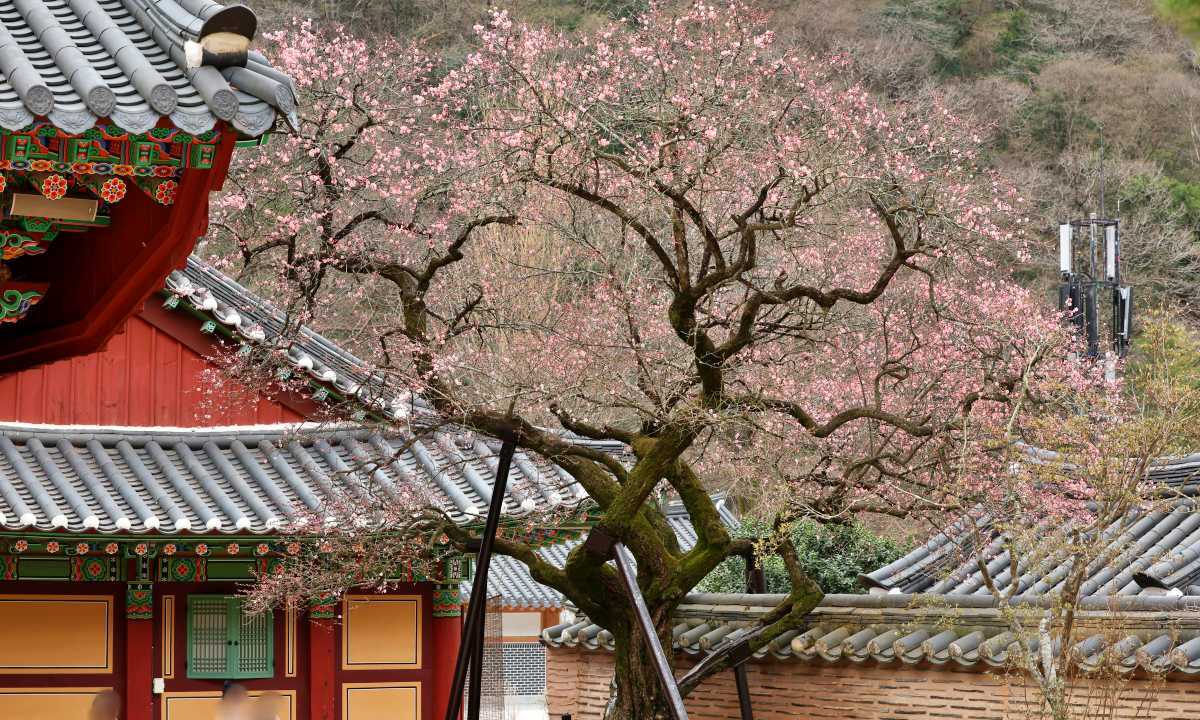
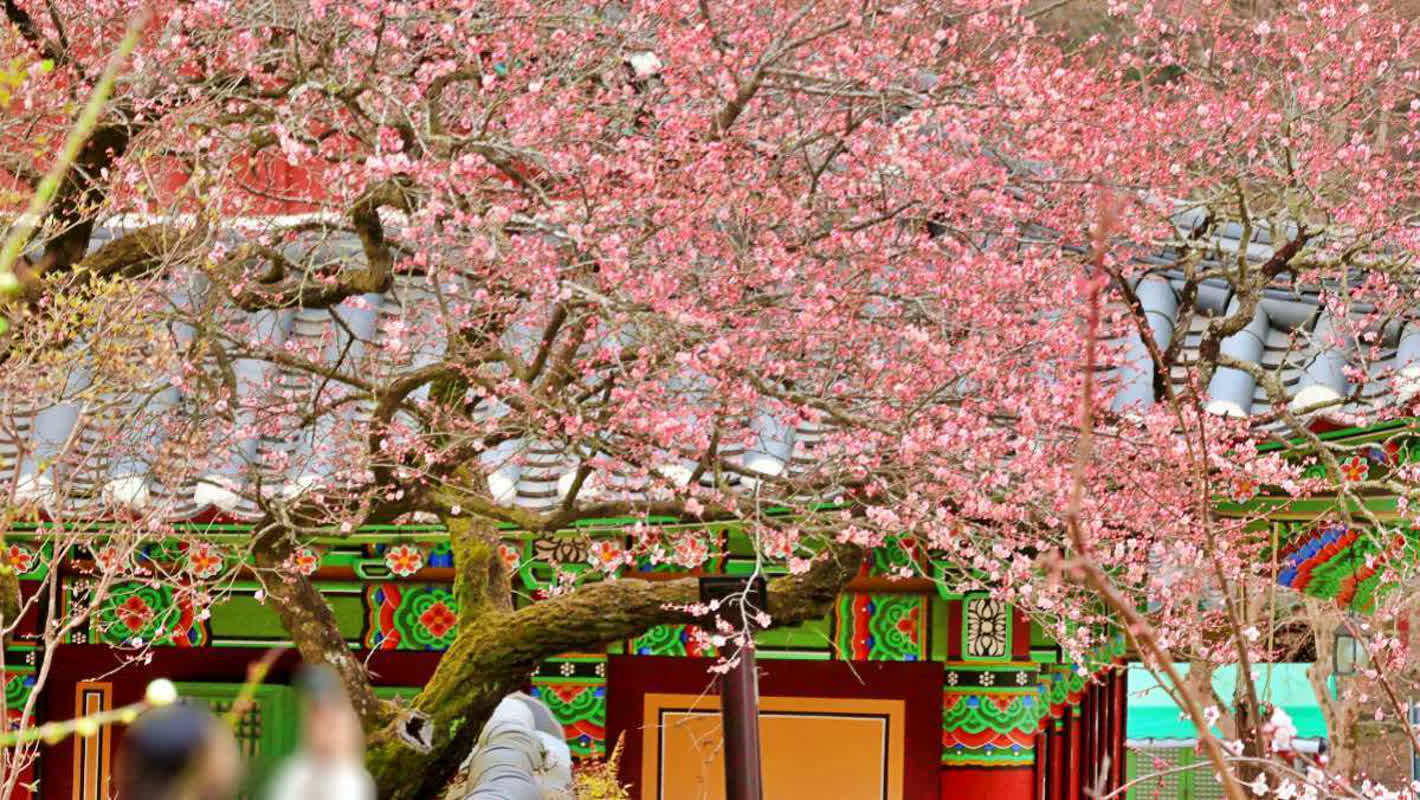
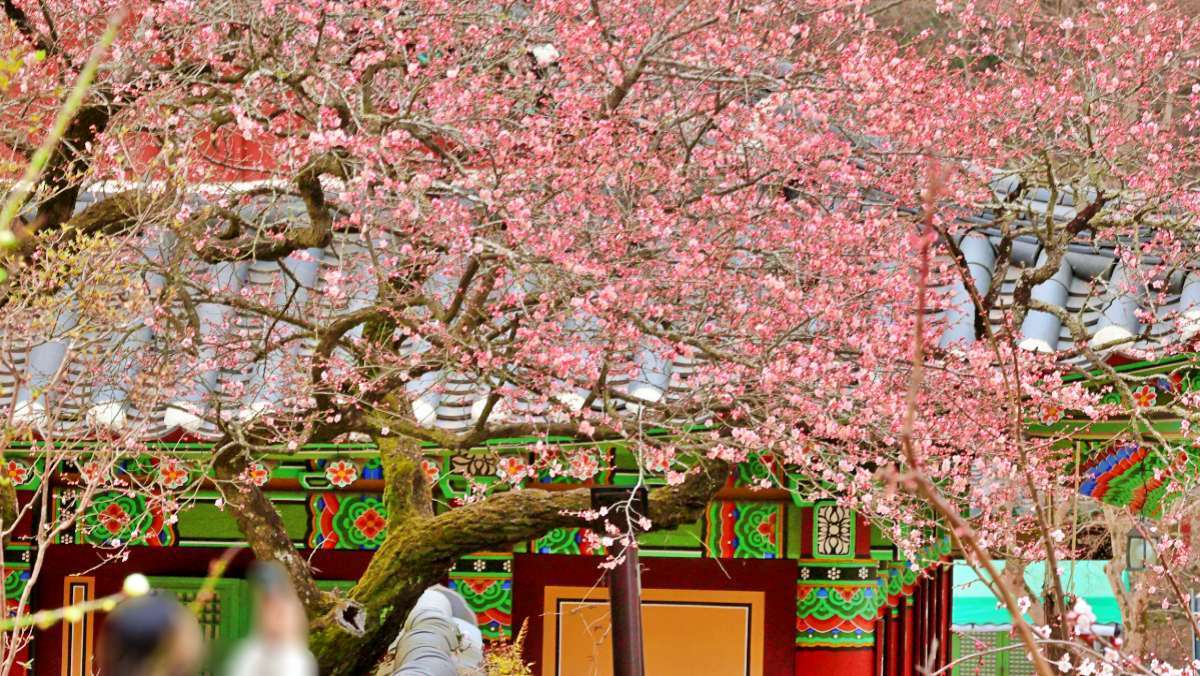
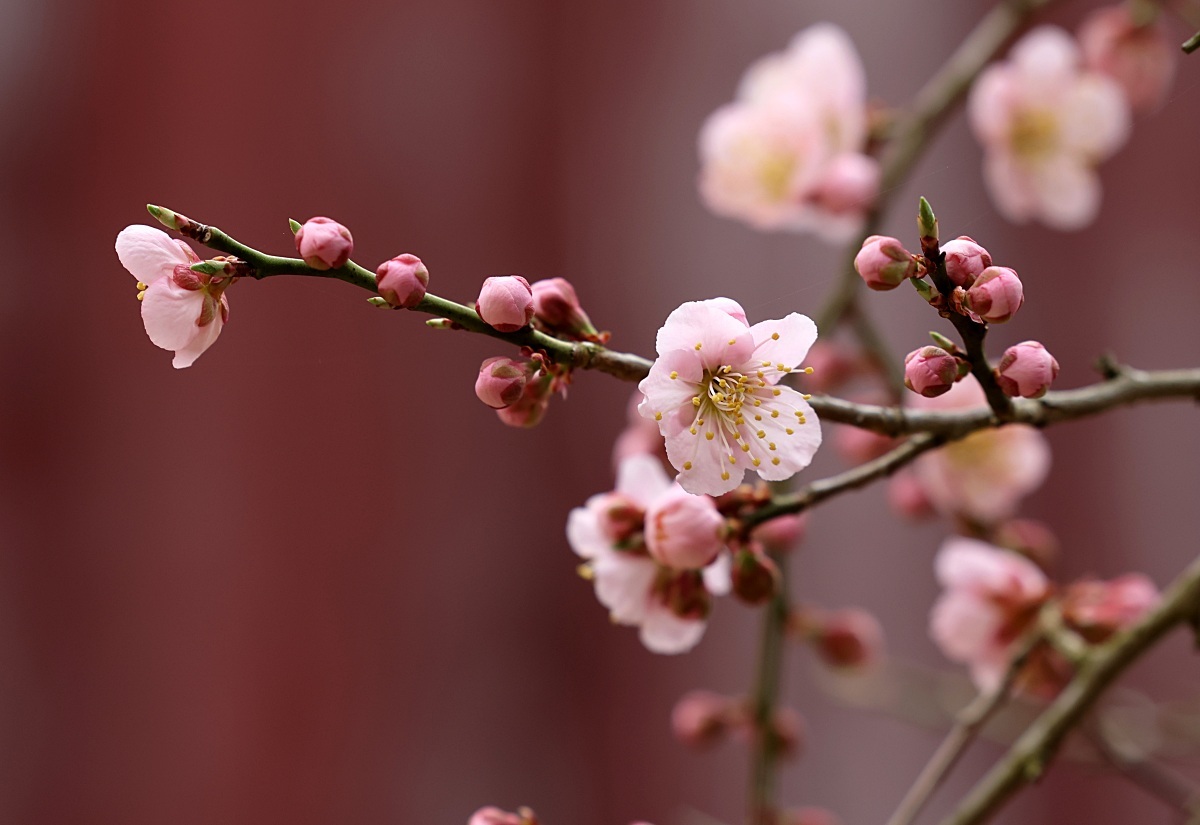
The undeniable star of Baekyangsa’s spring is the Gobulmae plum tree. Rooted in the front yard of Uisangjeon beside Daeungjeon, this plum is counted among Korea’s four great plum trees and carries a quietly regal presence. Monks have tended it lovingly since around 1700, and when the temple was relocated, they moved the tree too—preserving its life and legacy. In 1947, when the Gobul Chongnim assembly formed to honor the Buddha’s core teachings, the tree earned the name Gobulmae. Every late March, its deep-pink blossoms burst into bloom and the whole temple fills with a subtle, intoxicating scent. The trunk splits into three sweeping branches; the curve of those limbs against the vivid petals creates an elegant silhouette worthy of its status as a designated natural monument.
After exploring the main halls, continue your walk to the nearby hermitages. A roughly 20-minute hike up the mountain trail from the temple entrance brings you to Yaksaam, a natural lookout with sweeping views of Baekyangsa. Nestled among layered peaks, the scene is so peaceful it momentarily wipes away the bustle of daily life. The stands of yew trees lining the trail are protected as a designated natural monument and stay green year-round, adding a constant freshness to the forest.
Admission and parking at Baekyangsa are free. If you’re using public transit, buses to Baekyangsa run regularly from the Jangseong Public Bus Terminal—check the schedule ahead of time.